
The United States has been asleep for decades as China undercut US economic strength by stealing ideas, technologies and, more recently, artificial intelligence advances, with the Chinese military first in line to benefit, according to testimony heard by a congressional committee on Thursday.
The hearing by the House Select Committee on China, which focused on economic espionage and Chinese efforts to exert influence at state and local levels, was held amid mounting bilateral tension over export controls and tech rivalry – despite last month’s summit between Chinese President Xi Jinping and US President Donald Trump meant to stabilise relations.
“China has orchestrated a highly strategic, highly accelerated and multifaceted effort to steal commercial and technological secrets from the United States and other Western nations,” said David Shedd, former acting director of the Defense Intelligence Agency.
“The campaign, which blends cyber espionage, human intelligence, academic collaboration, and commercial investments, has been instrumental in propelling China’s rapid economic and military rise.”
Some witnesses and lawmakers pushed back, however, arguing that although Beijing’s aggressive campaigns to acquire foreign secrets must be checked, any broad-brush approach targeting students, property owners and researchers of Chinese descent as well as private Chinese companies ultimately undermines US security.
“We should use a scalpel, not a sledgehammer,” said John Yang, president and executive director of civic group Asian Americans Advancing Justice.
“Asian-Americans no longer feel safe because of their race or ethnicity.”
“The number of scientists and students that are interested in coming to the United States, not just from China, but from countries all over the world, is dwindling,” he added. “This brain drain does not benefit national security.”
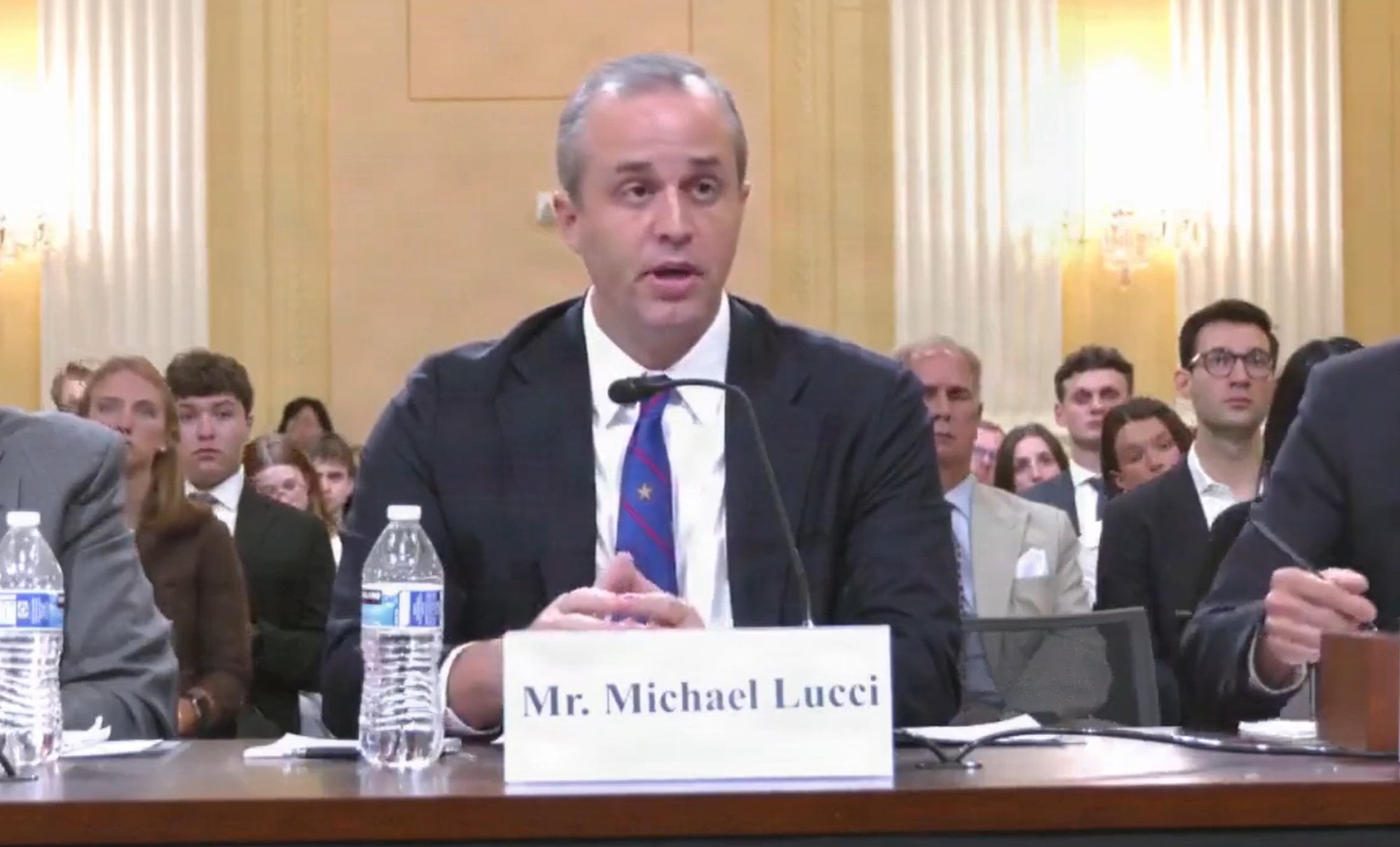
At one point a heated exchange erupted between Ro Khanna, a Democratic lawmaker from California, and witness Michael Lucci, chief executive of State Armor, a security company.
Lucci had accused two Chinese-Americans on social media of being disloyal to the US tied to their birthright citizenship.
“Do you believe millions of Chinese-Americans who gain citizenship through birthright to be denaturalised, or are you simply a racist?” said Khanna. “Do you believe 1.5 million should be denaturalised?”
“When people see I have a Chinese wife and four Chinese children, I don’t think they’re going to see racism,” Lucci countered.
“I think your statements are racist against Chinese-Americans,” Khanna fired back.
“And I’m trying to understand whether you believe that this is just Chinese-Americans who should be denaturalised or whether you believe that anyone born here who goes to a foreign country and is raised [there] should be denaturalised.”
The Supreme Court is poised to hand down a highly anticipated ruling any day on Trump’s bid to undercut birthright citizenship. Under the US Constitution, anyone born in the US is considered a US citizen.
Shedd said the US-China intellectual property showdown has spread to AI, amid reports that such Chinese tech companies as Alibaba have targeted Anthropic and other US AI models.
“The Chinese are taking that data and dumbing it down so that they can put it on the market at a much lower cost and with greater accessibility to it,” Shedd said.
“We’re looking at the CCP’s ability to generate new requirements and new capabilities,” he added, referencing the Communist Party.
The South China Morning Post is owned by Alibaba. The Hangzhou-based company did not immediately respond to a request for comment.
Witnesses said the US has for decades failed to fully recognise or respond adequately to the mounting Chinese economic espionage threat, which is increasingly targeting local areas where defences are less robust.
Even the Federal Bureau of Investigation (FBI) and other intelligence agencies have failed to take the issue seriously, they added, instead tending to focus more on traditional spying.
The risk, they argued, is different from more mundane industrial espionage seen among companies in that China’s is a “whole of society” initiative involving companies, trade and commercial officials and the Ministry of State Security working in concert.
The Chinese embassy in Washington said accusations of industrial espionage were baseless, amounted to “malicious slander” and steeped in Cold War mentality.
“We urge the relevant US politicians to change course, stop making such irresponsible remarks and do things that are conducive to China-US relations,” a spokesperson said. “China’s scientific and technological achievements were not obtained through theft or robbery. They are the result of the Chinese people’s hard work, wisdom, and dedicated effort.”
Yang said a balance needs to be found so that safeguards are strengthened without making the Asian-American community collateral damage.
Possible steps proposed by witnesses included a single disclosure form required by all federal grant-making agencies to avoid confusion; better education for universities and ethnic communities on risks to avoid getting hit with frivolous paperwork lawsuits; and better awareness at top corporate and FBI levels of vulnerabilities.
The bipartisan House Select Committee was established in 2023 to investigate and analyse economic and security threats posed by the Communist Party.
While it can advise lawmakers, it cannot directly propose, vote on, or advance legislation to the House floor. -- SOUTH CHINA MORNING POST