




As national EU leaders meet in Brussels to thrash out a possible new China policy, speculation is high as to where they all stand amid fluid member-state dynamics. In the last part of this three-part series, we look at whether the conventional wisdom will be fundamentally changed in the EU and how the bloc could forge a united front in dealing with China.
Over dinner on Thursday, leaders from the European Union’s 27 member states will chew on one of their toughest courses in years: “global macroeconomic imbalances and their implications for Europe’s competitiveness and prosperity”.
In Brussels-speak, this mealy-mouthed dish is shorthand for “China” – an issue so difficult to digest that bureaucrats have avoided putting it on the menu at all.
However, as leaders gear up for their first meaningful debate about China in three years, their unwillingness to name it on the agenda speaks to the layers of trepidation at play.
Not only do they hope to avoid the forceful retaliation Beijing has pledged, but they are also mindful of needing to balance between the competing interests of the constituent members, each on its own journey with China.
Nonetheless, officials involved in the planning said a lack of written outcomes from the meeting should not be “confused with inaction” and that the council intended to give the commission “very powerful” guidance on how best to move forward.
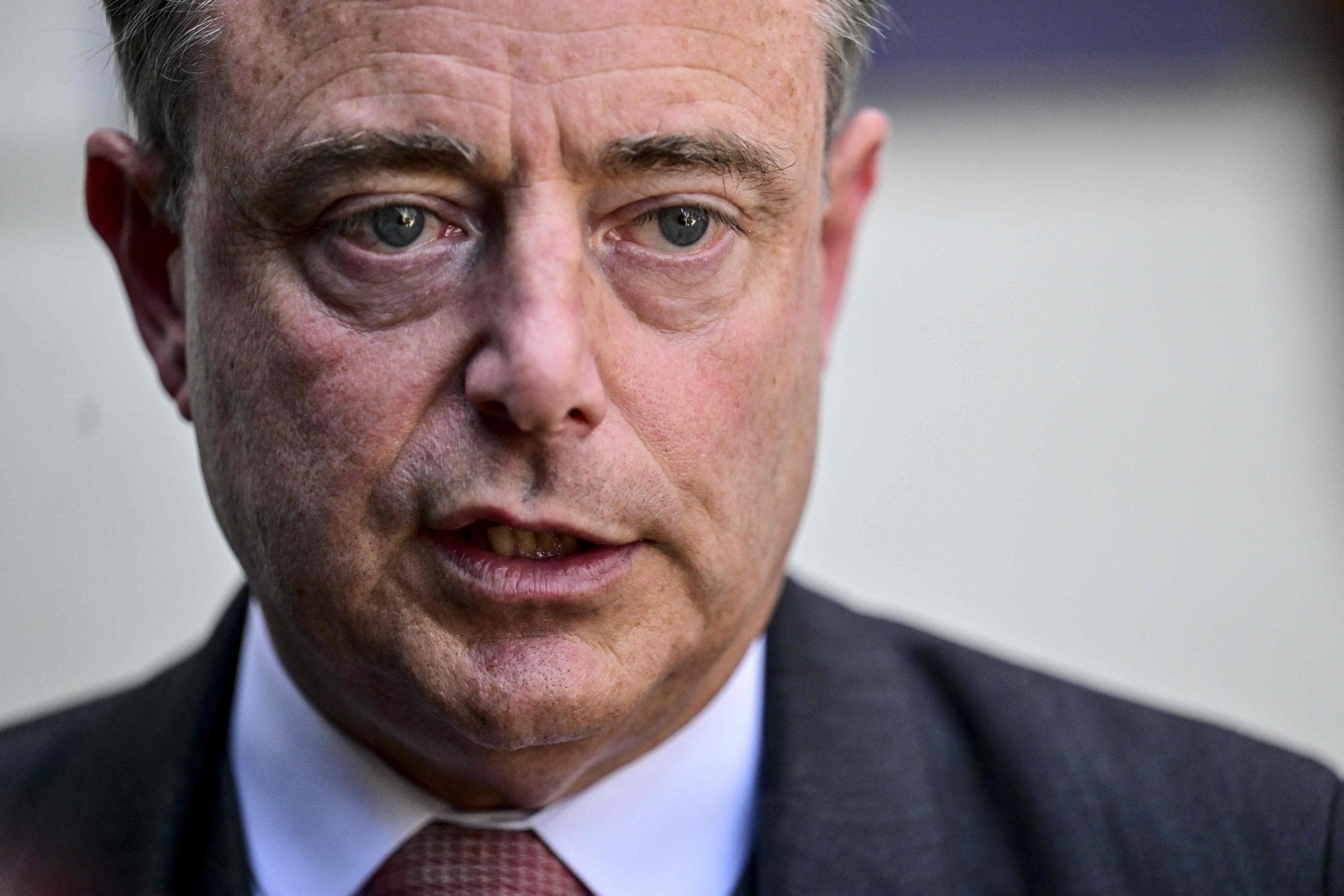
“They have called it geoeconomic imbalances, just not to name China by name, because we are so afraid that we don’t even dare to do that,” said Belgian Prime Minister Bart de Wever, who has emerged in recent months as one of the bloc’s most vocal China hawks, of the looming discussion.
These intra-European dynamics have become more fluid of late, as elections and economic realities have led to flips and flops among capitals such that a cottage industry in analysis has sprung up with experts trying to assess where each stands on the core focus of Thursday’s debate: what Europe should do about the China shock 2.0.
“If Paris and Berlin cannot synchronise their actions, it is very hard to come up with a coherent war plan, and that seems to be the case,” according to Joerg Wuttke, partner at consultancy DGA-Albright Stonebridge Group, who previously chaired the EU’s top business lobby in China.
“There seems to be little trust between Paris and Berlin, and if that’s not happening, you go case by case, and China is not a case-by-case issue. China is a climate change in trade.”
This fluidity on China was on display last month in Prague, where a last-minute addition to a conference agenda set tongues wagging.
The topic was “Taiwan and Europe”, the speaker was the island’s foreign affairs minister, Lin Chia-lung, and the discussion was marked clearly as “off the record and not for attribution”.
After his brief address, Lin was spirited out of the venue by staff, leaving a trail of reporters in his wake, as if his presence in the Czech capital was being kept as low-key as possible.
It was a far cry from previous editions of the Globsec Forum, one of Europe’s main security conferences, where Taiwanese ministers were given star billing and press conferences.
Now, though, a new government wants to reset ties with Beijing. In April, Prime Minister Andrej Babis refused to provide an aircraft for Czech Senate speaker Milos Vystrcil to visit Taipei.
Beijing sees Taiwan as part of China to be reunited by force if necessary. Most countries, including EU members, do not recognise Taiwan as an independent state. But many of them retain ties with Taipei short of recognition, which have drawn protests from Beijing.
Foreign Minister Petr Macinka has met several times with Chinese counterpart Wang Yi, and insiders say the government wants to bring Prague to the EU mainstream rather than remain out on a limb on China policy. Already, they said, it had been rewarded with fast-track permits for rare earth licences.
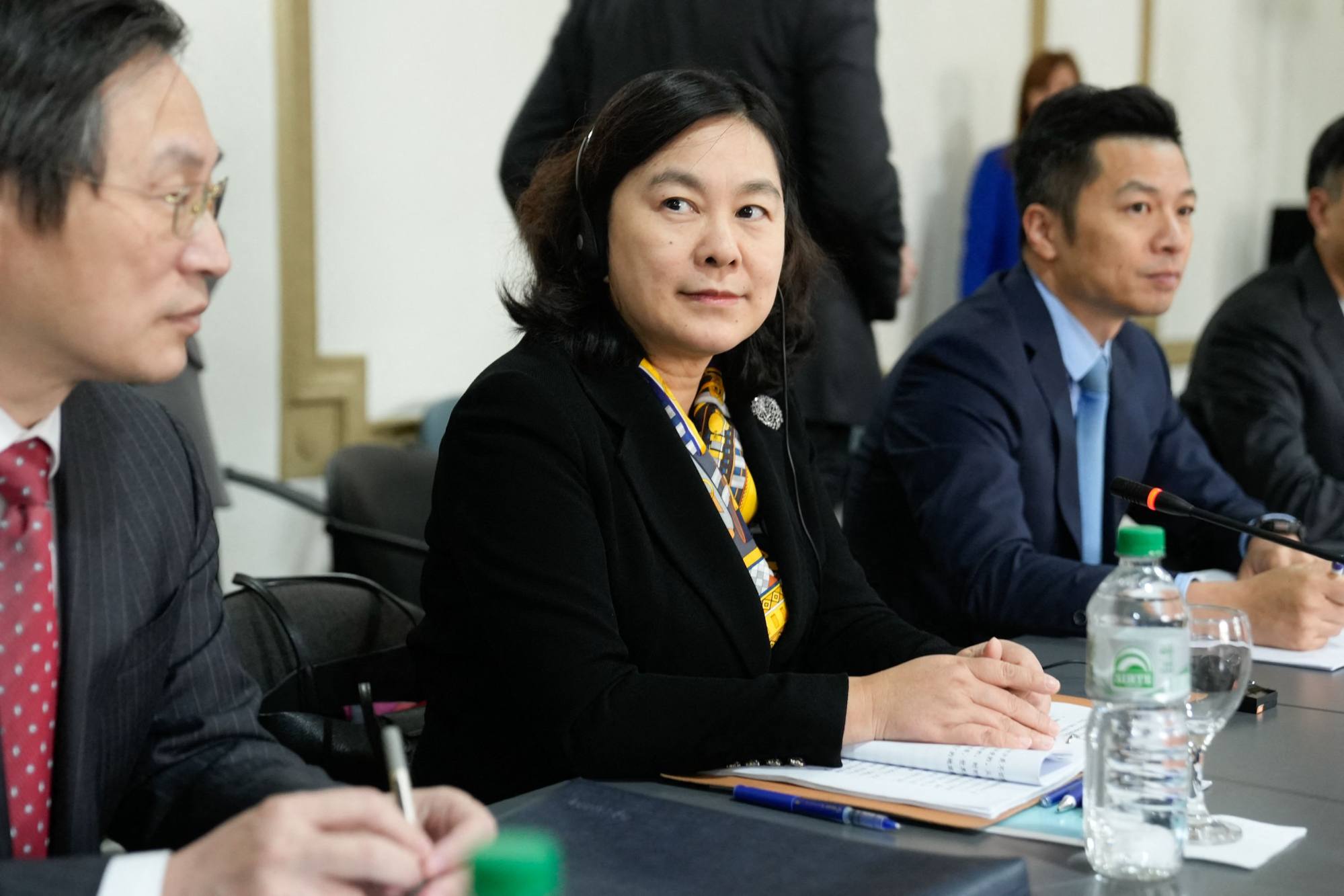
“This shift has not gone unnoticed in Beijing. China is trying to use this window of opportunity,” said Kara Nemeckova, a research fellow at the Central European Institute of Asian Studies.
“Back in January, vice-foreign minister Hua Chunying met her counterpart in Prague and also dined with Babis’ foreign policy adviser, probably to feel out the direction of the new Czech China policy.”
As the commission looks to make its pitch on Thursday, the Czech pivot is a sign that the old map on China policy has been redrawn since the leaders last debated it at length.
Lithuania too was long seen as the most reliably hawkish EU member towards Beijing. Its centre-left government has also spent the past 18 months insisting that it must reset ties with Beijing, which ailed under the previous government and another pivot to Taipei.
On Tuesday, the Baltic state moved to appoint a new Social Democratic prime minister, Mindaugas Sinkevicius, the party chair who in February said that “it is the government’s commitment to restore diplomatic relations with China”.
Its president and foreign minister, on the other hand, remain sceptical of Beijing, reflecting a common division within national governments that further confuses matters on the EU level.
At the same time, new hawks are emerging. Belgium has joined France as one of the most hardline voices in the European Council.
De Wever has called for the bloc to tear up its triptych approach through which it considers Beijing simultaneously a partner, competitor and rival, and instead adopt stern trade measures.
In Greece, which since a near-decade-long sovereign debt crisis has pulled close to China as it sought billions in investments, Prime Minister Kyriakos Mitsotakis this month said Europe should not be “completely annihilated [by Chinese goods] simply because we’re always in search of the cheapest product”.
Mystery, meanwhile, surrounds the position of the new Hungarian government, which, after a combined two decades of pro-Beijing positions under Viktor Orban, is now rivalled by Spain for the position of China’s best friend in Europe.
Still, the general consensus is that nothing will substantially change in the EU’s China policy without the backing of Germany, by far Beijing’s largest trade and investment partner in Europe and for years acting as a brake on Brussels’ desire for a more forceful approach.
“This is as close as we have come in years to a make-or-break moment for European China policy,” said Noah Barkin, a senior adviser in research house Rhodium Group’s China practice.
And as Chinese industry has moved up the value chain, it has become the fiercest competitor of the European manufacturing sector, much of which revolves around Germany.
Research from the German Economic Institute showed that Germany was likely to have lost about 400,000 industrial jobs between 2019 and 2025 due to China’s trade policies.
German companies say they are losing market share in China, Europe and third markets around the world.
Even while acknowledging the impressive leap in Chinese competitiveness, there is annoyance about the lack of reciprocal market access and the level of state subsidies – estimated by the Organisation for Economic Cooperation and Development to be three to eight times higher than those of other industrial players.
“Hundreds of thousands of European jobs have been lost because of unfair competition with China,” Barkin said. “Europe’s trade deficit and dependencies on China are growing despite all the talk of de-risking.”
EU debates can often resemble what Sigmund Freud called the “narcissism of small differences”, with officials consumed by technical disputes and institutional turf wars.
But many observers say that this week’s discussion on China is about something much bigger.
“This week’s European Council is likely to mark one of the most important moments in Europe’s China debate in years,” said Andrew Small, head of the Asia programme at the European Council on Foreign Relations.
“The issue is no longer whether China poses a systemic challenge – EU leaders now broadly accept that – but whether Europe is prepared to act at the scale and speed required.”
For China, Europe is a vital export market that offers a salve to its internal economic issues, including sluggish consumption levels and cutthroat domestic competition that has seen many electric vehicle makers struggle to turn a profit despite their world-leading innovation.
In May, retail sales in China fell for the first time in more than three years. In a world of sky-high tariffs, Europe is seen to be the last rich market to remain relatively open to expensive Chinese goods that need to be exported.
On Thursday, the commission will try to convince capitals that this should change, through the use of safeguard measures that allow a more quick-fire deployment of tariffs and quotas, often by sector rather than by individual product.
Its success or otherwise could help determine the future of one of the world’s largest trading relationships.
The German handbrake on China policy, meanwhile, has often jarred with Berlin’s Zeitenwende rhetoric, adopted since the Russian invasion of Ukraine in 2022, which was supposed to represent more realist thinking in Europe’s biggest economy.
Its positions on Thursday will show how much has changed. The early signs are that things are indeed in flux.
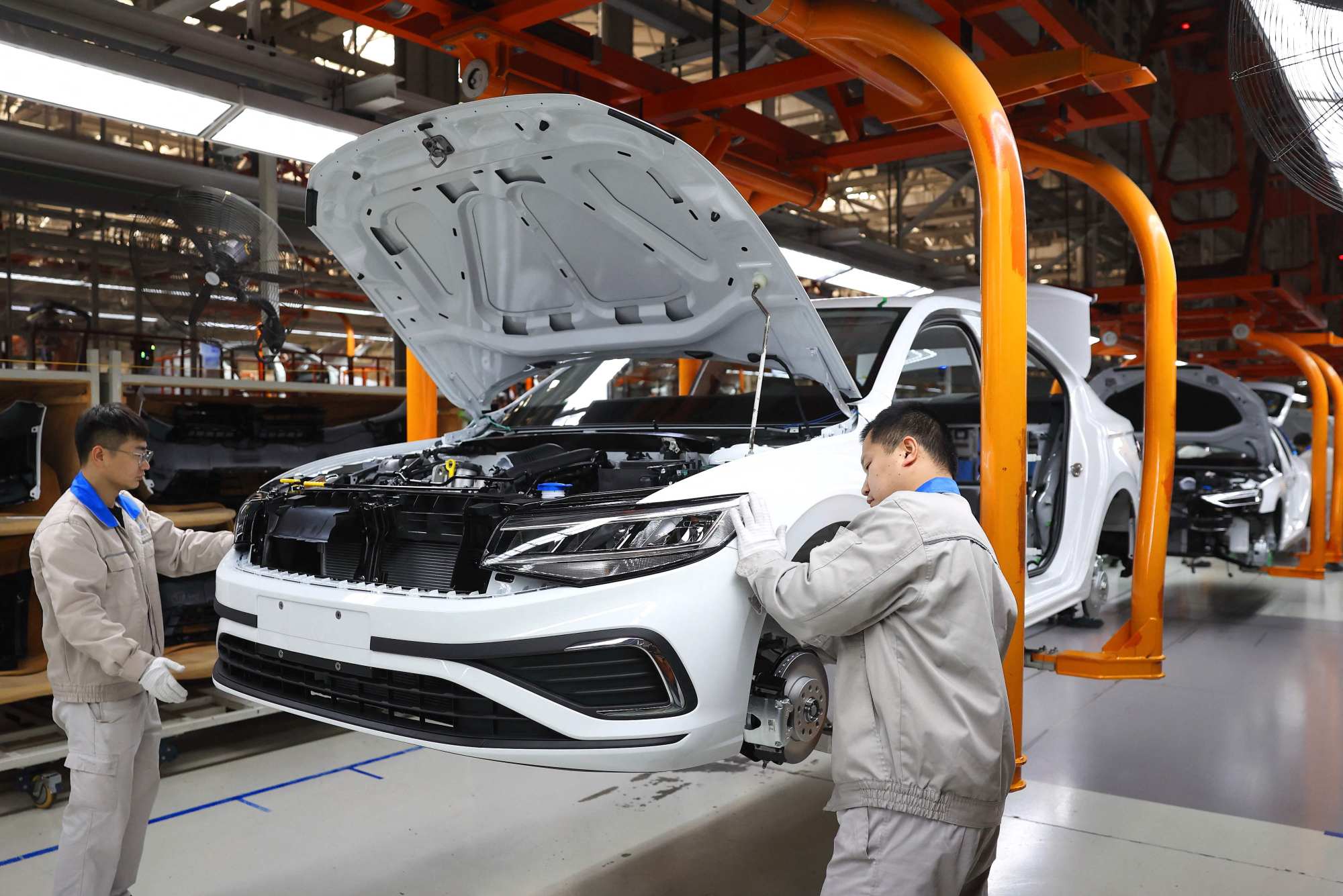
A report in business daily Handelsblatt on Monday said that even Volkswagen, one of Europe’s biggest corporate investors in China, has been telling EU officials that a tough new approach is required.
“VW is now conveying this message: Europe may be in a weak negotiating position vis-a-vis China, but it is the best position for the coming years. Action must be taken now,” the paper reported.
Chancellor Friedrich Merz is reported to be convinced by research blaming the China shock 2.0 for the country’s industrial malaise, even if it is unclear just where he stands on individual measures.
Yet, other arms of the German government are said to be cowed by Beijing’s frequent threats to retaliate.
“Berlin will insist that we need to deepen our dialogue with China, but also we have to make sure that we have all the appropriate instruments if ever necessary,” said a diplomatic source familiar with planning for Thursday’s debate.
Downstream from Germany’s industrial heartlands, manufacturing clusters in Poland, the Czech Republic, Slovakia and Hungary are also in line to be hit by a China shock, economists say.
Poland’s economy is larger than the other three combined and has indicated that it is on board with a more assertive approach.
Last week, Warsaw added its signature to those of Paris, The Hague, Rome and Vilnius, on a policy paper calling for the use of trade safeguards and the creation of a new “resilience instrument” to force companies to diversify their dependency on China.
Even without Spain, which signed and subsequently withdrew its support, that group accounts for 41 per cent of the EU’s population – beyond the threshold of 35 per cent required to defeat a “blocking supermajority” to stop Brussels’ trade defence measures, according to Daniel Kral, an analyst at Oxford Economics.
Thursday’s debate is not expected to produce written conclusions, but it will be a vital barometer of where the cacophony of member states stands after a period of frenzied debate and could reveal a new map of Europe’s China politics.
“Stepped-up trade defences against China are coming,” Kral said. “The question is ‘what’, not ‘if’.” -- South China Morning Post


