
The race for artificial intelligence has hardened into a two-power contest between the United States and China, fought over rare earths, data and the rules governing the technology, with Latin America and Europe sidelined, Brazil’s top foreign policy adviser said on Tuesday.
Celso Amorim, a former foreign and defence minister, made the case at the Forte de Copacabana International Security Conference in Rio de Janeiro, an annual forum run by the Brazilian Centre for International Relations with the Konrad Adenauer Foundation and the European Union’s delegation in Brazil.
“We must recognise that neither Latin America nor Europe is leading the artificial intelligence race. What we see today are two poles, the United States and China,” Amorim said, adding that the gap will have practical consequences as technology “multiplies power, asymmetries and is never neutral”.
Brazil’s answer, in his telling, is to pick neither side but to draw capital and technology from both. The chief architect of President Luiz Inacio Lula da Silva’s foreign policy framed Brics and the Global South as the way to keep that balance.
That balance is harder to keep than it sounds, with the rivalry already crowding in on Brazil. Trump’s state visit to Beijing in May, where AI chips and critical minerals dominated the talks, settled little.
Washington has limited sales of Nvidia’s H200 chips to about 10 Chinese firms and blocked exports of its most advanced processors. Two weeks before the Rio speech, Trump signed an executive order tightening national security rules for AI firms, even as Beijing pushed a rival plan for global governance.
Nowhere is that pressure sharper than in rare earths, the minerals Amorim called “strategic rather than merely economic”. He named their use in chips, batteries, satellites and defence systems, and said any deal had to be weighed against national sovereignty.
“In exploiting them, economic and strategic factors always have to be considered,” he added. “But in the end, the strategic must prevail over the economic.” That principle is now meeting a market Brazil cannot bend to its will.
Brazil holds the world’s second-largest rare earth reserves after China, while Beijing also controls about 91 per cent of global refining, the International Energy Agency says.
Last month Lula told Trump the deposits were open to American, Chinese or any investor willing to refine on Brazilian soil.
His government is moving a critical minerals bill with US$5 billion in tax credits to keep processing at home. But a US company’s US$2.8 billion bid for Serra Verde, the only mine in production, is now being contested in Brazil’s Supreme Court.
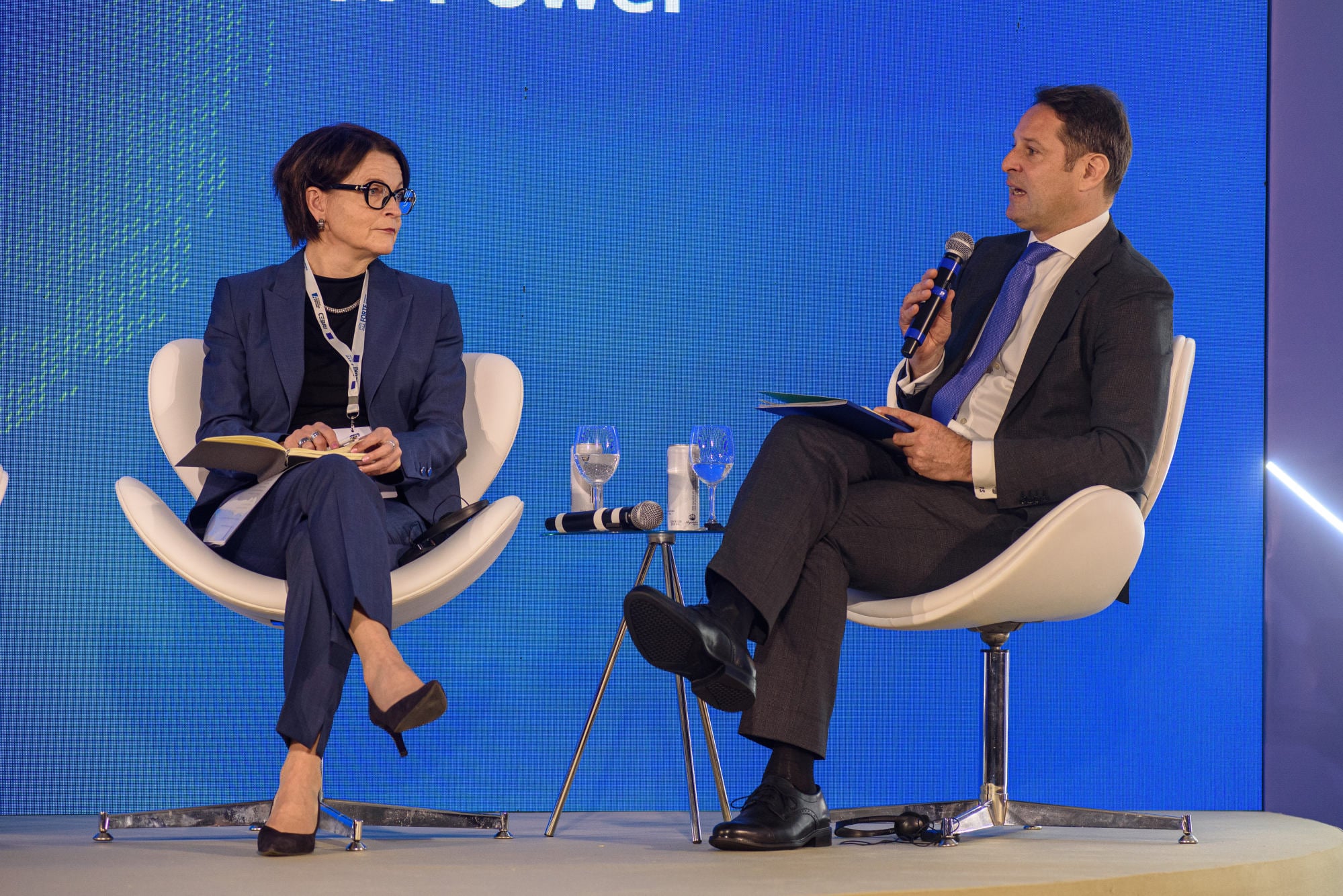
Spreading those bets is the strategy Amorim prescribed, starting with Brics, the bloc anchored by China, Russia, India, South Africa and Brazil.
“Brics is also a subject that has to be addressed, so the Global South can give an adequate response to the new challenges,” he said.
Amorim said he considered Europe and Latin America as natural allies on regulation, governance and AI ethics, two regions outside the race with a shared stake. Brazil would keep betting on both multipolarity and multilateralism, which reinforce each other rather than mean the same thing.
“Brazil remains committed to multipolarity and multilateralism. The two are mutually reinforcing and complementary. However, contrary to popular belief, they are not synonymous,” Amorim explained.
“Multipolarity without multilateralism could lead to a world divided into spheres of influence, or to the Hobbesian notion of a ‘war of all against all’. Conversely, multilateralism without multipolarity can result in the instrumentalisation of international organisations to serve the unilateral, and in many cases, coercive, agendas of major powers.”
Allies outside the race
The allies Amorim invoked were in the room, and they spent the next hour circling the same map.
Henning Speck, chief of staff at Germany’s foreign ministry, gave their concerns a blunter name, a world hardening into “two techno-spheres”, one around Washington and one around Beijing, with both outspending Europe and Latin America simultaneously.
Europe’s word for the way out of this dilemma was sovereignty, though Speck drained it of any of the romance of going it alone.
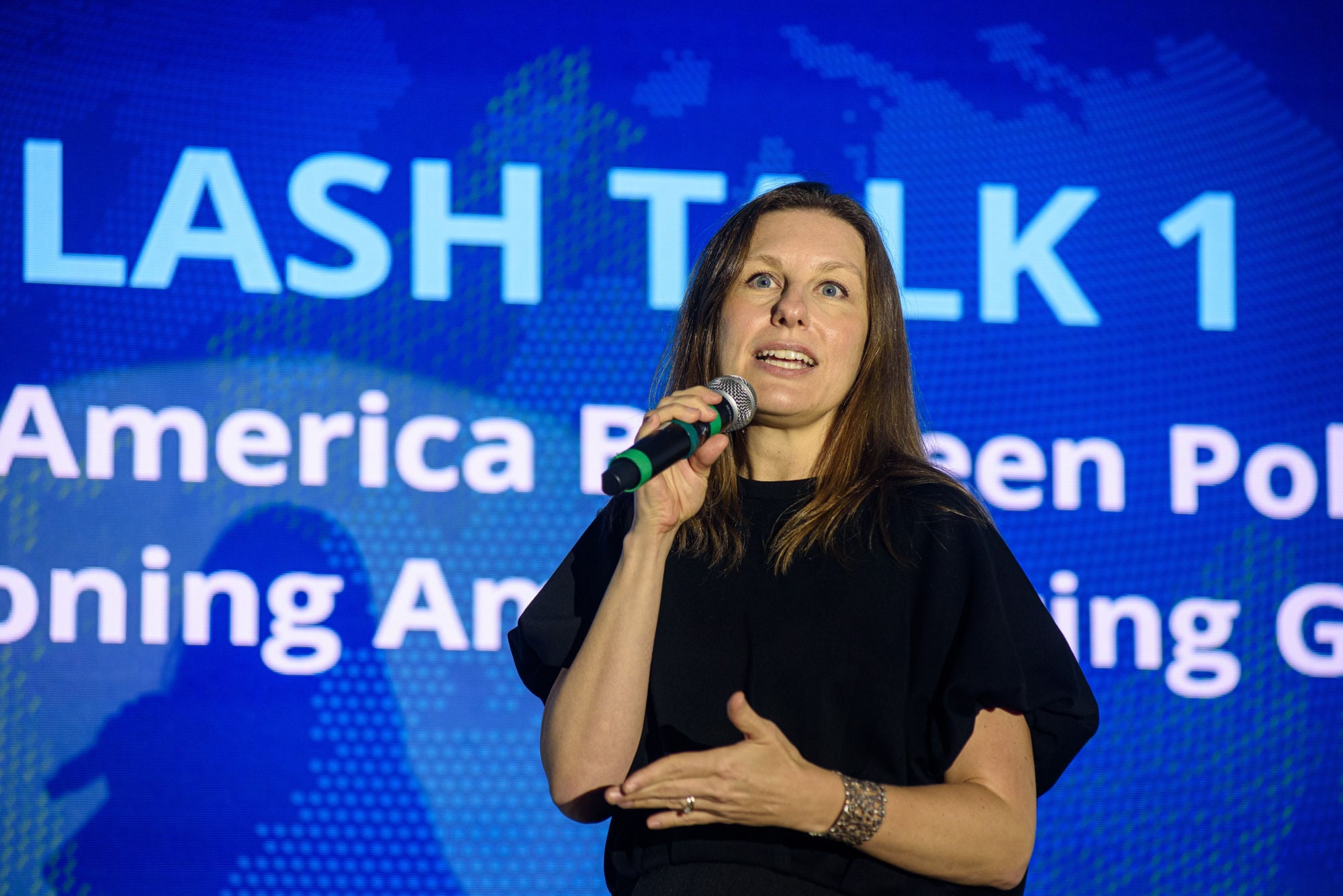
“By sovereign we don’t mean autarky,” he said. “It means controlling your own infrastructure, services and data, and, awkwardly, needing partners to manage it.”
If Speck stripped sovereignty of its loneliness, Anna-Kaisa Heikkinen, a director general at Finland’s Foreign Ministry, that stretched its reach.
It no longer stopped at a border, she said, but ran through the digital plumbing of an economy and the values coded into it. Technology was never only hardware, in her telling, and open, rule-based trade had become an instrument of security as much as a source of growth.
Larissa Wachholz took the argument off the podium and onto the balance sheet. A CEBRI senior fellow and former adviser to Brazil’s agriculture minister, she noted that Brazil is already living the sovereignty the Europeans were sketching out.
“The rules for an investment do not change according to the origin of the capital,” she said. “And it is good that it is so, because otherwise Brazil might be more exposed to pressure over where those exports go.”
That, in her telling, defused the Western worry about Chinese funding.
“If there is concern in the United States or Europe about Chinese capital coming into Brazil, the invitation is for American and European firms to take part too,” she added. -- SOUTH CHINA MORNING POST