




A recent survey in Japan and South Korea has revealed that strategic elites in both countries remain sceptical about developing nuclear weapons.
However, should one of the two countries take the lead in acquiring nuclear weapons, support for such a move in the other country could rise rapidly, according to the survey published on Thursday by Washington-based think tank the Centre for Strategic and International Studies (CSIS).
The impact of such a move could potentially exceed that of a reduction in United States troop deployments in the region, thereby affecting nuclear stability in northeast Asia, CSIS experts said in an event to publish the survey on Thursday.
The survey was led by Victor Cha, president of the geopolitics and foreign policy department and Korea chair at CSIS, and Kristi Govella, CSIS senior adviser and Japan chair.
Respondents of the survey, which ended at the end of October, included current and former government officials, parliamentarians, academics, think tank experts and corporate executives.
According to the survey, 75 per cent of South Korean strategic elites and nearly 80 per cent of Japanese strategic elites expressed opposition to or uncertainty regarding their respective countries acquiring nuclear weapons.
These findings stand in contrast to public opinion polls in South Korea. A 2024 poll commissioned by the Chey Institute for Advanced Studies and conducted by the consultancy firm Gallup showed that over 72 per cent of the South Korean public supported their country possessing nuclear weapons.
In Japan, however, there is no equivalent level of divergence between the elite and the public, according to Govella, who said that existing surveys also show that around 80 per cent of the Japanese public do not support acquiring nuclear weapons, and that media reports have exaggerated the momentum within Japanese decision-making circles to pursue nuclear armament.
However, the survey found that this restraint could be rapidly undermined by policy changes in neighbouring countries.
The survey also revealed that South Korean respondents in favour of nuclear armament primarily sought the ability to deal with North Korea, while Japanese supporters were most concerned about a lack of long-term US commitment.
Before the publication of this survey, the US held bilateral meetings in Seoul earlier this month to advance consultations on nuclear cooperation initiatives with South Korea, followed by an extended deterrence dialogue in Tokyo with Japan.
According to a statement from the US State Department last Tuesday, the US “reaffirmed its commitment to the defence of Japan, using the full range of US defence capabilities, including nuclear”, during the dialogue held last Monday and Tuesday.
On Thursday, the Chinese Foreign Ministry expressed “grave concern” over this, stating that “strengthening cooperation on nuclear deterrence exacerbates the risks of nuclear proliferation and nuclear conflict”.
Beijing has repeatedly accused Tokyo of seeking “remilitarisation”, including the pursuit of nuclear weapons.
On Thursday morning, Brandon Williams, under secretary for nuclear security at the Department of Energy and Administrator of the National Nuclear Security Administration, said at the Hudson Institute that the US must ramp up nuclear weapons production to counter Russia and China.
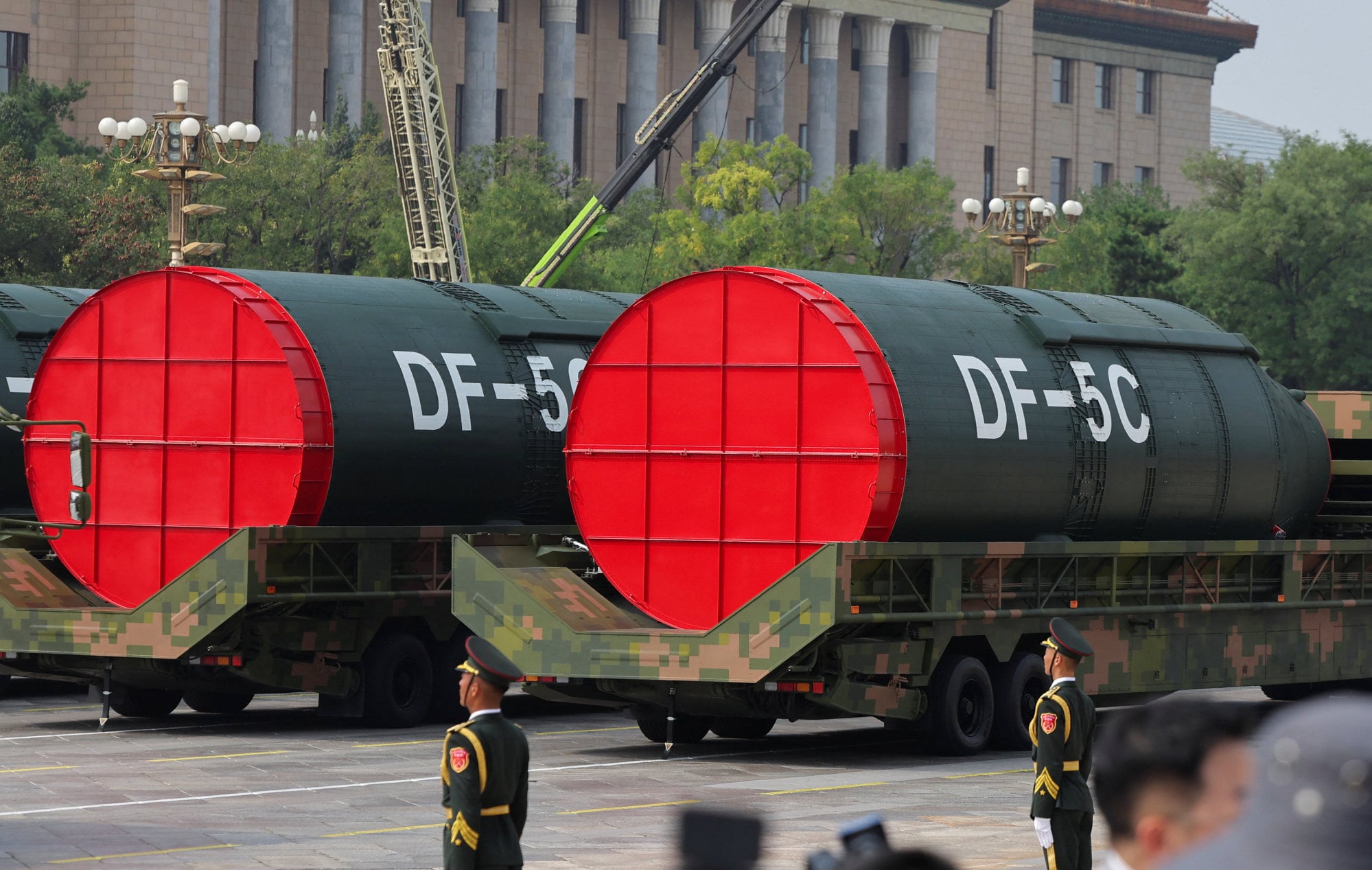
Williams said that his agency planned to invest US$600 million in artificial intelligence this year to drive the digitalisation of nuclear weapons design and production and to shorten the current 10- to 15-year time frame from identifying a need to deploying a new weapon.
In another CSIS discussion on Thursday, experts argued that the US should reconsider its policy of equipping hypersonic weapons exclusively with conventional warheads.
Heather Williams, director of the project on nuclear issues and a senior fellow in the defence and security department at CSIS, said that nuclear hypersonic weapons “should absolutely be in the mix” to increase the US’ strike options and make it more difficult for adversaries to predict its response.
She said that a more credible and diversified US nuclear force would also help reassure allies, as “assured allies are less likely to proliferate” – a view that echoed the findings of the CSIS survey of Japan and South Korea published on the same day.
Washington has been pressing Beijing to join the negotiations for the New Strategic Arms Reduction Treaty (New Start), which expired in February.
China has repeatedly stated that it will not join the arms control agreement between the US and Russia, as its nuclear arsenal is smaller than that of either country, and it has no intention of engaging in an arms race with any nation. -- SOUTH CHINA MORNING POST


