A China-led team of researchers has developed a powerful brain implant electrode array that is as soft as brain tissue, thinner than a strand of hair and more durable than anything before it.
In animal trials, a new flexible brain implant recorded neural activity with unprecedented long-term clarity and remained safely functional inside the body for 18 months.
The breakthrough addressed a major hurdle that had long held back brain-computer interfaces.
Invasive interfaces deliver the clearest and richest neural signals, yet a persistent challenge haunts invasive systems: the inherent mismatch between electrodes and soft brain tissue.
The cortical electrode arrays commonly used today, typically made of platinum or platinum-iridium alloys, offer excellent conductivity but are far stiffer than neural tissue.
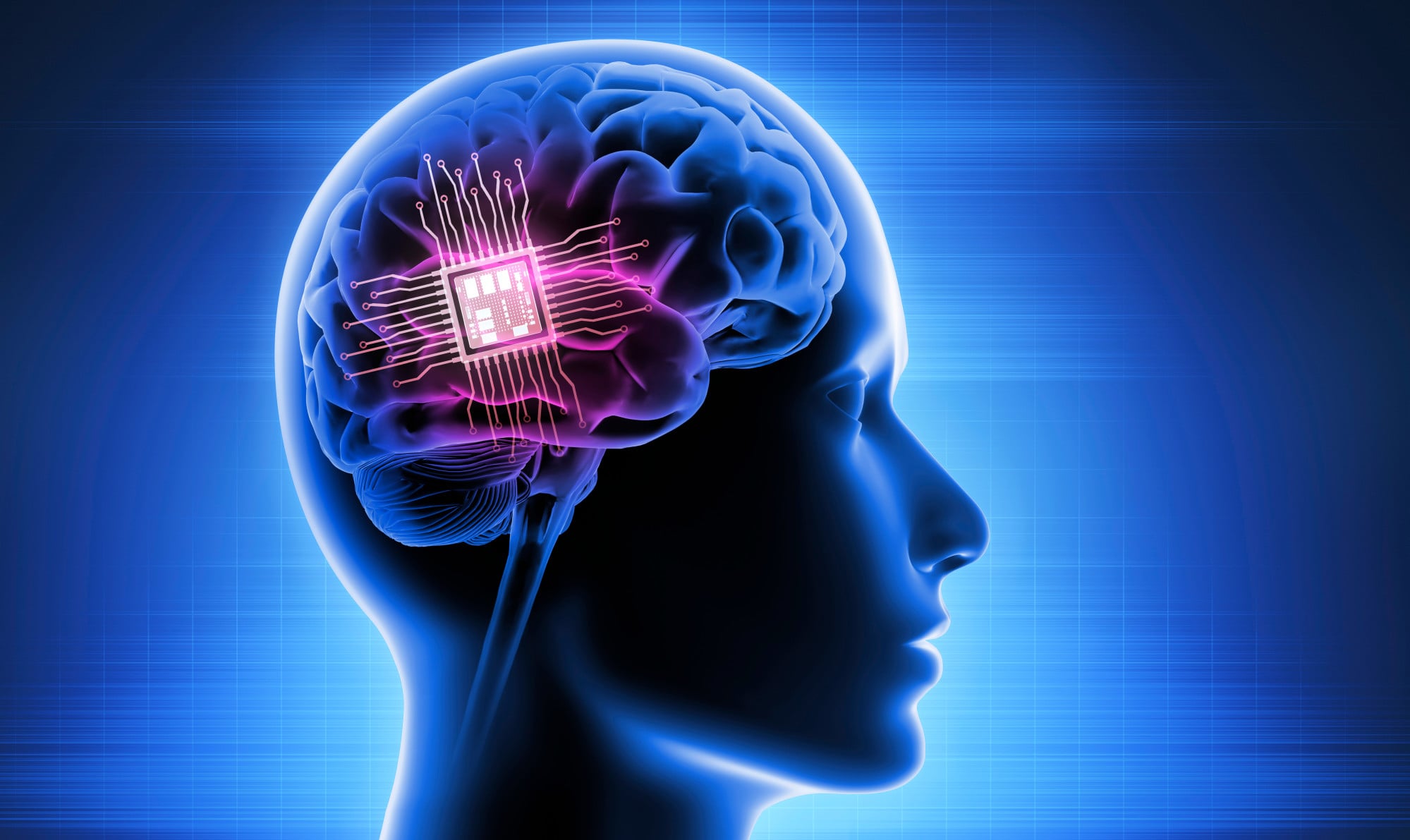
In long-term implantation, such “hard-against-soft” friction induces tiny relative displacements, triggering chronic inflammation and eventually forming scar tissue around the electrodes. The result is a steady decline in signal quality year after year.
Now, a team led by Xu Xiaomin from Tsinghua University’s Shenzhen International Graduate School, with Takao Someya from the University of Tokyo and Li Xiaojian from the Chinese Academy of Sciences’ Shenzhen-Hong Kong Institute of Brain Science, has introduced a material that combines metal-level electrical conductivity with soft-tissue-grade flexibility.
Through customised microfabrication, the team for the first time fashioned this material into a high-density, fully organic neural interface designed for extended service life.
The researchers’ work was published in the peer-reviewed journal PNAS on April 28 and reported by state-run China Science Daily on Wednesday.
Called conductive hydrogel with interfacial percolation (Chip), the material achieves the highest electrical conductivity ever reported for a hydrogel – up to 2,512 S/cm – enabling high-fidelity transmission of faint neural signals.
However, conductivity is only half the battle. Conventional hydrogels tend to swell upon absorbing bodily fluids, distorting microelectrode patterns and altering channel spacing, which severely limits miniaturisation and integration.
To overcome this, the team devised an innovative etching strategy: they pre-anchored the hydrogel onto a rigid parylene substrate to constrain lateral expansion, then performed high-precision photolithography in the dry state.
This ensured the structural integrity of the hydrogel during processing.
Using this technique, they fabricated a 128-channel electrocorticography (ECoG) electrode array just 9 micrometres thick, with a channel density of 853 channels per sq cm – more than 10 times higher than previous hydrogel-only designs.
The new electrode also excels in safety and biocompatibility.
The Chip hydrogel maintained stable electrical performance with less than 4 per cent variation after undergoing 1,000 cycles of 30 per cent tensile strain, which represents the maximum deformation that brain tissue can tolerate.
When the researchers adhered the ECoG array to fresh porcine brain tissue in the lab, it conformed gently to the surface and could be peeled away without causing any tissue damage, showing excellent interfacial adhesion.
For long-term stability, the team implanted Chip-based ECoG arrays into five rabbits.
Over more than 550 days of recording in freely moving animals, the researchers captured stable neural signals, with the signal-to-noise ratio remaining consistently above 94 per cent of its initial value throughout the entire period.
Histological staining after 16 weeks revealed minimal inflammatory response, confirming the system’s long-term biocompatibility.
These methods, the researchers said, could “broaden the use of functional hydrogels across diverse bioelectronic systems”, paving the way for safer, more durable neural interfaces that bring us closer to seamless brain-machine integration. -- SOUTH CHINA MORNING POST