
US President Donald Trump sought on Wednesday to frame his vague arrangement aimed at ending a questionable war as a major win that would bring the conflict to a close, reopen the strategic Strait of Hormuz and prevent Iran from “ever” obtaining a nuclear weapon.
“On Sunday, we reached an agreement with Iran that achieves everything we set out to accomplish, everything and much more,” the US president said at a press conference in France on the sidelines of the Group of 7 (G7) economies.
“When I say permanent, it should be permanent. But if it’s not permanent, they will be bombed,” he added. “I told them, ‘if you don’t adhere to that agreement, we’re going to bomb the hell out of you’.”
Trump’s much-anticipated appearance came as an economically dented world tries to assess how substantive and potentially lasting the Sunday memorandum of understanding (MOU) is, with its terms only released on Wednesday.
An official text of the MOU was released by a senior US official while Trump was speaking, following days of pushback over the administration’s lack of transparency.
According to the 14-point outline, the two sides agreed to “declare the immediate and permanent termination of military operations on all fronts, including in Lebanon”; end the dual blockades and any Iranian claim to charge tolls; and work to return “at least” US$300 billion in seized funds to Tehran.
The agreement is meant to be finalised within 60 days, at which point the two sides would “start negotiations regarding the final deal”.
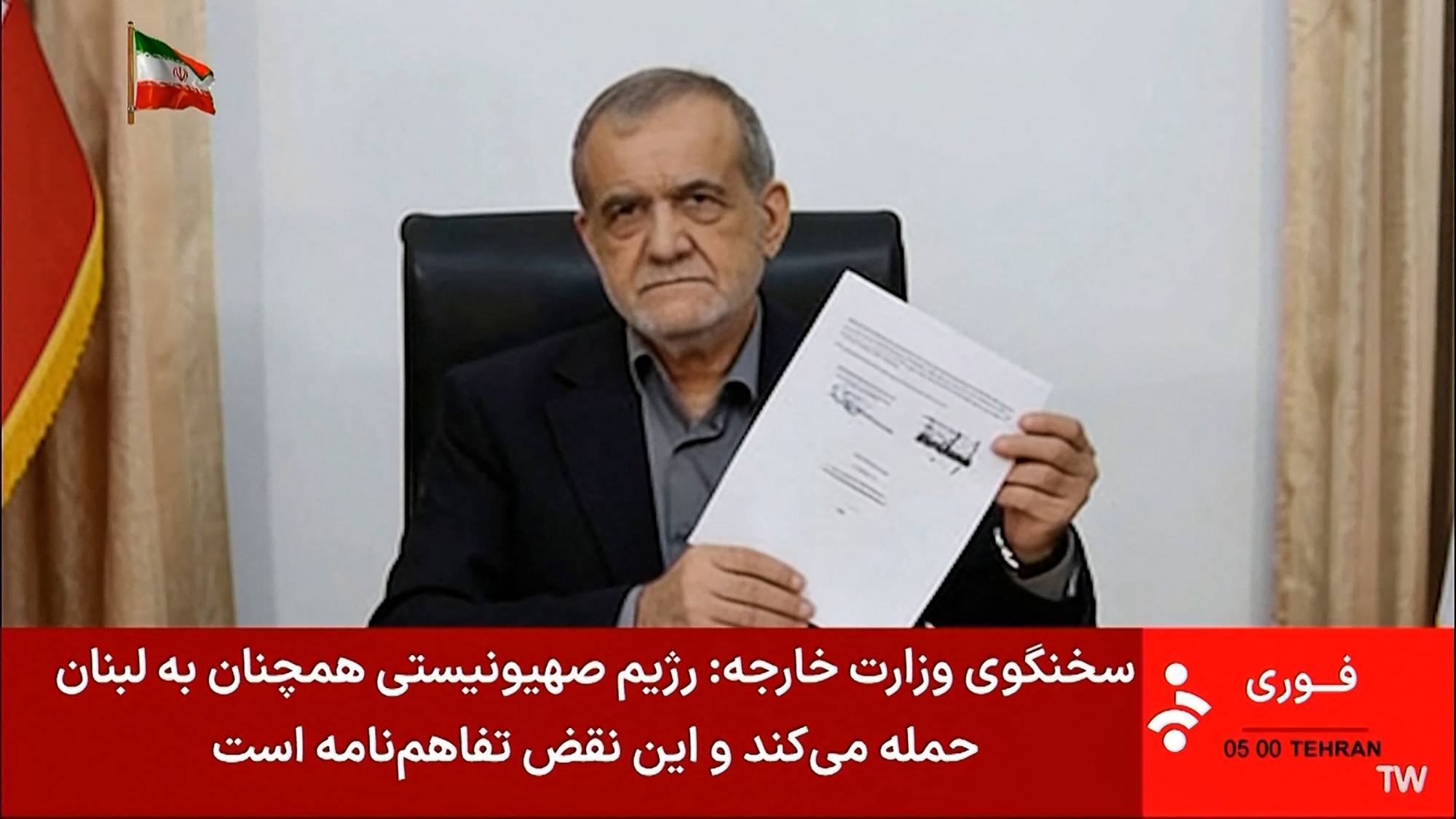
Iranian Foreign Ministry spokesman Esmail Baghaei said on Wednesday that the “Islamabad Memorandum of Understanding was finalised with the signatures of the presidents – now it is time to test the implementation of the agreement,” according to the state news agency IRNA.
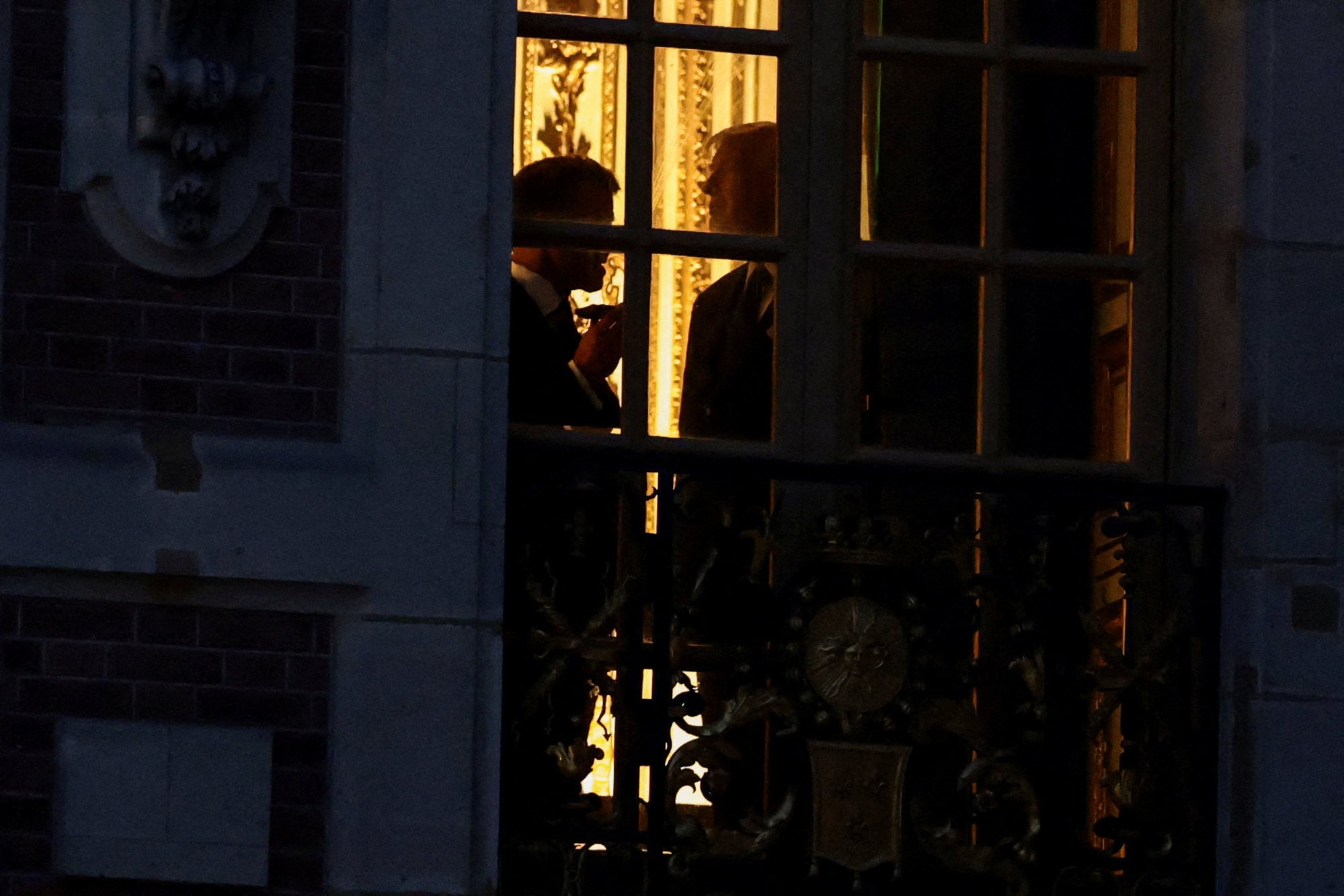
Trump signed the MOU during dinner with French President Emmanuel Macron at the Palace of Versailles.
The US, meanwhile, pledged to “terminate all types of sanctions against the Islamic Republic of Iran, including the United Nations Security Council resolutions”, as well as restrictions on oil sales and access to the US dollar.
Trump also used the opportunity to knock long-standing US military allies, including Japan and the United Kingdom, for not contributing ships and other hardware at the height of the war that he and Israeli Prime Minister Benjamin Netanyahu started.
And he lavished praise on Chinese President Xi Jinping and Russian President Vladimir Putin.
“The Chinese have been terrific,” he said. “They could have been bad. They could’ve sent in, to try and block or break the blockade. They could’ve sent in an oil ship with six destroyers on each side. They didn’t do that.”
Xi “stayed neutral, totally neutral”, he added, while he characterised Putin as “very neutral”.
Trump’s meandering 50-minute speech in Evian-les-Bains interspersed teleprompter language with diversions on building materials, how doughnuts are cooked, California’s electricity grid and illegal drugs “coming through water”, along with his timeworn playbook of rigged elections, the incompetence of past US presidents and mass-murderer immigrants.
Trump’s difficult decision leading up to deal
The days and weeks ahead, as the broad outlines of the deal become clearer, will show whether Trump can turn around, shout down or otherwise blunt growing bipartisan criticism that his costly war achieved little while leaving US national security worse off, exposing vulnerabilities and depleting weapons stockpiles.
In recent weeks, he has faced a difficult dilemma: whether to wrap up the war without, analysts say, achieving many of the objectives he espoused in first launching strikes in late February or halt the political bleeding as even support among his diehard base wanes amid higher fuel prices and a looming midterm election.
Thus, much of his speech was spent arguing that his was a much better deal than the detailed Joint Comprehensive Plan of Action agreement hammered out by former president Barack Obama, which he nixed.
He also said his definitive deal to end Iran’s “nuclear dust” programme was far superior to Obama’s “road to a nuclear weapon” and that the US$300 billion that Iran would receive could not be compared with the financial terms Obama agreed to.
“He loaded up a plane with US$1.7 billion in green cash from banks all over Washington, Maryland and Virginia,” he said. “They were stripped of all that cash, they had no cash for payrolls, all went into a Boeing 757.”
Trump did what appeared to be another turnaround by suggesting that Tehran deserved to have non-nuclear ballistic missiles. “I mean, they have to have some, because other people have some,” he said. “Am I going to let Saudi Arabia have missiles, but they can’t have them?”
Trump’s Iran deal ‘more of a nothing’
Analysts and critics said the proposed agreement was wobbly at best.
“Everything is deferred ... It’s more of a nothing than I thought,” said Jennifer Kavanagh, a senior fellow with the Defence Priorities Foundation. “It provides ample room for spinning the deal as a win, even though it’s not a win.”
She added that the framework was unlikely to find many enthusiastic fans despite Trump’s bravado and salesmanship skills, although it could stop or slow further deterioration in his polling numbers.
The president’s disapproval ratings in the June polling have approached 60 per cent.
“The bottom line is, American voters probably don’t care about nuclear weapons; they do care about gas prices, and it’s not clear that this will be enough to restart the flow of oil or provide immediate relief on prices,” Kavanagh added.
“It will be criticised by all sides. It will be criticised by people who didn’t want this war in the first place,” she said. “It will be criticised by people who want more war.
“The agreement is intentionally ambiguous to give both the US administration and the Iranian regime the room to sell the deal domestically.”
Senator Ted Cruz, the hardline Republican from Texas, quickly weighed in.
“History teaches that giving billions of dollars to theocratic lunatics who want to murder us is not a good idea,” he said, objecting to the release of Iranian funds for reconstruction, diplomatically attributing Trump’s decision to “bad advice”.
Others were less politic.
The deal was the “worst foreign policy blunder in decades”, said Senator Bill Cassidy, a Republican from Louisiana, in a posting on X.
“Iran’s nuclear ambitions were not curbed, and they have learned that threatening the Strait of Hormuz works and will undoubtedly leverage it in the future,” Cassidy added. “Now, Iran gets to build brand-new infrastructure under this deal.”
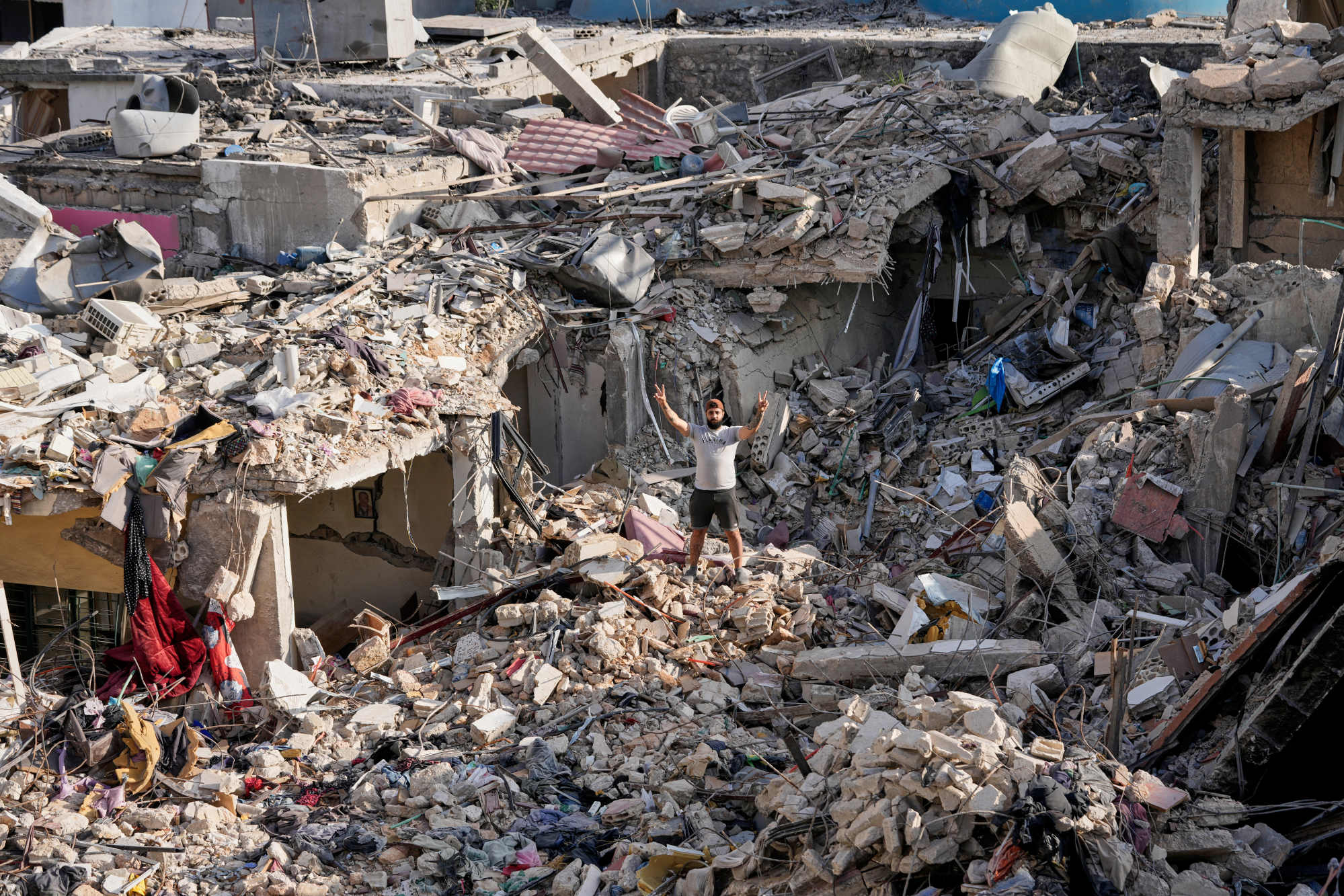
Trump used Wednesday’s press conference to slam Netanyahu, whom he has accused of undercutting his efforts at achieving the ceasefire by continuing to attack Iranian proxy Hezbollah in Lebanon.
Growing tensions and divergent interests between the US and Israel have added to the long list of concerns about the deal’s sustainability.
“He happens to be a very good man,” Trump said, but “he gets a little excited sometimes”.
“Maybe you don’t have to knock down a building every time someone walks into it from Hezbollah,” he added. “We’re the big partner. He’s a very small partner.”
Trump, who is not particularly well known for delegating or sharing the limelight, also joked about US Vice-President J.D. Vance and whether he would pin responsibility on his number two.
“If it works out, I’m going to take the credit,” the mercurial US president said. “If it doesn’t work out, I’m blaming J.D. You better be careful, J.D.” -- SOUTH CHINA MORNING POST