




A US prosecutor’s newly revealed diaries from World War II have laid bare the gruelling effort to document Japanese wartime atrocities in China and the unlikely bond forged between him and the people he helped.
The diaries belonged to David Nelson Sutton, an American assistant prosecutor at the Tokyo Trial, or the International Military Tribunal for the Far East – a landmark international judicial effort.
The tribunal drew upon a vast “evidence wall” comprising nearly 50,000 pages of trial records to dismantle the legal foundations of Japanese militarism and establish the historical record of war crimes in the region.
Six volumes of Sutton’s diaries and a report on the Nanking massacre were donated to the Memorial Hall of the Victims in the Nanking Massacre by Japanese Invaders. They made their public debut on April 29 at a symposium commemorating the 80th anniversary of the Tokyo Trial’s opening on May 3, 1946.
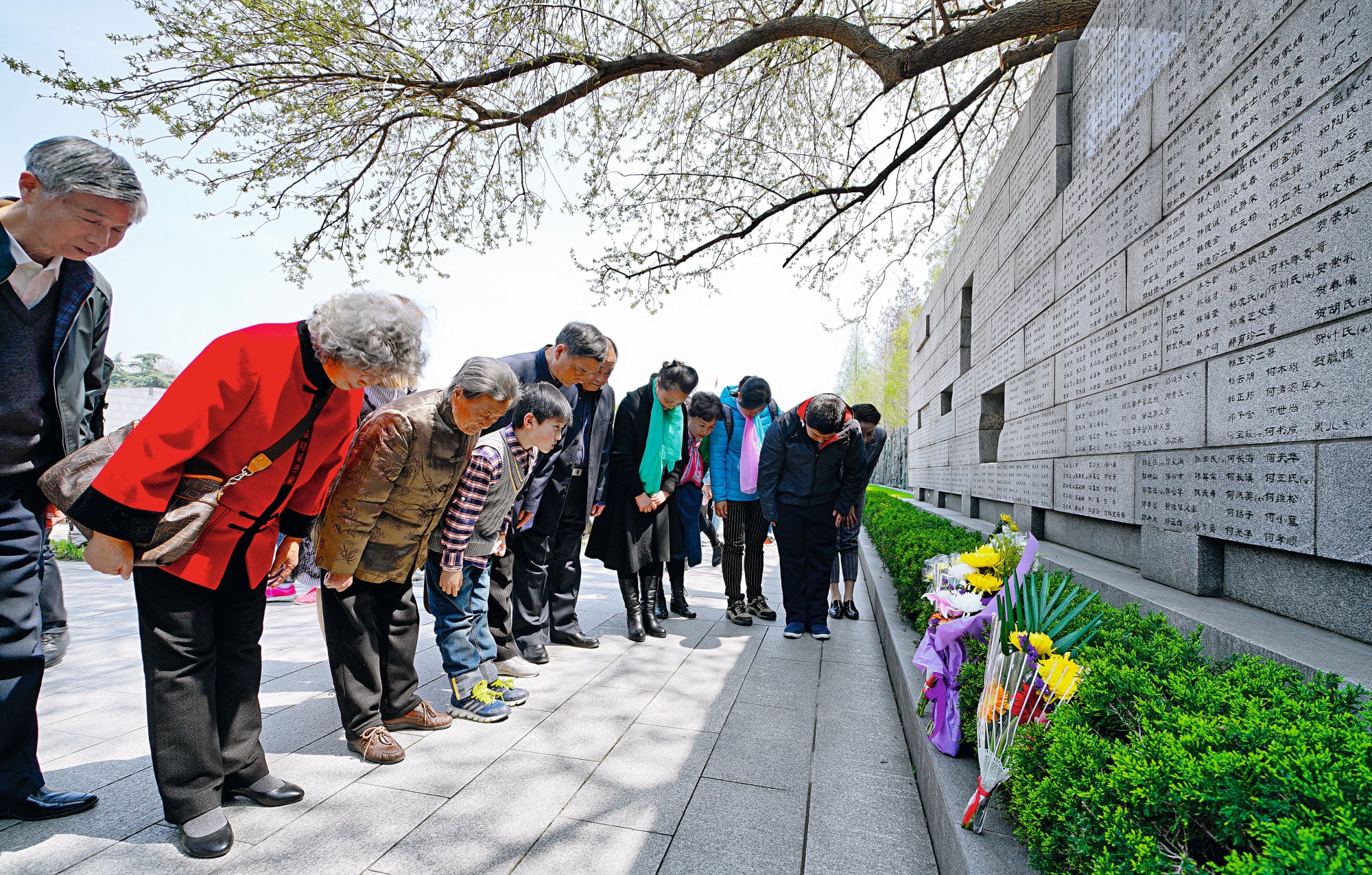
Yang Xiaming, a researcher at the Institute for National Memory and International Peace who has spent 20 years tracking Sutton’s legacy, hailed the archives’ historical significance and Sutton’s pursuit of justice for a country not his own.
“When you read these diaries, you understand the efficiency and the enormous personal sacrifice of the prosecutorial team,” Yang said at the event in Nanjing.
The disclosure of the records came ahead of a high-stakes visit by US President Donald Trump to China amid tense Sino-American relations. It also coincided with Beijing’s calls to remember the Tokyo Trial’s lessons as it sees recent attempts in Japan to erode them.
The archives were acquired at an auction in November last year by Chinese collector and historian Zou Dehuai, who has amassed more than 100,000 wartime historical records and photos.
In recent years, Zou has curated multiple exhibitions worldwide showcasing forgotten instances of friendship between the US and China during the second world war, including of the “Flying Tigers”, an American volunteer group that fought against Japanese forces.
Zou paid over US$100,000 for a set of nine lots on a US-based auction website specialising in military artefacts and later decided to donate them to the memorial hall in Nanjing, saying: “Peace comes at a cost. I hope we can guard this hard-won peace together.”
The Tokyo Trial ran from 1946 to 1948 and was a legal marathon of staggering proportions: 11 countries presided over the indictment of 28 Class-A defendants, resulting in a trial record of nearly 50,000 pages of transcripts.
Yet, behind the official transcripts, the trial amounted to a desperate scramble for proof.
Sutton was an emergency recruit with the task of helping the understaffed Chinese prosecutorial team.
When he arrived in Tokyo in 1946, the 51-year-old lawyer from Virginia found a Japanese military that had systematically burned its operational logs and intimidated witnesses.
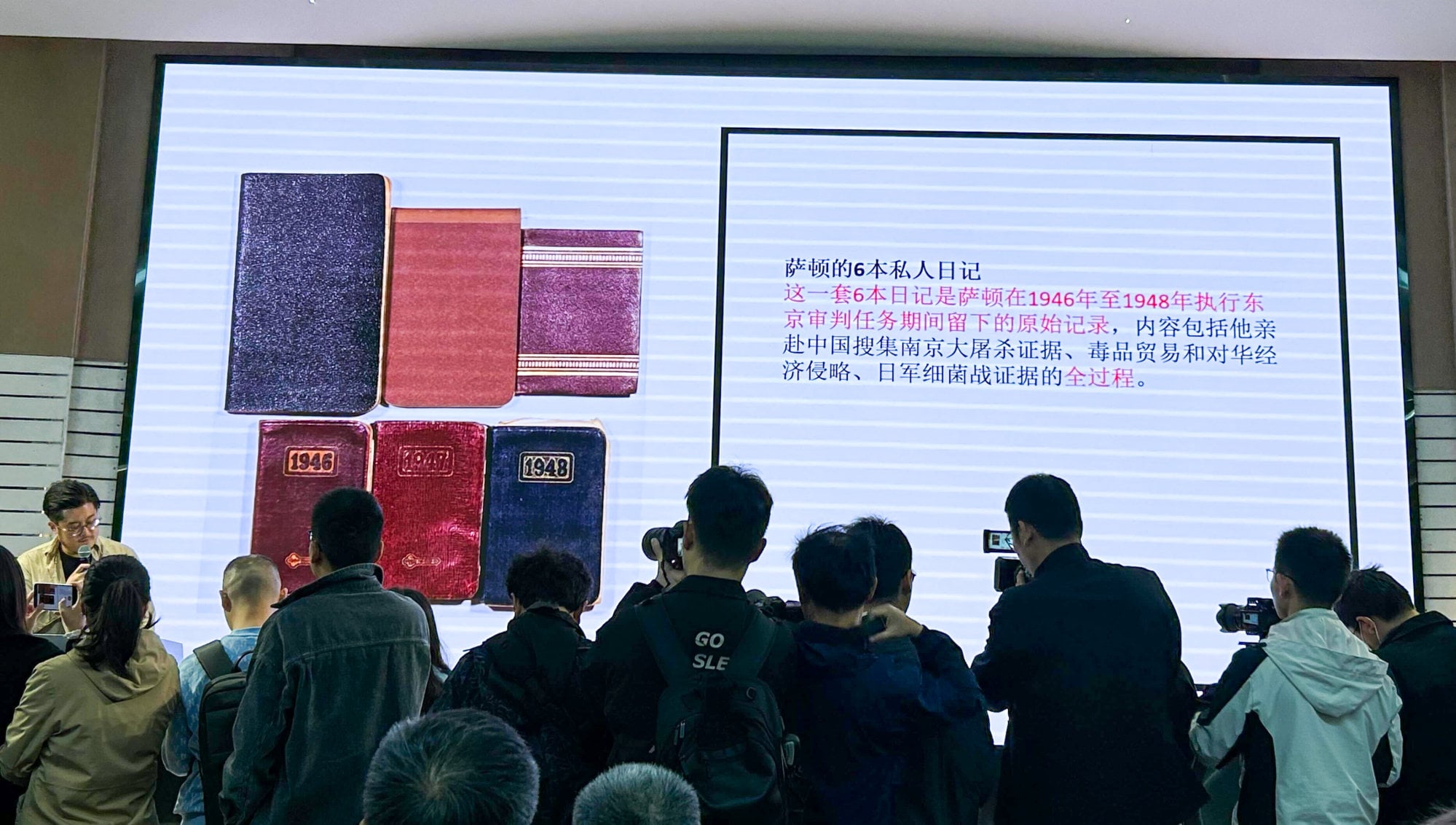
What makes the Sutton papers exceptional is their granular and human texture.
In his diary entry for May 3, 1946, the trial’s first day, Sutton looked at the defendants’ dock, filled with the architects of the “New Order in East Asia” – a manifesto espoused by imperial Japan – and described them as looking like “a pack of insignificant losers”.
With Chinese and American prosecutors working side by side, Sutton used his notebooks to record conversations with important Chinese figures in the trial, among them Mei Ju-ao, a judge; Xiang Zhejun, a prosecutor; and Qiu Shaoheng, Xiang’s assistant.
During the Nanjing symposium in April, Xiang Longwan, Xiang Zhejun’s youngest son and an honorary director of the Tokyo Trial Research Centre at Shanghai Jiao Tong University, recalled the bond between his father and the American lawyer.
“Mr Sutton came to China multiple times to investigate, often with my father and Mr Qiu,” Xiang Longwan said.
“From these archives, we even see that in Shanghai he invited my mother to dinner.
“This wasn’t just a professional partnership. They were true friends.”
The diaries chronicle the punishing nature of the prosecution’s work between 1946 and 1948. According to researchers, Sutton’s team would routinely go to bed at 3am after interrogating Japanese war criminals held in China. On a single frantic tour, they travelled to Shanghai, Beijing, Chongqing and Nanjing and interviewed 125 witnesses.
The diaries also include images from multiple Chinese cities as Sutton gathered evidence of atrocities.
Yang said Sutton took exceptionally clear photographs of witnesses who testified about the Nanking massacre, images now used in the memorial hall’s permanent exhibition in Nanjing.
He added that the files included the report “Report from China: Atrocities against Civilians, Nanking Massacre and Dictatorship”, which was instrumental to the prosecution’s case and ensured that witnesses such as John Magee, an American missionary who filmed the Nanking massacre, were brought to Tokyo to testify.
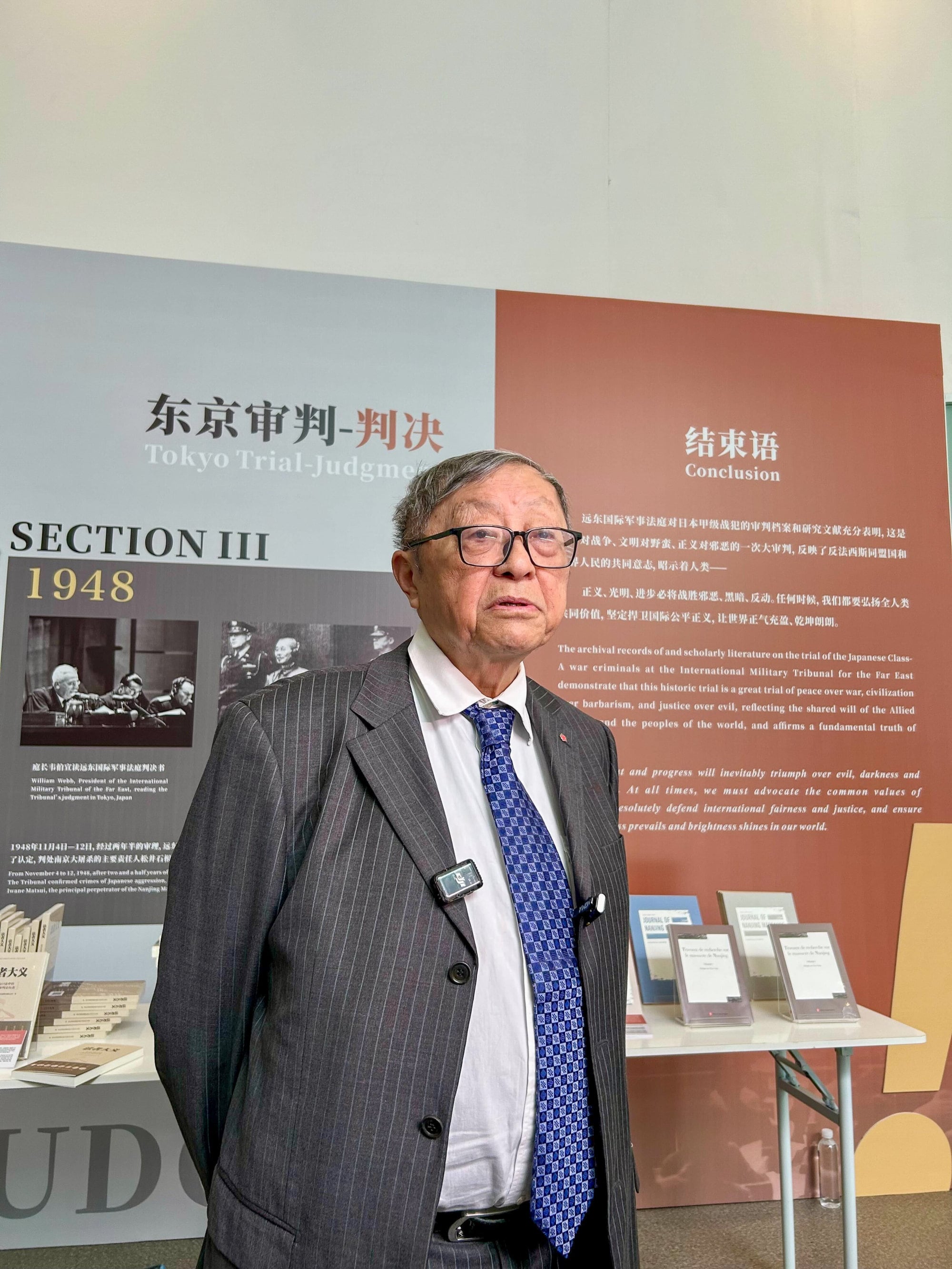
The symposium in April also recalled other witnesses, with remarks by Eric Foster, nephew of American journalist Edgar Snow – the author of Red Star Over China, which documented Chinese determination to fight the Japanese – and a video address from John Magee’s grandson, Chris Magee.
Speaking at the event, Einar Tangen, a senior researcher with the Centre for International Governance Innovation, argued that the Tokyo Trial ultimately resulted in “incomplete justice” because the prosecution was overwhelmed by the “sheer scale of Japanese criminality” and the military’s systematic destruction of documentary evidence.
Tangen said that despite investigating nearly 96,000 separate cases of war crimes between 1945 and 1946, the overstretched and under-resourced legal team could only process 650 witness statements, effectively sidelining nearly 100,000 documented atrocities owing to a “bureaucratic morass”.
This systemic failure was compounded by political constraints, he added, notably the US’ decision to shield Japan’s emperor from prosecution and grant immunity to the architects of biological warfare, such as the researchers of Unit 731, in exchange for their data.
According to Yang, Sutton was one of the few Western prosecutors who from the start took the allegations of biological warfare seriously.
Sutton met with Robert Borcic, an Austrian health expert, as well as Chinese scientists in Chongqing to document how Japanese aircraft had dropped plague-infected grain over various cities.
“I can conclude from the notes that Sutton never truly gave up,” Yang said. “He was still discussing these crimes just days before he took a leave of absence to visit his ailing mother in the US.”
Tangen asserted that the premature endings and calculated cover-ups prevented Japan from undergoing the kind of Vergangenheitsbewaltigung – “coming to terms with the past” – that Germany experienced.
“Japan remains unreconciled with its wartime past,” he said, adding that its modern tensions with neighbours arising from the Yasukuni Shrine controversy, revised history textbooks, as well as ongoing territorial disputes with China and South Korea, all traced their origins to such limited accountability.
Relations between Tokyo and Beijing have languished since November last year, when Japanese Prime Minister Sanae Takaichi suggested that Japan might intervene militarily if Taiwan were attacked.
Beijing sees Taiwan as part of China to be reunited by force if necessary. Most countries, including the US and Japan, do not recognise Taiwan as an independent state, but Washington is opposed to any attempt to take the self-ruled island by force and is committed to supplying it with weapons.
Beijing has become increasingly vocal about the Tokyo Trial as the legal bedrock of the post-war order, particularly as Japan moves towards “re-militarisation” and right-wing politicians question its validity.
In May, China’s foreign ministry said in a statement marking the trial’s 80th anniversary that the “poisonous legacy” of militarism was resurfacing, with Japanese right-wing factions actively denying and distorting historical facts and glorifying past crimes through the manipulation of textbooks.
This revisionist spirit has emboldened officials to worship Class-A war criminals at the Yasukuni Shrine and led to a dangerous “re-militarisation” that includes rearming the defence industry and seeking to amend Japan’s pacifist constitution, according to the statement.
“The Tokyo Trial and the Nuremberg trials together nailed the fascist war criminals to the pillar of shame in history,” it added.
“The historical justice carried by these two trials cannot be negated, their legal effect cannot be challenged and the cornerstone of the post-war international order they laid cannot be shaken.”
In a speech at the Shangri-La Dialogue in Singapore in late May, Major General Meng Xiangqing, head of the Chinese delegation to the annual Asian defence and security summit, reaffirmed the significance of the Tokyo Trial.
Meng warned about Japan’s recent military expansion as it pushes to increase arms exports and deepen defence ties with the Philippines, Australia and New Zealand.
“For a country that has not thoroughly eradicated the roots of its militarist past, I deeply question whether it [Japan] can win the trust of the international community, especially of the Asian countries it once invaded, while speaking at international forums about defence cooperation,” Meng added.
Yet, a day later at the Shangri-La Dialogue, Japanese Defence Minister Shinjiro Koizumi rejected the “new militarism” label.
Koizumi said Japan’s defence policy and military build-up were not based on viewing any specific country or region as a threat, nor were they intended to lead to military confrontation. -- SOUTH CHINA MORNING POST


