




Taiwan’s main opposition leader hailed US President Donald Trump’s recent comments opposing the island’s independence as a “relatively positive first step” towards reducing tensions.
Cheng Li-wun, chairwoman of the Kuomintang (KMT), told the South China Morning Post on Sunday in an exclusive interview: “The ‘one China’ principle and opposition to Taiwan independence have always been the Kuomintang’s stance.
“On this political basis, the status quo across the Taiwan Strait can be maintained, and the likelihood of war can be minimised.”
Cheng, who is currently visiting the United States, said Washington’s stance was “crucial” in her aspiration to transform the “first island chain” into a “chain of peace and prosperity”.
Cheng’s trip to the US came just over two weeks after Chinese President Xi Jinping met Trump in Beijing and warned his American counterpart that any mishandling of the Taiwan issue could lead to a “very dangerous situation”.
Trump said after the Beijing summit that he was not looking to have “someone go independent”, adding: “You know, we’re supposed to travel 9,500 miles [15,300 km] to fight a war. I’m not looking for that.”
Cheng described Trump’s statement as a “clear and effective message that he hopes Taiwanese independence will not become a source of regional tension or a potential trigger for war”.
Cheng said the “one China” principle was already enshrined in Taiwan’s constitution, and therefore her position was “fully in line” with the document. She also insisted that her position was consistent with Washington’s official stance.
After its defeat in the civil war in 1949, the KMT fled to Taiwan, which is officially called the Republic of China. The Communist Party of China proclaimed the People’s Republic of China in 1949 and in 1971 took up China’s seat at the United Nations.
Beijing sees Taiwan as part of China to be reunited by force if necessary. Most countries, including the United States, do not recognise Taiwan as an independent nation, but Washington opposes any attempt to seize the self-governing island by force and has pledged to supply it with weapons.
Beijing also maintains that the political foundation for cross-strait dialogue lies in opposing Taiwan independence and upholding the “1992 consensus”, a verbal agreement in which both sides acknowledged there is only one China but that each has its own interpretation of what one China is.
Cheng said any move to “change the status quo” had to “be in line with the wishes of the people on both sides of the strait”.
“This, of course, includes the wishes and attitudes of the people of Taiwan,” Cheng said.
She also criticised the ruling Democratic Progressive Party (DPP) administration, saying it had “made the situation in the Taiwan Strait extremely tense”.
Cross-strait relations have deteriorated since the independence-leaning DPP came to power in 2016 and worsened further when William Lai Ching-te was elected as Taiwanese leader in 2024.
Cheng said that, in terms of easing cross-strait relations, she hoped to launch a regular “party-to-party exchange and dialogue mechanism” between the KMT and the Communist Party.
Cheng insisted that “to maintain peace across the Taiwan Strait, the Kuomintang must regain power”.
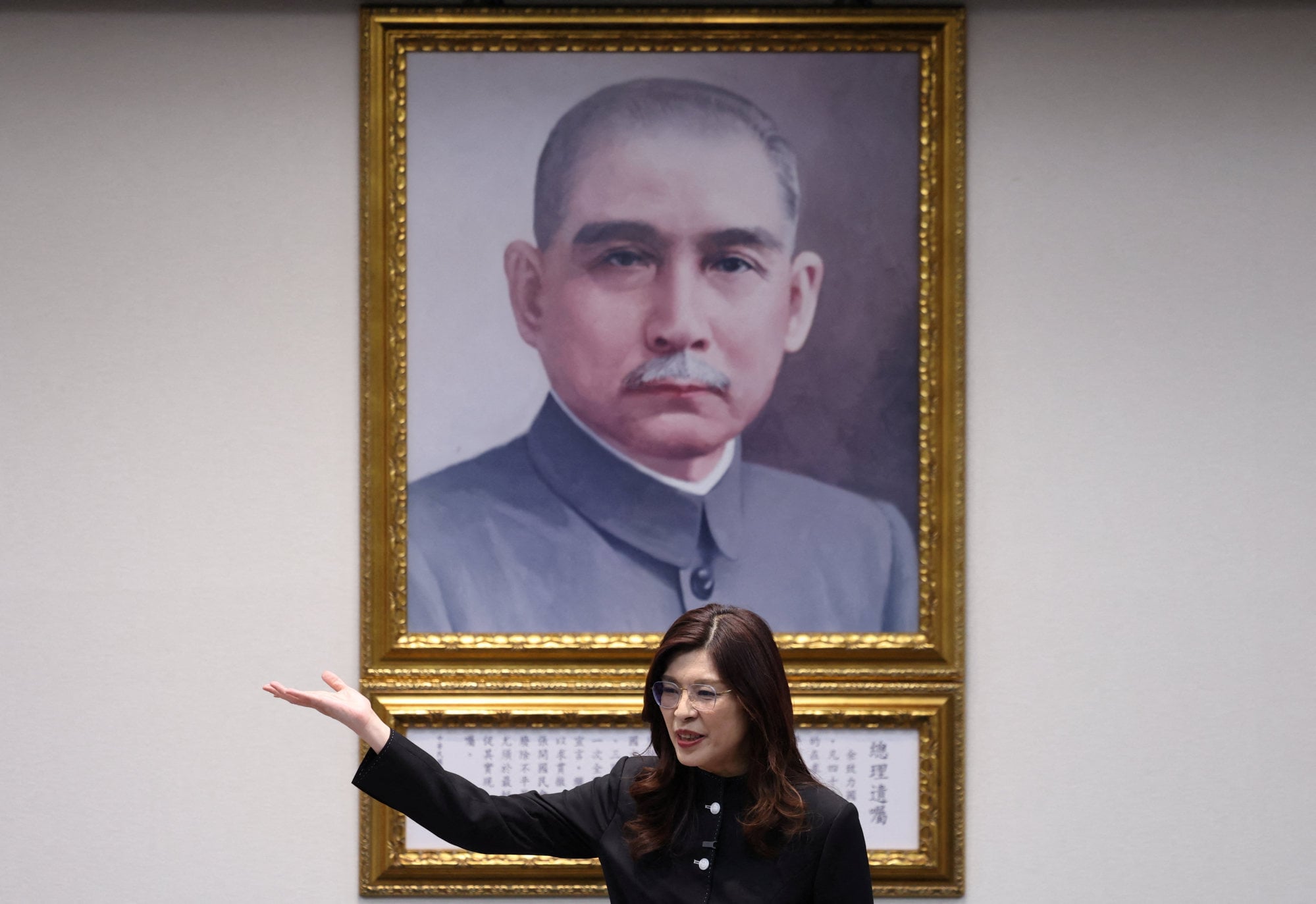
When asked if she plans to run for Taiwan’s leadership as the KMT candidate in 2028, Cheng replied: “I haven’t been thinking about that.”
Cheng said she hoped to “lead the Kuomintang” to victory in this year’s local elections and the 2028 presidential vote.
She also reiterated her proposal that Taiwan should serve as a “bridge” between Beijing and Washington, saying that this “would help the world move towards peace and reconciliation rather than confrontation and conflict”.
Cheng’s visit to the US is the first trip to the country for a KMT chairperson in two years.
She made a high-profile visit to mainland China in April, where she met Communist Party leader Xi Jinping, the first time a KMT chief had done so in almost a decade.
Cheng said that the American scholars and analysts she had met on her current trip were quite interested in her meeting with Xi.
Cheng did not directly address the issue of US arms sales to Taiwan, saying only that she believed the Trump administration was still considering the matter.
Beijing has consistently urged Washington to end arms sales to Taiwan. It was successful in demanding the US suspend the approval of arms sales to Taiwan around the time of Trump’s visit to Beijing.
US Secretary of Defence Pete Hegseth told the Shangri-La Dialogue in Singapore late last month that any decision regarding future arms sales to Taiwan would rest with Trump, although he insisted that US policy had not changed.
Washington has also repeatedly urged Taipei to increase its defence budget.
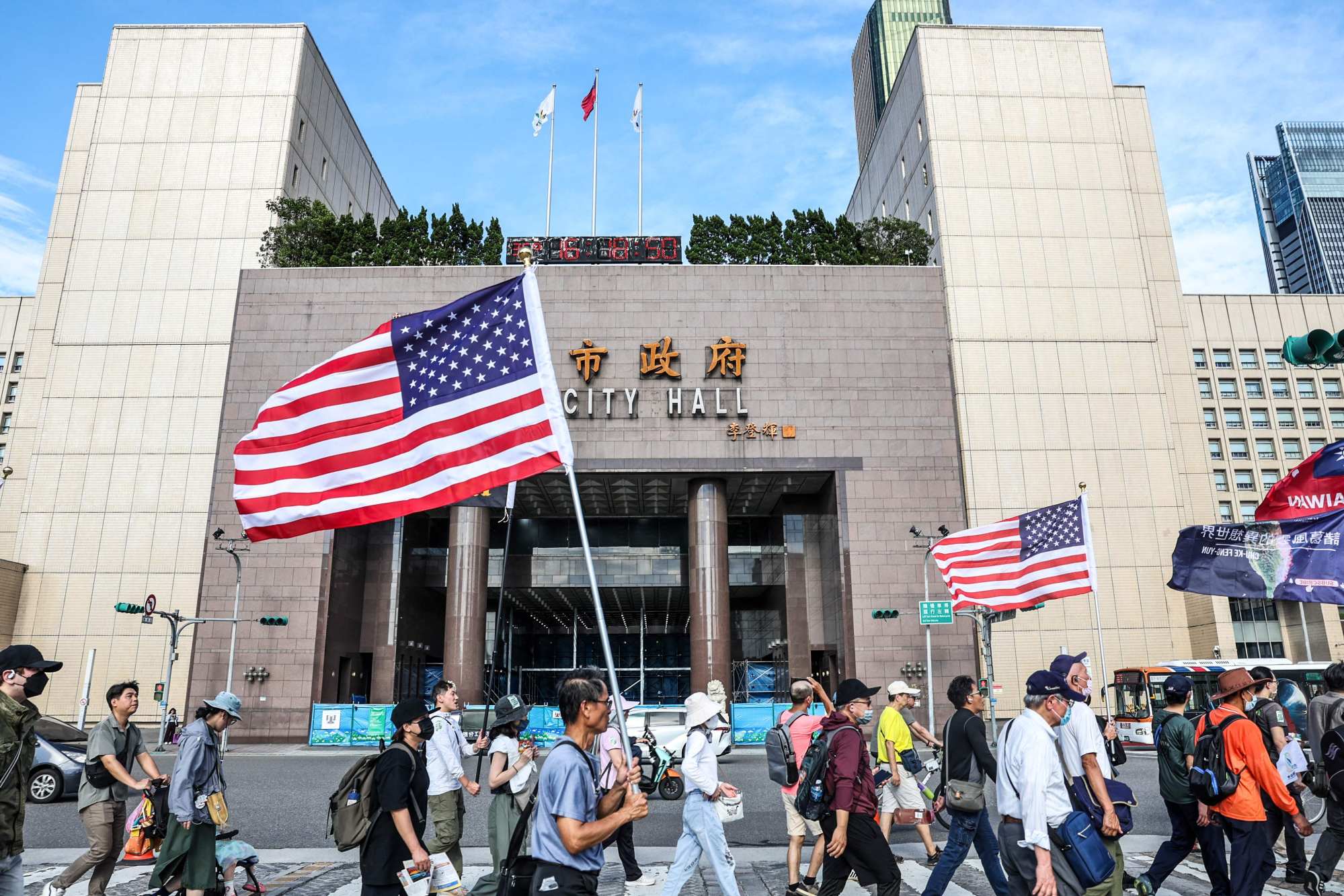
Cheng has shown flexibility on this issue, backing a larger special defence budget than she previously proposed – a move many analysts believe was prompted by pressure from Washington – and arguing that US arms sales should be handled on a case-by-case basis.
In early May, the KMT backed a NT$780 billion (US$26 billion) special defence budget, which was significantly less than the DPP’s proposed NT$1.25 trillion but more than double the budget Cheng had previously called for.
Regarding the recently announced talks between Japan and the Philippines on maritime boundary demarcation, Cheng said cooperation between the two countries “should not bypass Taiwan”.
She added that Tokyo and Manila had not consulted Taipei, yet Lai’s government had “turned a blind eye”, which constituted a “serious dereliction of duty”.
Late last month, the two countries said they would begin formal negotiations to demarcate their respective exclusive economic zones and continental shelves – areas that may overlap with Taiwan’s waters.
Beijing denounced the talks as “illegal and invalid” and later responded by sending its coastguard into the waters east of Taiwan.
Cheng left Boston on Saturday and headed to New York. Before that, she also visited San Francisco.
She is expected to arrive in Washington on Tuesday, where she will meet as-yet-unidentified politicians and scholars. -- SOUTH CHINA MORNING POST


