




The United States will hit Iran “very hard tonight” and will soon take control of the Middle Eastern country’s oil and gas infrastructure and markets, President Donald Trump said on Thursday.
“At some point in the not too distant future, we will be taking Kharg Island, and other oil infrastructure points, and assume total control of their Oil and Gas Markets, much like we have with Venezuela,” Trump said on social media.
Trump gave no details of how the US would seize Iran’s oil terminals, but any such operation would almost certainly require the involvement of US ground troops.
His threat came as the US carried out strikes for a second straight day on Wednesday, and the Treasury Department slapped fresh sanctions on entities that it says “have supported weapons procurement” on behalf of Tehran, including some in mainland China and Hong Kong.
“We hit them hard yesterday and we’re going to hit them again hard today,” Trump earlier told reporters at the White House.
“We’ll see what happens with the deal. We’re really close to a deal but they keep tapping us along. They keep playing us for suckers.”
Trump’s warning preceded an announcement by the US Central Command (CENTCOM) that it launched strikes at 5.15pm Eastern Time against “multiple targets” in Iran, further testing a two-month ceasefire. “The strikes are in response to Iran’s unwarranted and continued aggression,” CENTCOM said on social media.
Earlier in the day, US forces fired on the Palau-flagged Settebello for allegedly attempting to transport Iranian oil in violation of the US blockade on the country’s ports. On Thursday, New Delhi confirmed that three Indian sailors aboard the vessel died in the incident.
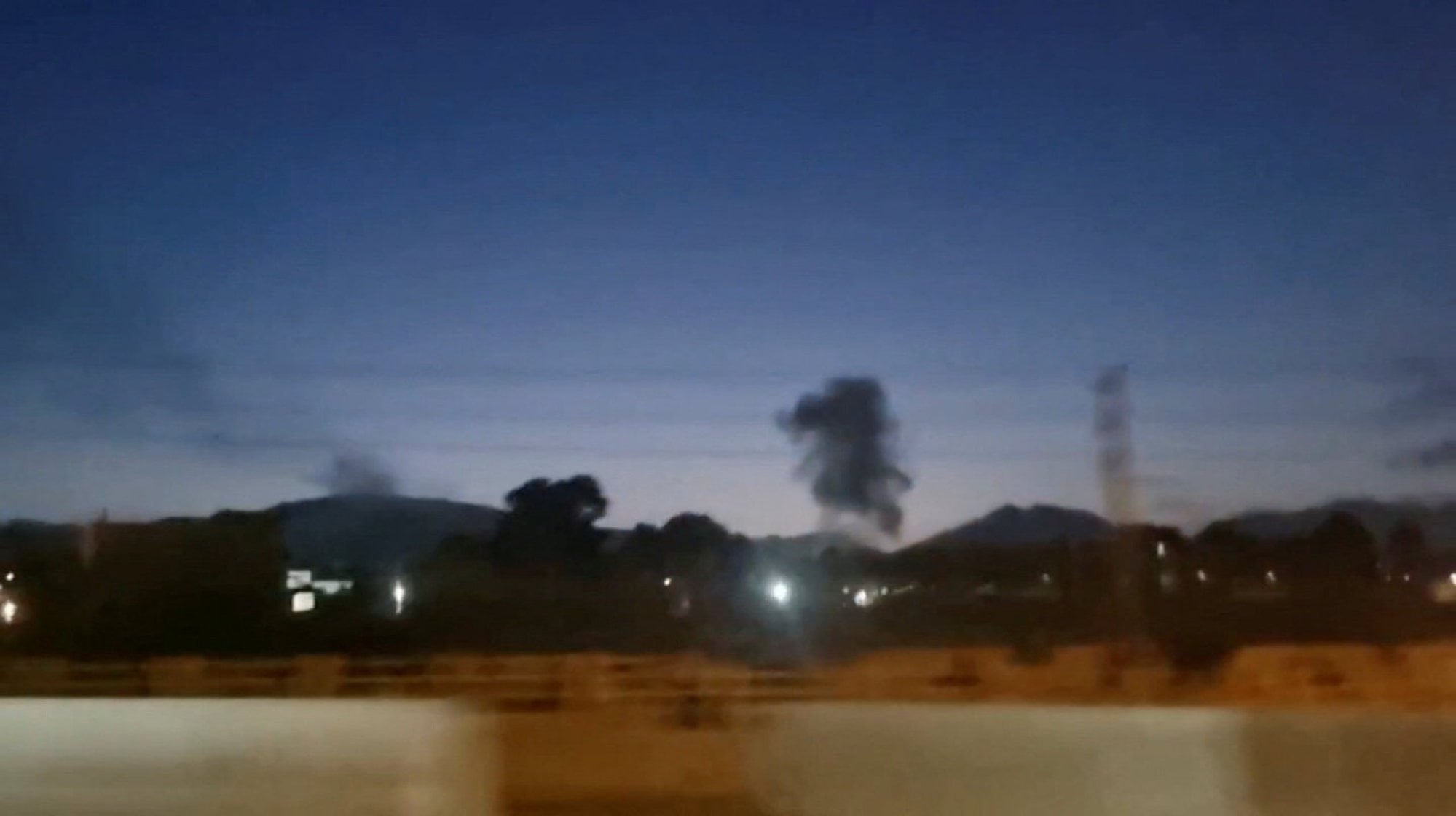
Iranian media reported explosions in several cities, including Sirik, Kargan, Bandar Abbas, Minab, Varamin and Karaj.
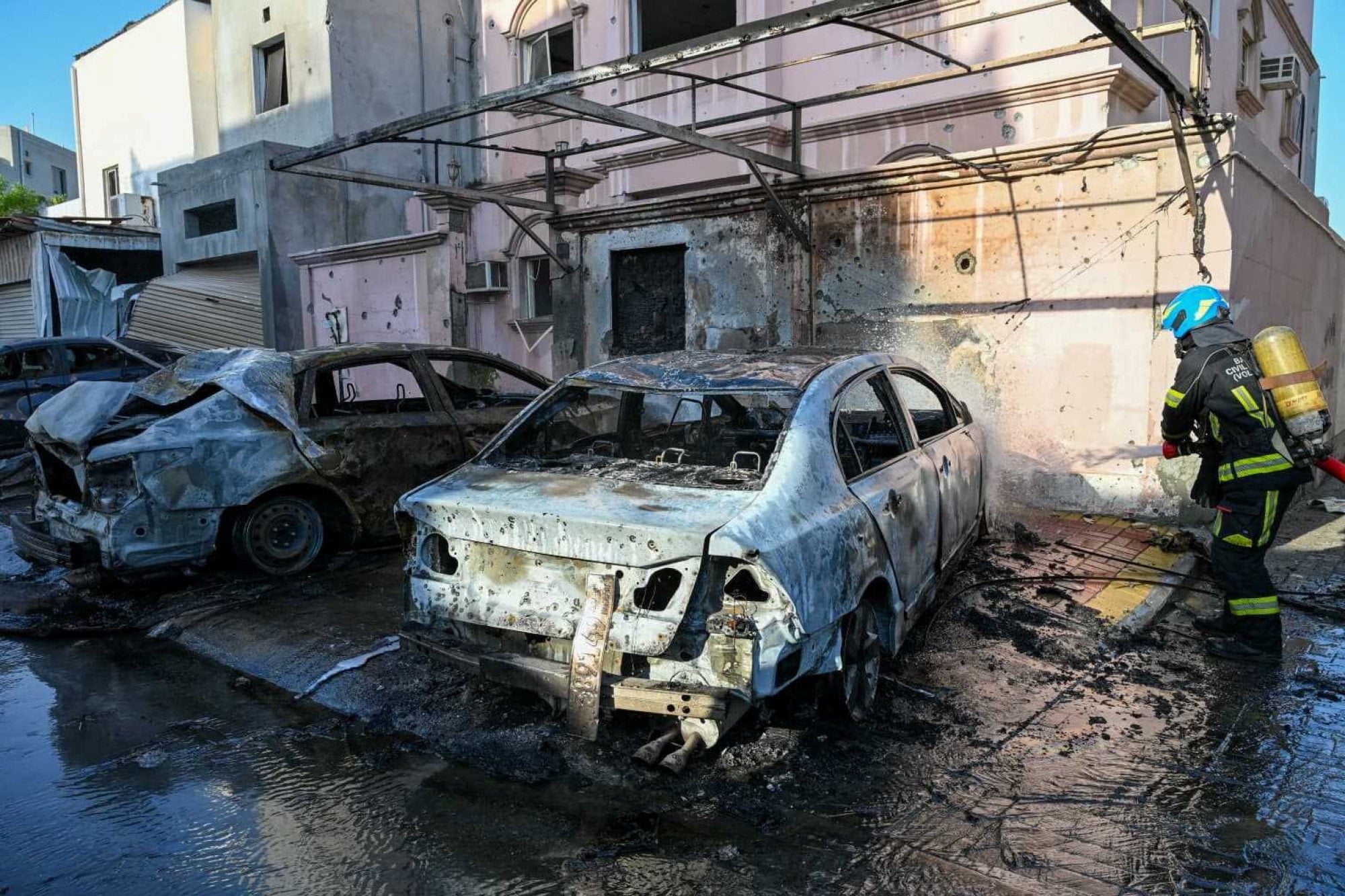
In response, Iran’s Islamic Revolutionary Guard Corps (IRGC) said on Thursday it had launched counter-attacks against military targets in Kuwait, Bahrain and Jordan, which it had done also on Tuesday. The Gulf states host US forces, and Bahrain is home to the US Navy’s 5th Fleet.
Jordan said it intercepted 20 Iranian missiles in the latest attack, while Bahrain said an 11-year-old girl was hurt and cars and homes were damaged by “falling debris”. Kuwait said it briefly closed its airspace.
Iran’s military command also declared it would target any maritime traffic attempting to transit the Strait of Hormuz, after its forces fired upon two merchant vessels attempting to pass through the strategic chokepoint. The strait is now “completely closed” to all types of vessels, the command said, according to Tasnim news agency.
That declaration directly challenged a social media post by Trump earlier on Wednesday, in which he claimed that more than 100 million barrels of oil and 200 commercial ships had “safely travelled” through the Strait of Hormuz since he approved “a secret mission” to support tankers on their passage.
Iran has maintained a stranglehold on the strait since this war broke out in late February, forcing energy prices up globally, but it has allowed some vessels to pass in recent weeks. The US, meanwhile, has enforced a sweeping blockade on Iranian crude oil shipments.
The flare-up followed Tuesday’s US strikes against Iranian military targets near the strait, which CENTCOM said was an act of self-defence after a US military helicopter was downed near Oman. Bahrain, Kuwait and Jordan defended against incoming aerial targets from Iran.
The second consecutive day of fire on Wednesday further threatened the fragile ceasefire reached in April and cast fresh doubts on efforts to end conflict in the Middle East, which also involves US ally Israel and fighting in Lebanon.
Israel and Iran exchanged missile attacks Sunday into Monday before agreeing to halt fire at Trump’s urging.
Referring to Iran, US Defence Secretary Pete Hegseth warned that Washington “will hit them hard on our terms on the targets that improve the environment for us to operate in and undermine the capabilities that Iran wants to have”.
“If we need to negotiate with bombs, we’ll negotiate with bombs, and we’re very good at it,” he told reporters.
Also on Wednesday, the Treasury Department said it was imposing sanctions against individuals and entities, including nine based in mainland China and Hong Kong, for supporting weapons procurement by Iran’s IRGC and the Iranian military.
The department’s Office of Foreign Assets Control (OFAC) said these entities facilitated the procurement of weapons as well as a Hong Kong-based company “operating within Iran’s clandestine banking network that attempted weapons procurement-related transactions”.
The Treasury was “prepared to take action against any foreign company or individual supporting illicit Iranian commerce”, the department said in a statement, adding that it may impose secondary sanctions on foreign financial institutions that facilitate activities for sanctioned Iran-linked actors.
Earlier in the day, Trump took to social media to attack Iran’s military as a “complete and total mess”, warning that Tehran had “taken too long to negotiate a deal that would have been great for them, now they will have to pay the price”. On Monday, he expressed optimism, saying negotiations with Tehran were “going well”.
“Look, I’ve been working with Iran for a number of months, and they should sign the deal,” Trump told reporters at the White House on Wednesday.
“Iran very simply cannot have a nuclear weapon, and they won’t, and they’ve agreed to that. All they have to do is they have to start signing a paper. It’s fully negotiated ... but they’re tapping and tapping.”
Iran has long denied it was seeking a nuclear weapon. Among its demands, Tehran has insisted the US unfreeze billions in frozen funds and pay war reparations.
Iran’s UN ambassador said the US should refrain from threats if it wants a deal.
“Iran has never negotiated under threats and pressure and will never submit to pressure or question,” Amir Saeid Iravani told the UN Security Council on Wednesday.
UN Secretary General Antonio Guterres warned that fresh strikes risked a return to a “full war” in the Middle East, saying he was “horrified by the fact that we see escalation upon escalation”.
“We should not minimise the risks of a lesser fire becoming full fire, or in another word – full war,” he said at the UN Security Council meeting.
Additional reporting by Associated Press and Reuters -- SOUTH CHINA MORNING POST


