
A former student of a well-known Hong Kong basketball coach, seen in a video slapping a young player, has defended his disciplinary approach as acceptable despite legal experts warning the conduct could constitute common assault.
Veteran coach Yung Kam-wah apologised on Tuesday over the incident, which took place two years ago, after the video recently went viral and sparked public concern.
In the clip, Yung first takes a jacket from the boy’s hand and throws it to the ground, then grabs the student’s left hand and uses it to slap his left cheek three times in quick succession.
After a brief pause, and without releasing the boy’s hand, Yung strikes the boy’s cheek three more times with his own left hand, with the force visibly moving the boy’s hair.
He then releases the boy’s hand and gestures towards him, prompting the boy to slap his own right cheek once more. They are in a school playground, with other students wearing basketball jerseys surrounding them.
The South China Morning Post learned that the Form Two student from Hon Wah College in Siu Sai Wan was punished for being late and was accused of neglecting basketball training.
A source said police had contacted the school, the student and the player’s parents.
“Parents and the student regarded the action as a form of disciplinary education and refused to file a report to police or provide a statement,” the source said.
The insider added the student, now in Form Four, remained a member of the school’s basketball team and maintained a harmonious relationship with the coach and teammates.
A police spokesman said the force had not received any reports regarding the incident and had proactively contacted the school to understand the situation.
According to a letter issued to parents by Hon Wah College, the coach involved has been suspended.
CCC Kwei Wah Shan College in North Point has also reportedly suspended Yung, who serves as head coach of the school’s boys’ basketball team, after the incident came to light.
A former Hon Wah student, now in his thirties, told the SCMP that Yung had also slapped him when he was a team member, but said he fully accepted the coaching method.
“Our physical conditioning was strong, so the slaps caused no physical harm,” the former student, surnamed Chan, said.
“This is his unique way of teaching, breaking down our self-esteem first to build genuine confidence afterwards.”
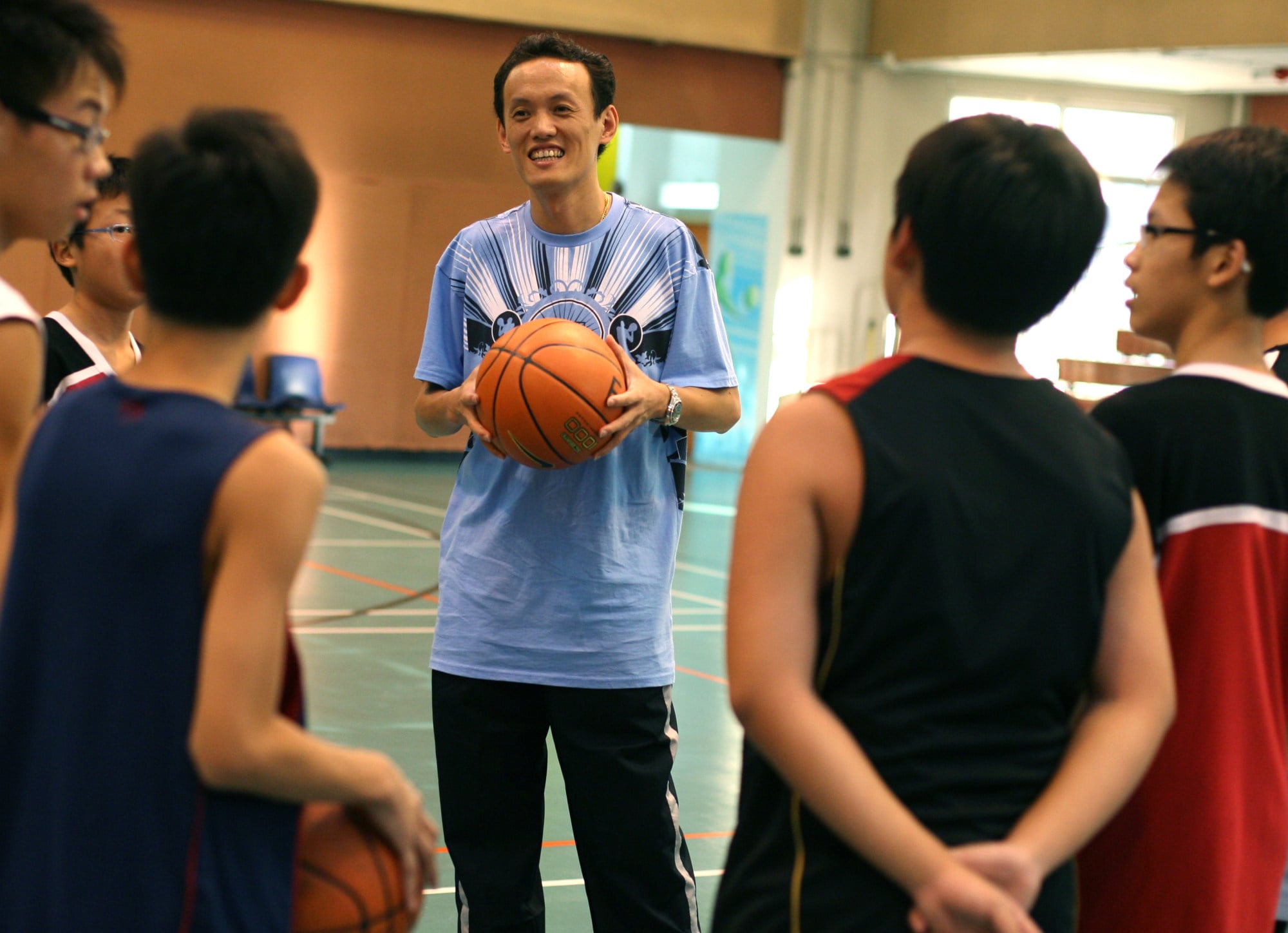
He added that because most team members had high aspirations, such as joining the Hong Kong team or pursuing basketball as a career, they had a mentality geared towards endurance.
“Anyone who wants to win a championship knows they have to suffer,” Chan said, adding that success was built on enduring greater pain – a reality every athlete must understand.
Senior counsel and Executive Council member Ronny Tong Ka-wah said Yung’s actions could constitute common assault even if he used the pupil’s hand to make him hit himself.
“Common assault means doing something that the other person does not consent to,” Tong said. “[Yung] has already violated another person’s body.”
Although the victim was said to be reluctant to pursue the case, Tong noted that the online video and the coach’s social media confession could provide sufficient evidence.
But he added that police typically did not pursue such cases if the victim was uninjured and declined to press charges.
He also pointed to the six-month time limit for prosecuting a summary offence, which this particular case had already passed.
Under the Offences against the Person Ordinance, common assault carries a maximum penalty of one year’s imprisonment. It is also an indictable offence with no time limit for prosecution, typically involving more serious cases heard in higher courts.
Family law specialist Lisa Wong Wai-yin said prosecuting the case as child abuse would be challenging if the student was unwilling to come forward and file a report.
She added that relying solely on video evidence to secure a common assault conviction could be difficult due to the growing prevalence of manipulated or fake footage.
Trevor Yung Wai-kit, an assistant professor at the Education University of Hong Kong and an educational psychologist, said such teaching methods were generally not accepted by society and that being slapped in front of others could severely damage a student’s self-esteem and foster a negative attitude.
“Not everyone can tolerate such treatment,” he said, adding that individual views defending the coach did not reflect the majority.
He warned that relying on aggressive coaching methods could trigger serious emotional issues in children, including anxiety and depression. -- SOUTH CHINA MORNING POST