BANDAR SERI BEGAWAN: For Brunei Darussalam, the ocean is central to food security, fisheries, aquaculture, tourism, coastal protection, biodiversity, livelihoods and future economic growth. It is also connected directly to the work of the Ministry of Primary Resources and Tourism (MPRT) in supporting sustainable development across fisheries, forestry, agriculture and tourism.
In these areas, good decisions must be built on strong knowledge. Healthy marine resources, responsible harvesting, effective management, and reliable data are essential for the fisheries sector, while, aquaculture depends on research, technology, biosecurity, water quality management, and market development. Coastal ecosystems, meanwhile, require monitoring, protection, and restoration.
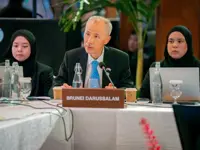
The importance of building a Sustainable Blue Future for Brunei Darussalam was mentioned by Permanent Secretary at the MPRT Tutiaty Abdul Wahab in her welcoming remarks as the guest of honour at the Ocean Sustainability that took place at The Core, Universiti Brunei Darussalam.
Research, she explained, “Plays an important role in this journey. It helps assess fish stocks, improve aquaculture systems, monitor water quality, protect biodiversity, and identify new opportunities within the blue economy.”
Technology, she mentioned, “is equally important, where new tools for marine monitoring, environmental data collection, aquaculture systems, and biodiversity tracking can transform observation into action’.
“They support better decisions, improve productivity, protect ecosystems, and open new areas of growth.” The blue economy, the guest of honour shared “is a vital part of this conversation”. “It goes beyond conservation and extends to areas such as jobs, research, entrepreneurship, food systems, tourism, innovation, marine biotechnology, sustainable aquaculture and future industries.”
She said, “This vision aligns closely with the Brunei Vision 2035, which aspires to develop highly skilled people, improve quality of life, and build a dynamic and sustainable economy. The future of Brunei’s ocean will depend on our students and young researchers, who will study it, manage it, protect it and build new industries around it.”
Although Brunei Darussalam is a small nation, she highlighted, “It has a significant ocean space, rich biodiversity, strong conservation values and real opportunities to contribute to regional ocean sustainability. Our size can be an advantage, allowing for close collaborations, testing of ideas and move from research to implementation more quickly.”
However, she also acknowledged, “This cannot be achieved alone. The Government has to play a role in providing direction, regulation and support. Universities and researchers contribute evidence and knowledge. Industry brings investment, innovation and implementation.
"Non-governmental organisations (NGO) and community groups bring awareness, outreach and local participation, and international partners bring experience, expertise and wider networks. Together these efforts make sustainability achievable.”
Meanwhile, President of Poni Foundation and Chief Business Officer of Poni Group Anna Aziz in her remarks shared, “ For us, this conference is not just about presentations. It is about connection. It is about bringing the right people into the same room, so ideas can become partnerships, partnerships can become pilots, and pilots can become long-term systems that benefit Brunei.
"Ocean sustainability cannot stop at national borders. Regional collaboration is essential if we want to solve shared challenges and build a stronger blue economy together.”
Held under the theme ‘Investing in Our Ocean’s Future’, the conference brought together global and regional experts to explore how Brunei can protect its marine environment while building opportunities in the blue economy, sustainable fisheries, ocean technology, nature based solutions and community livelihoods.
Organised by Poni Foundation in partnership with the MPRT, in conjunction with Brunei Mid-Year Conference and Exhibition 2026, the conference is designed to make ocean sustainability more practical, relevant and connected to Brunei’s future.
Keynote speaker New Zealand-born marine conservationist, Oxford educated author and filmmaker Winston Cowie shared international perspectives from more than 20 years of work in marine conservation, fisheries and blue economy programmes.
His session highlighted the importance of practical action, strong governance, community participation and long-term thinking in protecting marine ecosystems while supporting sustainable economic development.
Chief executive officer of Poni Group and Chairman of Poni Foundation Mohd Tahsin Wong Abdullah delivered a plenary session on Brunei’s opportunity to connect marine tourism, conservation, youth engagement, sustainability innovation and blue economy projects into long-term national value.
The conference also featured Professor Zhang Wei on marine biotechnology and next-generation aquaculture, Dr Yang Wei on blue economy development and ocean governance, Mahesh Pradhan of the United Nations Environment Programme on regional cooperation for the seas of East Asia, and Associate Professor Michelle Voyer on participatory blue economy governance and Asean cooperation.
Other sessions included contributions from Dr Imam Musthofa Zainudin on sustainable fisheries and blue food systems, Dr Sheila S. Vergara on science-based governance of marine protected areas, Siu Tzyy Wei on South-East Asian maritime security and IUU fishing, Dr Jonathan Daniel Maxey on sustainable aquaculture and coastal oceanography, Hendri Karisma on carbon accounting and blue carbon market infrastructure, Dr Aria Lee of Living Seawalls on nature positive marine infrastructure, and Zachary DeLong on oyster ecosystems and water remediation.
As part of Ocean Week Brunei 2026, the conference reinforced the role of the ocean as more than an environmental issue. It is closely connected to Brunei’s future economy, food security, climate resilience, youth opportunities, community livelihoods and long-term national resilience. – Borneo Bulletin/ANN