US Secretary of State Marco Rubio said “significant irritants” remained in the US-China relationship but that Washington and Beijing needed to keep talking to stop flashpoints from erupting.
At a Senate Foreign Relations Committee hearing on Tuesday, Rubio said both countries – the world’s two largest economies and most powerful militaries – must communicate to “de-escalate potential points of conflict that could lead to something broader”.
“The Chinese government and the US government have to speak. There’s really not a choice here,” he said at the hearing on the State Department’s budget.
“There are obviously very significant irritants in our relationship with China. Some of these are long-term problems that we know we’re going to have to address,” he added.
“So what we’re trying to do is manage a period of strategic stability while recognising that there are areas of our relationship in which we are going to have struggles, not just for years but perhaps for decades.”
Rubio’s remarks offered a clear read on where US-China relations stand and the strains weighing on them, coming just weeks after US President Donald Trump’s summit with Chinese leader Xi Jinping.
Rubio also told senators that reopening the Strait of Hormuz must come before any broader negotiations with Tehran, but stressed that Iran would not receive upfront sanctions relief in exchange for restoring access to the strategic waterway.
Any sanctions relief, he said, would be tied to concessions on Iran’s nuclear programme.
At a separate budget hearing later on Tuesday, Rubio downplayed Chinese support for Iran, saying Beijing has not offered any help to Tehran that has impeded US operations against Iran despite their strategic relationship.
US-China issues over trade and Taiwan
While the May summit yielded few deliverables and left structural problems, including US-China trade imbalance, untouched, both leaders agreed to build what they called a “constructive relationship of strategic stability”.
Rubio, who was part of Trump’s delegation, said the meetings in China made clear where Washington and Beijing disagree, and that the two countries faced “real challenges” over the longer term, including on supply chains.
Washington, he said, would want to reduce its reliance on any single country – from weapons systems to pharmaceuticals – to avoid being “cut off at any time as leverage against us or punishment or in a time of conflict”.
“This is going to be a long-term issue that we’re going to have to continue to confront and work on. Work on that continues even while we are engaged in the ability to dialogue and speak to them because we have to,” he said.
“It’s responsible and we truly have no choice ... It’s to their benefit and ours, and I would argue to the benefit of the world that these two countries are able to speak to one another.”
On Tuesday, Rubio again insisted that US policy on Taiwan was unchanged, weeks after Trump called arms sales to the island a “very good negotiating chip” in his dealings with Beijing.
Trump has yet to sign off on a record US$14 billion arms package, with acting US Navy Secretary Hung Cao saying last month that the deal was paused to ensure that the US has enough munitions for its operation against Iran.
Ahead of Trump’s China visit, Beijing reportedly pushed Washington to toughen its wording on Taiwan to say it opposes Taiwan’s independence.
Beijing views Taiwan as part of China to be reunited with the mainland, by force if necessary.
Most countries, including the US, do not recognise Taiwan as an independent state, but Washington is opposed to any attempt to take the self-ruled island by force and is committed to supplying it with weapons.
“Obviously the Chinese side would like to see a change in the verbiage but no change has been made in that regard,” Rubio said.
“The most important thing to understand is we want to see the status quo preserved as is at this moment. That’s our policy ... It’s a very delicate relationship to balance. But our policy on Taiwan has not changed, and it did not change on this trip.”
Rubio faces questions over Iran war budget, other Trump policies
Rubio sidestepped questions about whether sales of high-end Nvidia semiconductors to China were undermining US national security and declined to say whether Trump offered in his discussion with Xi to condition future Taiwan arms sales in return for improved China-US relations.
Rubio faced tough questioning on the Iran war, elevated gas prices, strikes on suspected drug vessels and other Trump foreign policy priorities with the proceedings interrupted at one point by protesters, including one who shouted “stop killing Cubans” before being removed.
The interruption underscored how prominently Cuba featured at the hearing. Rubio defended his decision to keep the island on the US list of state sponsors of terrorism, describing it as a host for foreign intelligence operations near the American mainland.
“We also know, for example, that Cuba continues to host a pretty substantial collection of intelligence sites on behalf of the Chinese and the Russians,” Rubio said. He offered no new evidence, drawing a challenge from the senator who had requested it.
The remarks echoed findings made last year by the Center for Strategic and International Studies, a Washington think tank. Its researchers used satellite imagery to identify four suspected signals intelligence sites on the island.
One near the town of Bejucal had been upgraded with a new antenna array capable of tracking long-distance radio signals across the southeastern US.
US officials have grown more open about the activity. In 2023, the Biden administration confirmed China had run an intelligence post in Cuba since at least 2019. Beijing and Havana have repeatedly rejected such claims, calling their cooperation legitimate and aimed at no third party.
The long-time China hawk also declined to commit to earmarking a portion of the administration’s proposed US$245 million fund, designed to “counter” Chinese influence, to Taiwan or use other funds to support Uygur language studies within the State Department.
But Rubio did decry Beijing’s ongoing efforts to pry Taiwan’s few remaining diplomatic partners away, which he said had often been accomplished by offering favourable loans or low-cost infrastructure that in many cases led to debt traps or unfinished projects.
“The first thing is to point to the bait and switch, in many cases these things are not provided,” he said.
But Rubio, a former Florida senator who answered questions adeptly on Tuesday, added that China is often the only game in town and the US needed to step up.
“In many cases ... frankly, the only companies that show up are Chinese companies,” he added. “Part of it is providing the resources, so these countries can go out and do this without being subject to or vulnerable to the sort of leverage tactic that’s used against them.”
Senators pushed Rubio on why Trump has reportedly spent as much on 14 weeks of war he started with Iran – at around US$35 billion – as the administration’s entire requested State Department budget for diplomacy.
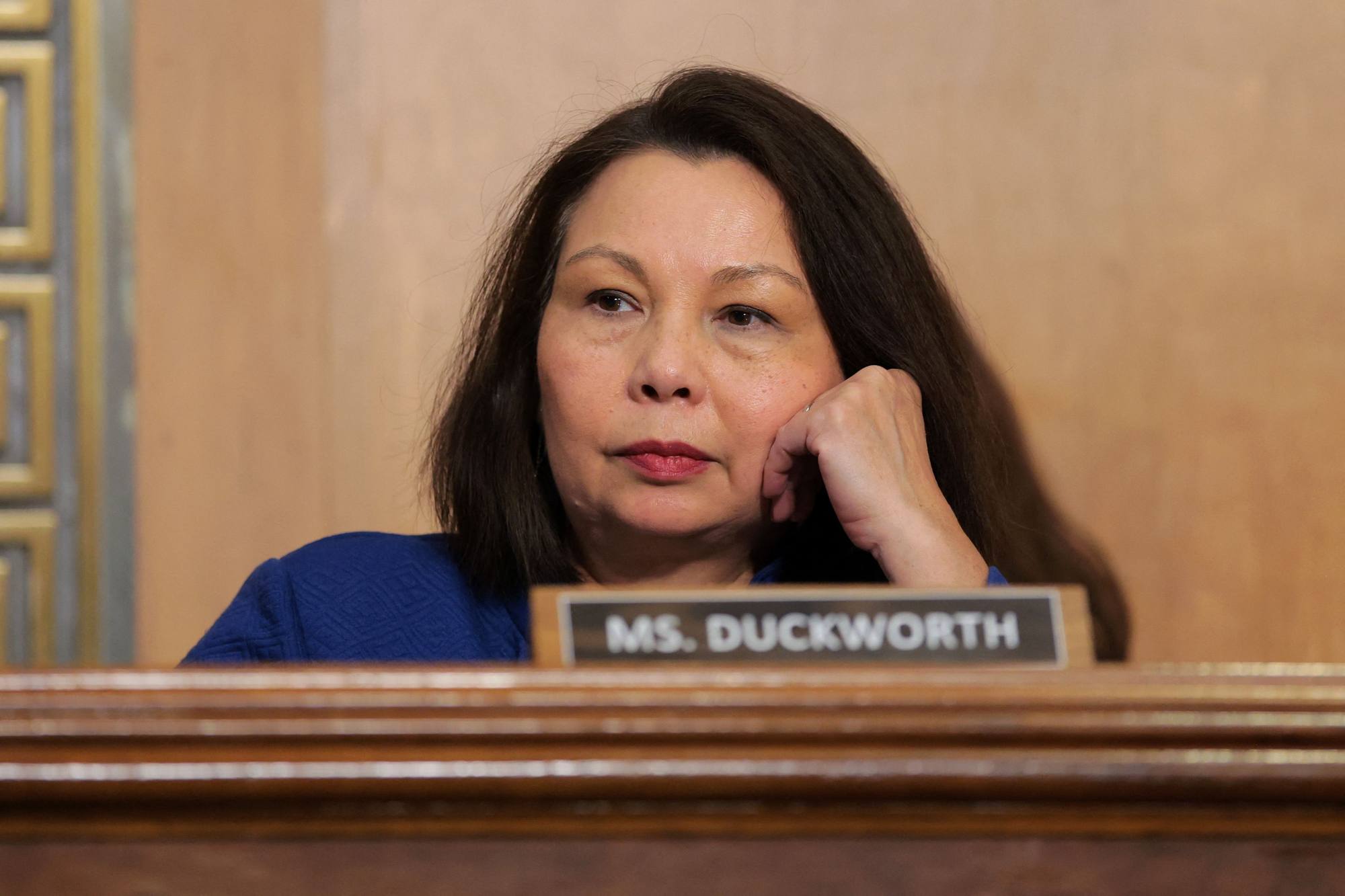
“President Trump is blowing a shocking amount of money,” said Senator Tammy Duckworth, a Democrat from Illinois and an Army National Guard veteran. “This administration insists on using military force as a first resort instead of a last resort.”
But Rubio pushed back, arguing that the administration remained actively engaged in diplomacy. He pointed to US involvement in efforts related to India-Pakistan, Thailand-Cambodia and Israel-Lebanon, as well as what he called other “frustrating situations” involving Sudan and the Quad.
“Diplomacy always costs less money. We don’t buy missiles,” he said. “I just don’t think it’s fair to say we’re not actively involved in diplomacy.” -- SOUTH CHINA MORNING POST