The global energy crisis stemming from the effective closure of the Strait of Hormuz has added complexity to already competitive China-India maritime relations.
The bottleneck in the Gulf has disrupted the provision of vital supplies of oil, gas and fertilisers to Asia, underscoring the fragility of global supply chains and the significance of trade chokepoints.
Amid uncertainty over the Strait of Hormuz’s reopening, India’s US$10 billion plan to transform its remote Great Nicobar Island into a major defence and logistics hub near the strategically critical Strait of Malacca has gained momentum.
The shipping routes from the Strait of Hormuz to the Strait of Malacca are instrumental in sustaining China’s economy, with any disruption to the maritime artery possibly dealing a serious blow to the world’s second-largest economy.
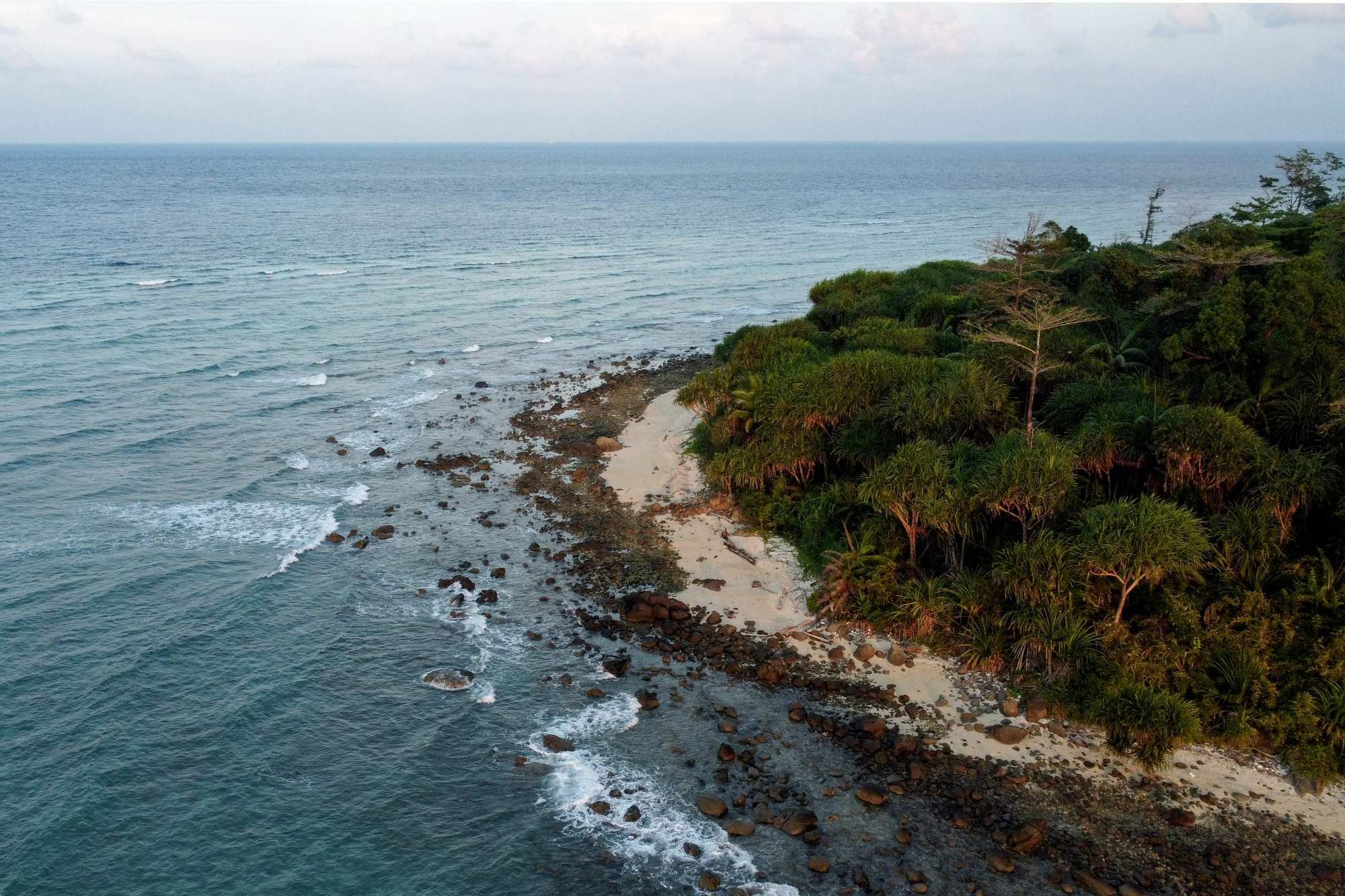
Great Nicobar, a 921 sq km (356 square mile) island wrapped in dense prehistoric rainforest, sits at the southernmost edge of India in the Andaman and Nicobar island chain – some 1,200km (746 miles) from the Indian mainland but less than 150km from the Strait of Malacca’s western entrance.
Amid the Hormuz blockade, supporters of the Indian project, including some of the country’s military veterans, argue it would enable New Delhi to “control” or disrupt Chinese supply chains and worsen its “Malacca dilemma”.
The dilemma refers to Beijing’s reliance on the Strait of Malacca for 80 per cent of its imported energy and two-thirds of its total trade volume.
According to prominent retired Indian Major General G.S. Rawat, “the Strait of Malacca holds even greater significance in terms of global trade and maritime movement”.
“From an operational standpoint, controlling or having a strong presence near such routes enhances strategic leverage, surveillance capability and maritime security,” Rawat recently told Indian media.
While India’s opposition figures and activists have opposed the plan on environmental grounds, the ruling Bharatiya Janata Party has dismissed the concerns, labelling them “pro-China”.
In recent years, Beijing has been studying the Indian Ocean through its vast network of survey operations, advancing its understanding of water conditions, currents and the seabed – all actions allowed under international law.
Yet, China’s activities have alarmed India, which traditionally views itself as an Indian Ocean country, with a coastline exceeding 11,000km and more than 1,300 offshore islands.
Despite concerns over environmental degradation and the displacement of tribal communities, New Delhi is pressing ahead with its massive infrastructure drive to turn Great Nicobar into a strategic “unsinkable aircraft carrier”.
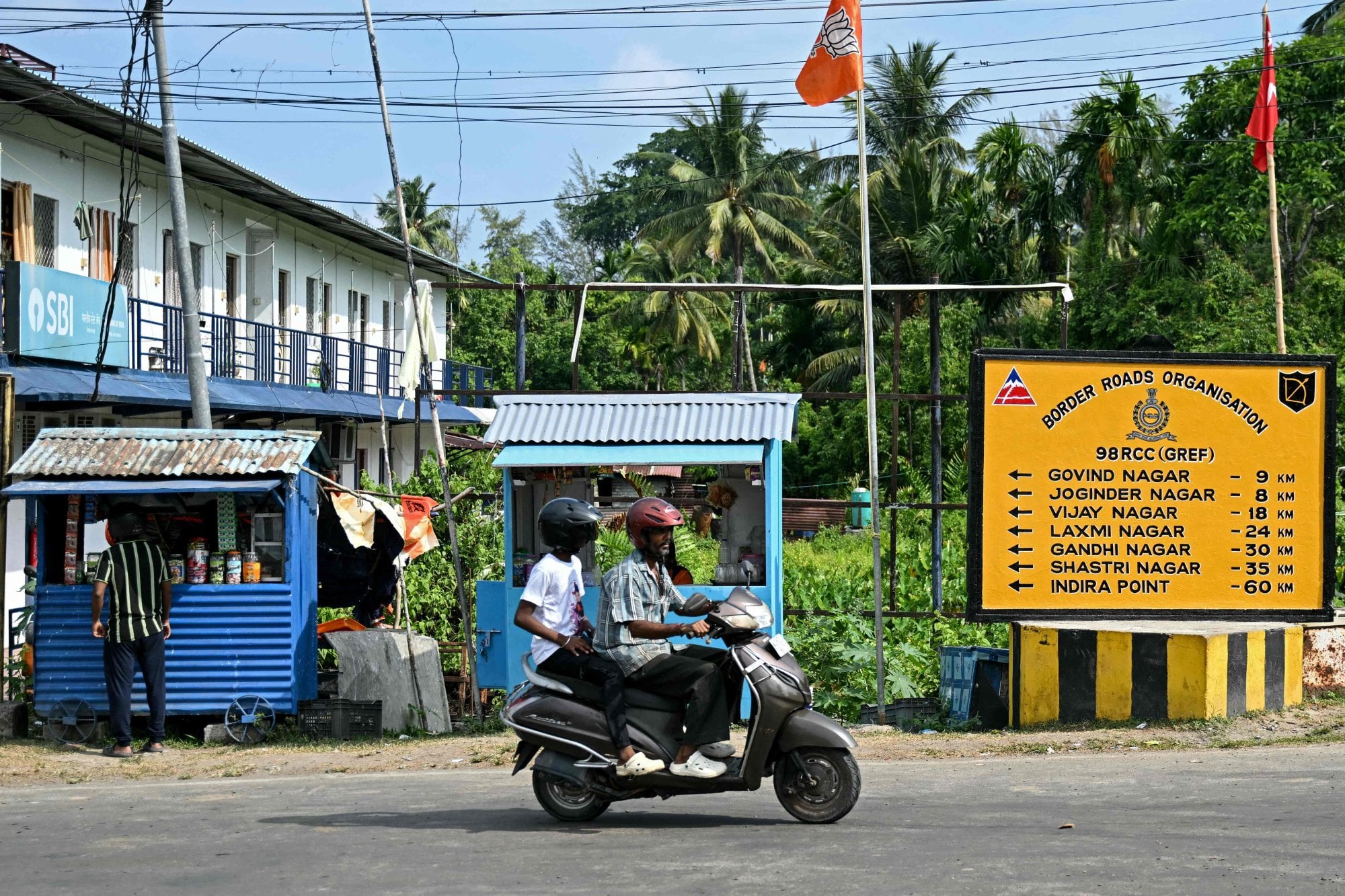
The island would be equipped with a major container terminal, an international airport, a power plant and modern urban infrastructure.
According to an official note from the Indian government, the project is designed to “enhance India’s national security, strategic and defence presence” and reduce “dependence on foreign transshipment ports”.
“The Great Nicobar project is a strategic project which aims to strengthen India’s presence in the Andaman Sea and Southeast Asia,” the note said.
Nilanthi Samaranayake, an adjunct fellow at the East-West Centre in Washington, described the Great Nicobar project as the latest update in New Delhi’s “20-year imperative to augment India’s presence in the Andaman and Nicobar Islands”.
“What’s different now is that there seems to be more momentum behind this project.”
As for China, analysts played down concerns that the project would pose a direct threat to Beijing’s supply routes.
“Translating maritime presence into actual coercive leverage against China is far harder than our navalists claim,” said Yogesh Joshi, director of the India Centre at the University of Central Florida.
“The national security argument has real merit, but let’s not oversell it,” Joshi added.
Apart from establishing its first overseas base in Djibouti in the Gulf of Aden in 2017, Beijing has made considerable investments in ports in India’s neighbourhood under the Belt and Road Initiative, its China-centred trade and infrastructure network.
These include the ports of Gwadar in Pakistan, Hambantota in Sri Lanka and Kyaukpyu in Myanmar, as well as the Ream Naval Base in Cambodia.
China’s port investments in the Indian Ocean form part of its broader worldwide strategy to expand maritime influence.
Meanwhile, New Delhi is upgrading its fleet, building new naval facilities and expanding its operational footprint through targeted exercises and reconnaissance, including in the Andaman and Nicobar Islands. India is also actively deepening security and economic ties across its maritime area.
Joshi of the University of Central Florida said Beijing’s rising clout in the Indian Ocean region gave New Delhi the “immediate rationale” to compete in the contested space.
He was referring to what many in India call a “String of Pearls” strategy, a phrase coined by a US-based consultancy in 2005 to describe China’s growing network of commercial and military infrastructure in the Indian Ocean region.
However, Joshi maintained that the risk of bilateral conflict was low.
“Any Sino-Indian conflict will be short and sharp, salami-slicing under nuclear shadow. Maritime trade warfare takes too long to bite,” he said, adding that even if India reached the Strait of Malacca, “we don’t control it. Indonesia, Malaysia and Singapore do”.
Singapore was committed to keeping the strait open, the city state’s top diplomat Vivian Balakrishnan said during his trip to Beijing this week.
Ivan Lidarev, a visiting research fellow at the National University of Singapore’s Institute of South Asian Studies, said the Hormuz crisis might accelerate the maritime rivalry between China and India but was “unlikely to reshape” it, though India was likely to become much more active in the long run.
“New Delhi still has neither the capabilities, nor the strategic position in the Indian Ocean, nor a clear vision ... to play an assertive role,” Lidarev added.
Li Hongmei, a research fellow at the Shanghai Institutes for International Studies’ Centre for South Asian Studies, said China-India maritime competition would remain manageable, with their major risks of conflicts being on land in their border regions.
Li suggested that the Hormuz crisis, coupled with revived bilateral ties, afforded an opportunity for both sides to explore maritime security cooperation in the Indian Ocean.
“But the crucial prerequisite is for India to break away from its long-standing defensive and hostile mindset towards China and instead embrace the true confidence and mentality of a major power,” she said. -- SOUTH CHINA MORNING POST