




Kazakhstan aims to deepen its financial services cooperation with Hong Kong, viewing it as an ideal fundraising hub to access renminbi capital through bond issuances, according to the country’s top envoy in the city.
In an exclusive interview with the South China Morning Post, Bauyrzhan Dosmanbetov, Kazakhstan’s consul general in Hong Kong, also said the Central Asian country’s community in the city had grown over the past decade to about 1,000, driven by the local government’s Belt and Road Scholarship programme.
“Kazakhstan and Hong Kong are currently building a partnership that goes far beyond simple trade – we are looking at deep institutional and technological integration,” he said, citing areas such as digital finance, artificial intelligence and sustainable infrastructure.
“We see a perfect match between Hong Kong’s capital and Kazakhstan’s digital transformation.”
Hong Kong is seeking to strengthen its ties with Central Asia as Chief Executive John Lee Ka-chiu prepares to embark on his first official visit to Kazakhstan and Uzbekistan in early June.
With Kazakhstan being a strong partner under Beijing’s Belt and Road Initiative, the collaboration between Astana and Hong Kong has been scaling up.
Last September, the Development Bank of Kazakhstan issued a 2 billion yuan (US$280.8 million) bond in Hong Kong, the first bond listed by a Central Asian state-owned enterprise in the city.
Dosmanbetov said Kazakhstan was very interested in offshore renminbi, given it had a lot of projects with mainland China and needed the currency.
He added that Hong Kong, which had abundant capital, served as an ideal fundraising hub.
“Hong Kong is the only financial and stock exchange hub within six hours’ flight to our country. It is the closest one,” he said.
Dosmanbetov said the successful issuance of the bond had sent a clear signal to the region and proved that Kazakhstani and other Central Asian issuers could confidently access Hong Kong’s vast offshore renminbi market.
“With the stock connect between Astana International Exchange and Hong Kong stock exchange now active, we expect more of our national champions – including potentially Kazakhstan Temir Joly [KTZ] – to look towards Hong Kong for their international growth, and to align with world-class environmental, social and governance standards,” he said, referring to the country’s state-owned railway company.
He also called tungsten mining company Jiaxin International Resources’s move to debut on both the Hong Kong and Kazakhstani stock exchanges – the first such dual-listing for the country – a “watershed moment”, which showed how the city’s capital could drive hi-tech manufacturing and downstream processing in the Central Asian country.
“We are now seeing active interest from other Kazakh entities in the critical minerals and renewable energy sectors,” the consul general said.
Dosmanbetov said he had seen increasing interest from Hong Kong businessmen in the resource-rich nation, especially amid the prolonged war in the Middle East.
“I’ve met someone who said they are closing their projects in the Middle East and are going to move to Kazakhstan,” he said.
He said there was also a notable 30 to 40 per cent increase in inquiries from Hong Kong logistics firms looking to make use of the Middle Corridor to mitigate risks.
The Middle Corridor is a multimodal logistics route that connects China and Europe via Kazakhstan in Central Asia, Azerbaijan and Georgia in the South Caucasus, the Caspian Sea and Turkey.
Dosmanbetov said he had seen first-hand how the Kazakhstani community had burgeoned in Hong Kong over the past two decades.
When he first came to the city to serve as a vice-consul 20 years ago, there were “probably only four Kazakhs here”, he said, with half of them working in the consulate.
Returning to Hong Kong to lead the consulate nearly a year ago, Dosmanbetov learned that he now had 1,000 fellow citizens in the city, with a Kazakhstani restaurant opening in SoHo last December serving Central Asian delicacies such as horsemeat.
All these changes were the result of the Belt and Road Scholarship programme rolled out by Hong Kong authorities in 2016 and other similar schemes offered to his country’s students, the diplomat said, adding many young Kazakhs decided to remain in the city after completing their university studies.
According to the latest official figures, 833 people from 57 countries had been awarded the Belt and Road Scholarship between 2016 and 2026 – 59 of them from Kazakhstan.
Hong Kong was now the most popular and attractive destination among elite students from the country pursuing higher education, Dosmanbetov said.

“They know that they will find a job to work here,” he said, with many employed in the financial sector.
He said the visa Hong Kong authorities offered to non-local students, which grants them 24 months after graduation to secure a job, was “attractive”.
Dosmanbetov highlighted the local government’s especially “aggressive” bid to attract Kazakhstani talent to the city, and he hoped the scholarship could be expanded to benefit more bright students.
However, the seasoned envoy noted that the “connectivity gap” between Kazakhstan and Hong Kong remained the biggest challenge and often affected the pace of business.
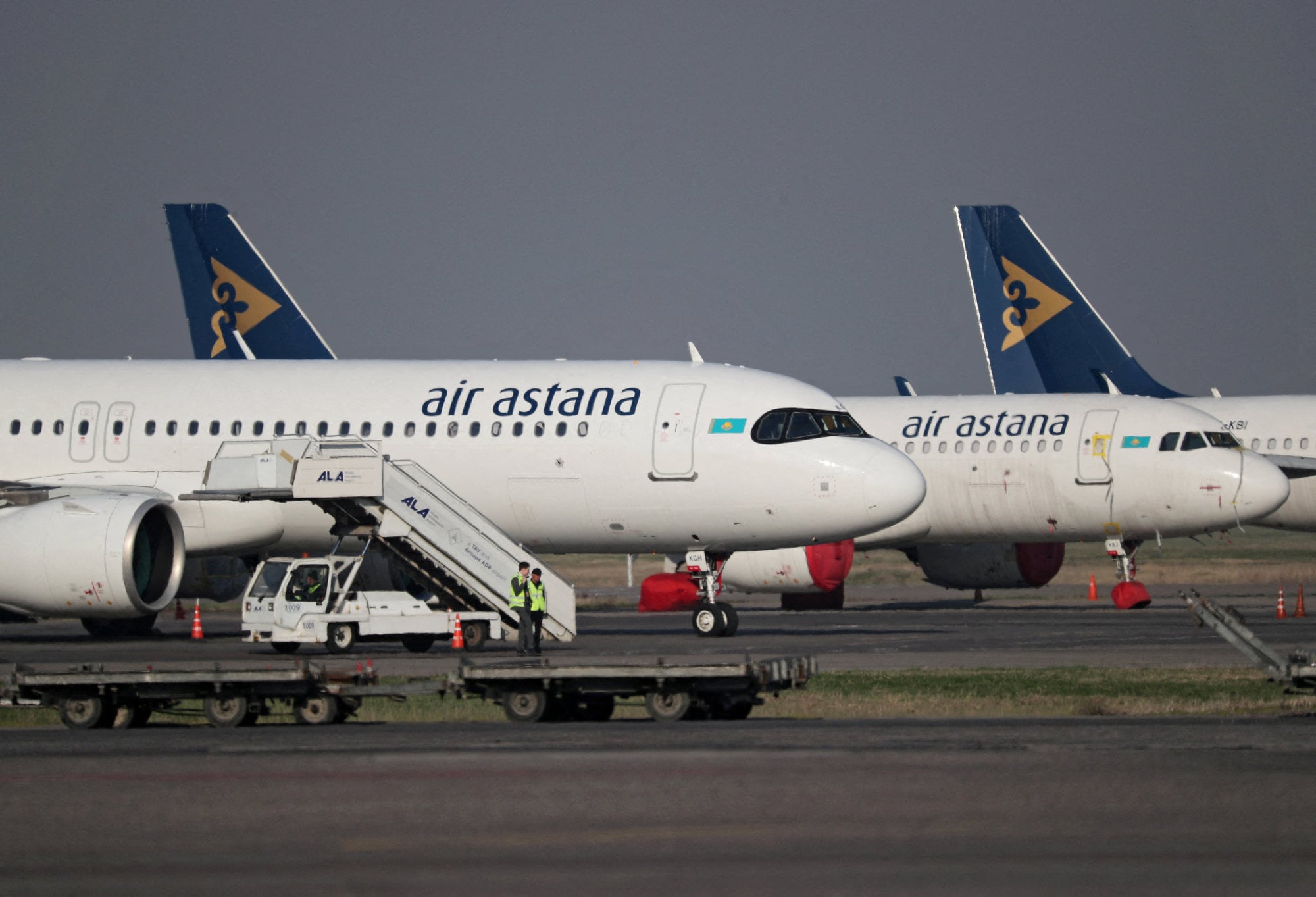
“The lack of direct flights is currently the only missing piece in an otherwise rapidly growing puzzle of cooperation,” he said, pledging to make flight resumption “a key priority” for the consulate.
Dosmanbetov revealed that the country had been working closely with major carriers, including Cathay Pacific Airways and Hong Kong Airlines, saying they were in a phase of “very active and constructive dialogue”.
He was optimistic that Lee’s coming trip would bring Hong Kong, Asia’s largest financial centre, and Kazakhstan, Central Asia’s biggest economy, closer, as there would be events gathering more than 200 business representatives from both sides.
“I think Hong Kong officials know that they can get much more [from working with Kazakhstan],” he said.
Xeniya Tregubenko, a co-founder of Yurt, a Kazakhstani restaurant that opened last year, came to Hong Kong in 2018 to study hospitality.
“Universities in Hong Kong offer valuable internship opportunities to us,” the graduate of the Chinese University of Hong Kong said.
The restaurant serves as a regular gathering place for students from the country and employs staff from the community. -- SOUTH CHINA MORNING POST



