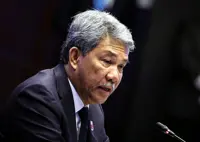
BANGKOK: Surasak Phancharoenworakul, Minister of Tourism and Sports, said on Tuesday (May 19, 2026) that the Cabinet meeting had resolved to cancel the 60-day visa-free scheme for more than 90 countries.
The cancellation would also apply to countries with more than one visa arrangement, with the previous criteria to be reinstated.
The next step would be to notify various agencies of the resolution.
All countries for which the 60-day visa-free scheme is cancelled would return to their previous visa categories, most of which allow about 30 days, or the 30-day visa-free scheme.
On the criteria for revising the visa system, the Visa Policy Committee would reconsider each country to decide which visa type was suitable, taking security and economic considerations into account from all sides.
For the next step, the government will notify relevant agencies of the Cabinet resolution.
The revised criteria and conditions to be submitted later will be assigned to the Visa Policy Committee for detailed country-by-country consideration, to assess which visa category is suitable for each country.
The review must take into account both security and economic dimensions in a balanced manner.
“We will not focus only on tourist numbers. The emphasis must be on quality tourists, not simply on making entry easy and achieving high volume. The prime minister has instructed that visa issuance be considered carefully to strengthen safety and improve the tourism system as a whole,” Surasak said.
A closer look: why is the government scrapping the 60-day visa-free scheme?
According to in-depth information, the 60-day visa-free scheme, which was previously introduced to stimulate the economy and tourism, has come under close scrutiny from security authorities after key “loopholes” were identified as follows:
>Blocking security threats and grey-capital groups: The previous scheme had become a channel for some foreigners to enter Thailand under the guise of tourists, before allegedly setting up illegal nominee businesses, working without permits and using the country as a base for transnational crime, including call-centre gangs.
>Most tourists stay for less than 60 days: Statistics from the Ministry of Tourism and Sports show that most foreign tourists travelling to Thailand stay for an average of just nine days. Reducing the entitlement to the 30-day visa-free entitlement is therefore believed to have little impact on the main tourism market.
>A new 15-to-30-day structure expected: The Visa Policy Committee’s fresh screening process is expected to regroup countries in line with the current diplomatic situation. Some countries may have their entitlement reduced to the 15-day visa-free entitlement, so that the measure better serves short-term tourism.
In addition, the Ministry of Tourism and Sports is preparing to move ahead in parallel with the collection of an Entry Fee from foreign tourists, commonly referred to as the “landing fee”, at THB300 per person, mainly for air arrivals.
The revenue would be channelled into the Tourism Promotion Fund and used to improve the efficiency of the screening system.
What is expected to happen next
>Cancellation of the 60-day visa-free scheme: Foreigners from the original group of 93 countries and territories will no longer be able to stay in Thailand automatically for 60 days.
>Return to previous criteria, mostly the 30-day visa-free entitlement: The maximum period of stay will be reduced in line with previous bilateral arrangements.
>Tighter country-by-country screening: The final decision from the Visa Policy Committee is awaited before a new list is announced of countries eligible for the 30-day visa-free entitlement or 15-day visa-free entitlement, with security as the key consideration. - The Nation/ANN