BRICS foreign ministers, including from Iran and Russia, met in New Delhi, where India warned of “considerable flux” with conflict driving economic uncertainty and energy insecurity.
Conflict in Iran and the related fuel crisis are dominating discussions in the two-day gathering.
India, which holds the BRICS chair this year, was hosting the foreign ministers from the expanded bloc, which now includes Iran, Saudi Arabia and the United Arab Emirates – countries at odds over the conflict launched by the United States and Israel on Feb 28.
“We meet at a time of considerable flux in international relations,” India’s Foreign Minister Subrahmanyam Jaishankar said in his opening speech yesterday before closed meetings began.
Among the foreign ministers attending were Iran’s Abbas Araghchi and Russia’s Sergei Lavrov.
“Ongoing conflicts, economic uncertainties and challenges in trade, technology and climate are shaping the global landscape,” Jaishankar added.
“There is a growing expectation, particularly from emerging markets and developing countries, that BRICS will play a constructive and stabilising role.”
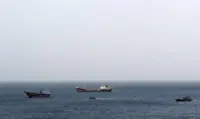
Disruptions around Gulf shipping routes and the Strait of Hormuz continue to drive volatility in oil and gas markets, increasing pressure on energy-importing economies, including India.
“Development issues remain central,” Jaishankar added.
“Many countries continue to face challenges on energy, food, fertiliser and health security, as well as also access to finance.”
The conflict involving Iran has added strain to India’s economy, heavily reliant on Middle Eastern energy supplies and fertiliser imports, and has cast uncertainty over New Delhi’s growth outlook.
India, the world’s third-largest oil buyer, normally sources about half of its crude through the Strait of Hormuz, a vital waterway that has been repeatedly blocked since the conflict began.
Ship tracking and import data show that India has partially plugged the gap by turning to old allies, expanding promising ties and reviving suppliers it had not tapped in years.
The biggest backstop has been Russian crude – a fuel source New Delhi spent much of the past year trying to pivot away from under stiff US tariffs.
Jaishankar met with Lavrov on Wednesday evening.
“Our political cooperation is even more valuable in an uncertain and volatile global environment,” Jaishankar said in remarks at the meeting, adding that discussions included “trade and investment, energy and connectivity”. — AFP