BENGALURU: On May 4, the day the votes of the Tamil Nadu state elections were counted, Singaporean counsellor Delip Saravanan went to the Sri Krishnan Temple in Waterloo Street to pray fervently for one particular candidate.
The 41-year-old had never been so invested in the outcome of any Indian poll, but this time, he was all in. It was the political debut of his beloved Tamil superstar Joseph Vijay, whom he has been a fan of since the age of 11.
The soft-spoken actor known for his high-octane dance moves made his foray into politics two years ago, launching the Tamilaga Vettri Kazhagam (TVK) party. The 2026 state election was the TVK’s first time taking on decades-old Dravidian parties.
“As the vote count started, his party was behind. But when I reached home from the temple and saw that he was leading, I screamed in excitement,” Delip told The Straits Times.
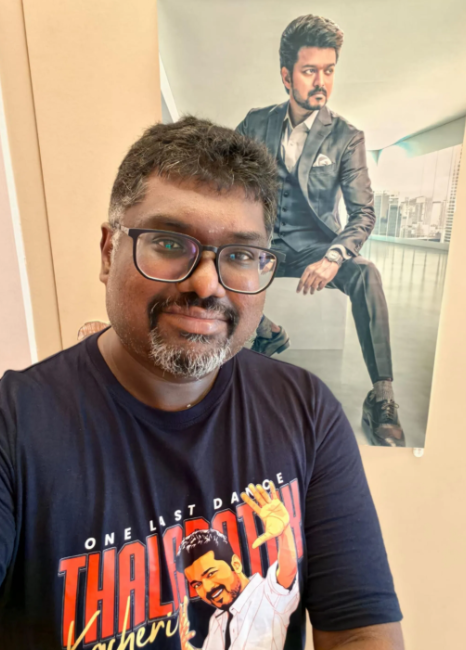
“I was in tears and couldn’t believe it happened. I felt like that 11-year-old in me kind of won.”
Such scenes are to be expected in the south Indian state of Tamil Nadu, where Vijay lives.
Incredibly, Tamil speakers in Singapore, Malaysia and Sri Lanka were following the poll closely too.
When the TVK defied most poll predictions to secure an astounding victory, the 51-year-old actor’s overseas fans celebrated with parties, cakes and festival-like feasts.
In Kuala Lumpur, the Malaysian Vijay Fans group organised a live screening of Vijay’s Chennai swearing-in ceremony at a cinema hall in Selangor.
Shirley Chand, 33, national secretary of the Malaysian Vijay Fans group that has over 2,000 members, said: “Around 200 people watched the swearing-in. We really enjoyed his first speech as chief minister – totally different and energetic.”
The fan club has organised a charity event and feast in Vijay’s honour later this week.
None of these revellers is an Indian citizen, but they celebrated his cinematic win as their own, in a heady combination of idolatry, kinship and maybe even political wishful thinking.
The love for the Tamil celebrity was long nurtured through an intense, border-crossing fandom.
Vijay has often played angry men fighting against a corrupt or unjust system. But he won over fans way before that, with his cool, boy-next-door roles, where he sported an impish smile and a powder moustache, bantered with male friends and romanced beautiful heroines.
It was all tied together with virtuoso dancing that combined street koothu with breakdance in a genre all his own. His music videos attract a separate fan base.
“Vijay did not win acting awards or play many diverse roles. Most of his roles were the same. But we believed that character was him, and loved him. So most of his films were blockbusters,” said Delip.
The fan has taken many life lessons from the actor. He gave up Coca-Cola after he watched Vijay fight a cola corporation stealing a village’s water in the movie Kaththi (2014). When he experienced burnout from counselling students, watching the actor battle similar demons as a teacher in Master (2021) “felt like therapy”.
On screen, Vijay often schooled heroines into being more traditional in the name of “Tamil kalachaaram (culture)”. Some fans concede that instances of his on-screen behaviour towards women normalised misogyny, but defend it as a product of directing choices at the time.
Among Vijay’s numerous female fans is Lavanya Premananth, 24, a data engineer in Singapore. She was only four when she saw her first Vijay film, Thirupaachi (2005), where he played a villager who eradicates gang wars in the city to make it safe for his sister. She saw “his kind nature” and has stayed hooked for 20 years.
The keen overseas interest in Vijay’s election might also be an expression of kinship ties. The actor himself says he is a brother, son or uncle to his fans.
Shirley said: “Even though we are in Malaysia, we have roots in Tamil Nadu, and some even have relatives there. At the end of the day, we are hoping that they have a good government.”
As a Tamil in Singapore, Lavanya feels connected to Tamil Nadu through language, identity, family roots and the world of cinema, and what happens there often influences her conversations and sentiments.
“So when a major cultural figure like Vijay enters politics, it becomes more than entertainment news,” she told ST.
Journalist Purujoththaman Thangamayl, 40, who lives in Sri Lanka’s capital Colombo, said that local Tamil papers called Vijay’s win “a tsunami victory”.
Surrounded by predominantly Sinhala movies and music, the Tamil minority in Sri Lanka has long consumed Indian Tamil movies and soap operas.
“As we watch movies, so we watch politics – which in Tamil Nadu has always been mixed with cinema. My father-in-law grew up seeing actor MG Ramachandran, screenwriter M Karunanidhi and actress J Jayalalithaa rule Tamil Nadu. It’s a historic moment: Vijay is the first enormous ‘reel-to-real’ story of my generation,” he said.
When he cut a cake in honour of Vijay’s win, his father-in-law refused to touch a slice, devastated by the other party’s loss. “Those affinities have also crossed the seas,” Purujoththaman said, laughing.
When the actor entered politics, he was mocked as a greenhorn by experienced leaders. His local fans were called unserious voters by supporters of other parties.
After 41 people died in a stampede at one of Vijay’s political rallies, and he was seen with Tamil actress Trisha Krishnan soon after his wife filed for divorce, his reputation seemed to take a hit.
That did not deter his die-hard fans.
But those ST spoke to had a common gripe: being underestimated and mocked for being Vijay fans.
“We were called stupid for being obsessed with an actor. Our fan club became more bonded because it was the only safe space for us to express our genuine love and admiration,” said Shirley.
Several of her friends in Malaysia had been incredulous, asking her “what was the relevance of supporting an Indian politician” when she was a Malaysian. But after Vijay won, and even the Malaysian Prime Minister congratulated him, Shirley felt vindicated.
The thrill over his victory in the Tamil diaspora could also be a projection of their own aspirations, and a desire to feel seen and to matter in their own political firmament.
Especially in Sri Lanka, where the Tamil minority has long been discriminated against, Vijay’s overnight political success offered catharsis – and lessons.
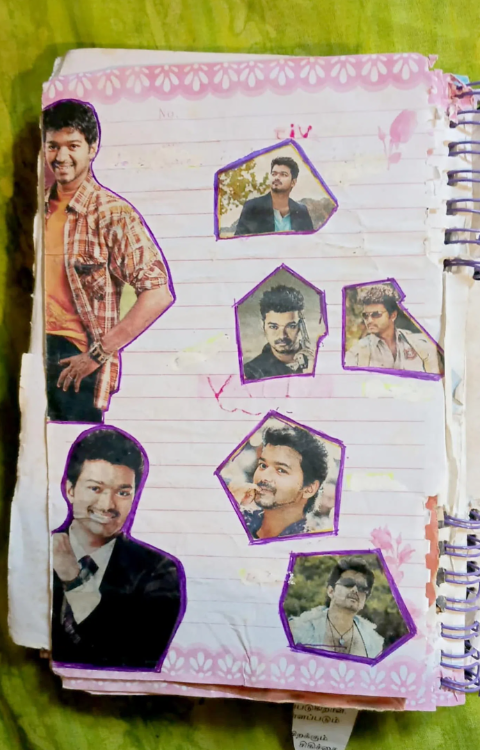
In Sri Lanka’s Kandy, school teacher Thameera Vaishnavi spoke of Vijay’s win as a sort of wish-fulfilment. She had prayed for Vijay at her home altar, and was thrilled to see the masses elevate him to a top politician in Tamil Nadu.
An upcountry Tamil, she saw members of her community – many of whom are marginalised, poor tea plantation workers – light firecrackers and throw yard parties after Vijay secured a majority. Thameera also cut a cake with her mother in celebration.
“Even if he is a wealthy, popular superstar, he was an underdog in the field of politics. It feels good when an underdog wins,” she said, adding that she hopes this would inspire young people to be less apolitical.
Purujoththaman said, referring to Tamils in Sri Lanka: “We know that Vijay is only a leader of a state in India, and there is a limit to what he can do for Sri Lanka, beyond maybe influencing the Indian foreign policy. But it is enough if he just extends a hand if something bad happens to us.”
Shirley, whose branding firm works with some political parties of Indian origin in Malaysia, believed there were “lessons from Vijay’s success that we can implement in our own backyard” – for instance, to focus on social media activity and door-to-door campaigns, as well as to “rise up when knocked down”.
Vijay’s well-timed political bid inadvertently allowed tens of thousands of frustrated voters to swat away jaded old-timers and choose a relatable leader worthy of their admiration.
Delip admitted that such a “fantasy-like” political rise was probably impossible in Singapore’s “more process-based” democratic system, where politicians had to climb up slowly from the grassroots.
Beyond promising a secular, corruption-free government that kept women and children safe, Mr Vijay’s campaigns did not outline any ideology or governance approach. Still, his silence allowed voters tired of the status quo to project their own hopes of good leadership onto his charismatic persona.
Purujoththaman, who has witnessed a revolution in Sri Lanka in 2022 that unseated corrupt, bigoted leaders to install a more people-friendly president, said that “the desire for a good leader is not limited to any country”.
That the leader this time was a movie star who knew how to shake a leg simply made the climax all the more joyful. - The Straits Times/ANN