Chinese pet food market heats up as local brands challenge global players
In a dedicated pet mall in the centre of Beijing, Liu Xin shops for Chinese-branded, ready-made beef and chicken meals for her two-year-old terrier, Eighteen. The 25-year-old spends at least US$250 (RM987) a month on pet food.
“I only buy domestic dog foods,” she said. “They are fresh and offer more choices. Western pet foods are too expensive and they aren’t always better.”
Liu is among a growing number of Chinese pet owners choosing local brands over Western ones, fuelling a boom in the more than US$24bil (RM94.8bil) pet food market.
Annual sales rose sixfold between 2014 and 2024, making the industry one of the brightest spots in the consumer sector of the world’s second-largest economy, which has been weighed down by a property crisis, stagnant wage growth and job security concerns.
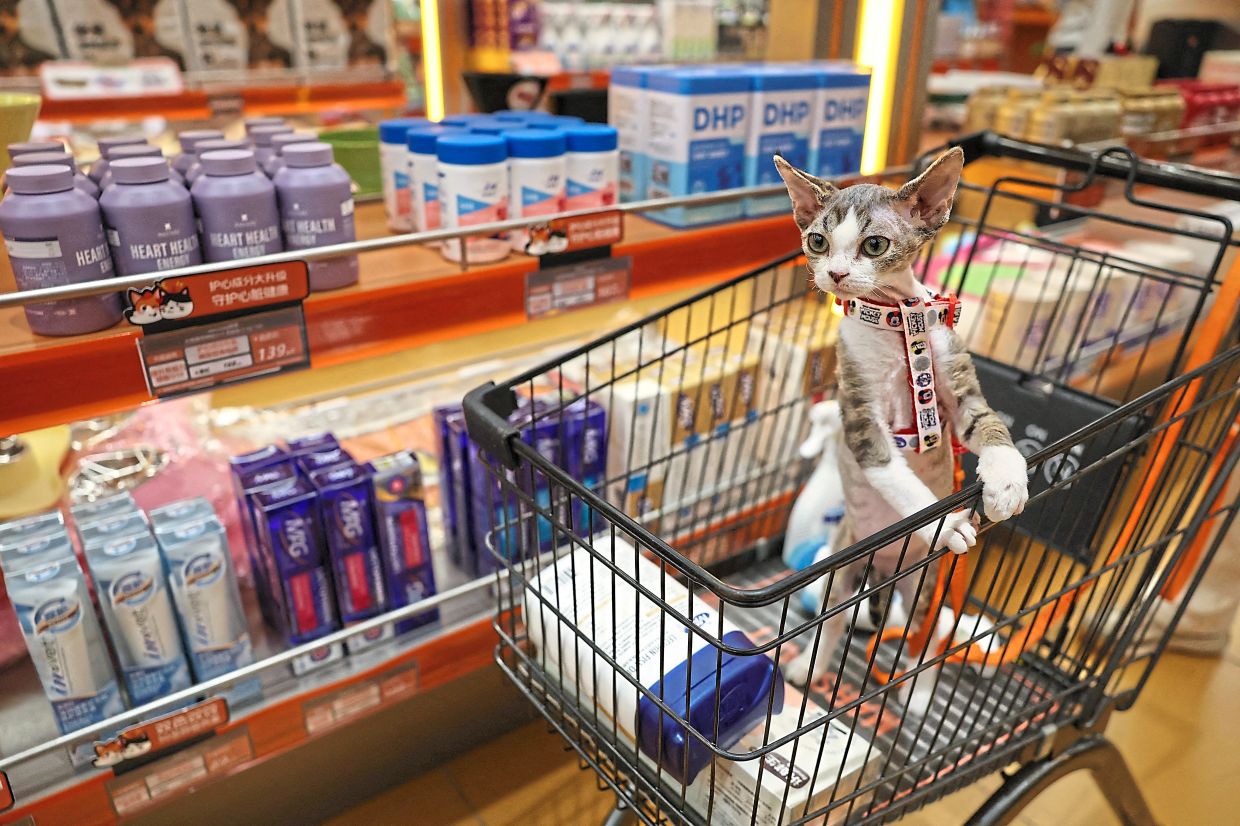
The rapid growth has drawn large domestic firms seeking new revenue streams as Chinese consumers lavish attention on their pets even as they tighten spending elsewhere.
Earlier this year, China’s national liquor maker Kweichow Moutai said it planned to develop pet food out of protein byproducts from the fermentation process.
Pork producer Wens Foodstuff acquired pet food maker Qingdao Shuang’an Biotechnology Co, while WH Group, owner of packaged pork giant Smithfield Foods, invested in Zhongyu Pet Food last year.
Dairy companies Mengniu and Yili, as well as drugmaker Yunnan Baiyao Group, have also launched pet food lines in recent years.
The domestic boom has squeezed the market share of international brands such as Canada’s Orijen and Nestle’s Purina.
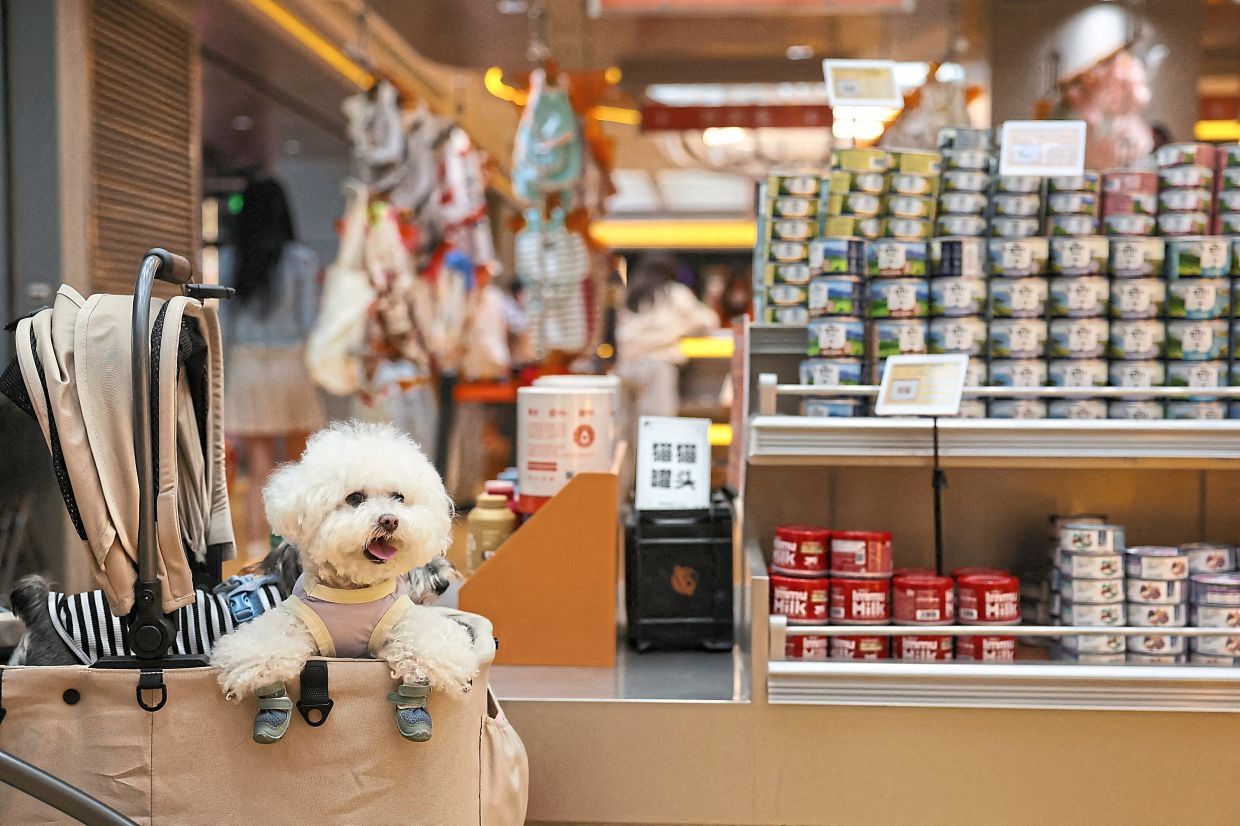
On April 9, General Mills said its Blue Buffalo brand had wound down operations in China.
Zhu Ruhai, a sales manager at Germany’s Animonda Carny, said sales of its German-made chicken cat food in China fell 30% last year.
“It’s like electronics or autos – more people are buying local brands these days,” he said.
Regulation concerns
China produced 1.9 million metric tonnes of pet food in 2025, up 17.9% from a year earlier, the China Feed Industry Association said in March, calling it the fastest-growing segment of the animal feed industry.
To lure pet lovers, local producers focus on attractive packaging, as well as a variety of flavours and kibble shapes. Many offer gifts in-store or online and spend heavily on e-commerce platforms including ByteDance’s Douyin, the Chinese version of TikTok.
Some are now moving up the value chain, adding more meat and fresher ingredients to their recipes.
“Domestic firms can reach more than 90% animal protein in some cat foods, while many foreign brands use plant proteins such as soy,” said Li Bingnan, sales director at Steo International Trade Co, a pet food producer founded in 2023. Li said its sales jumped 40% in 2025.
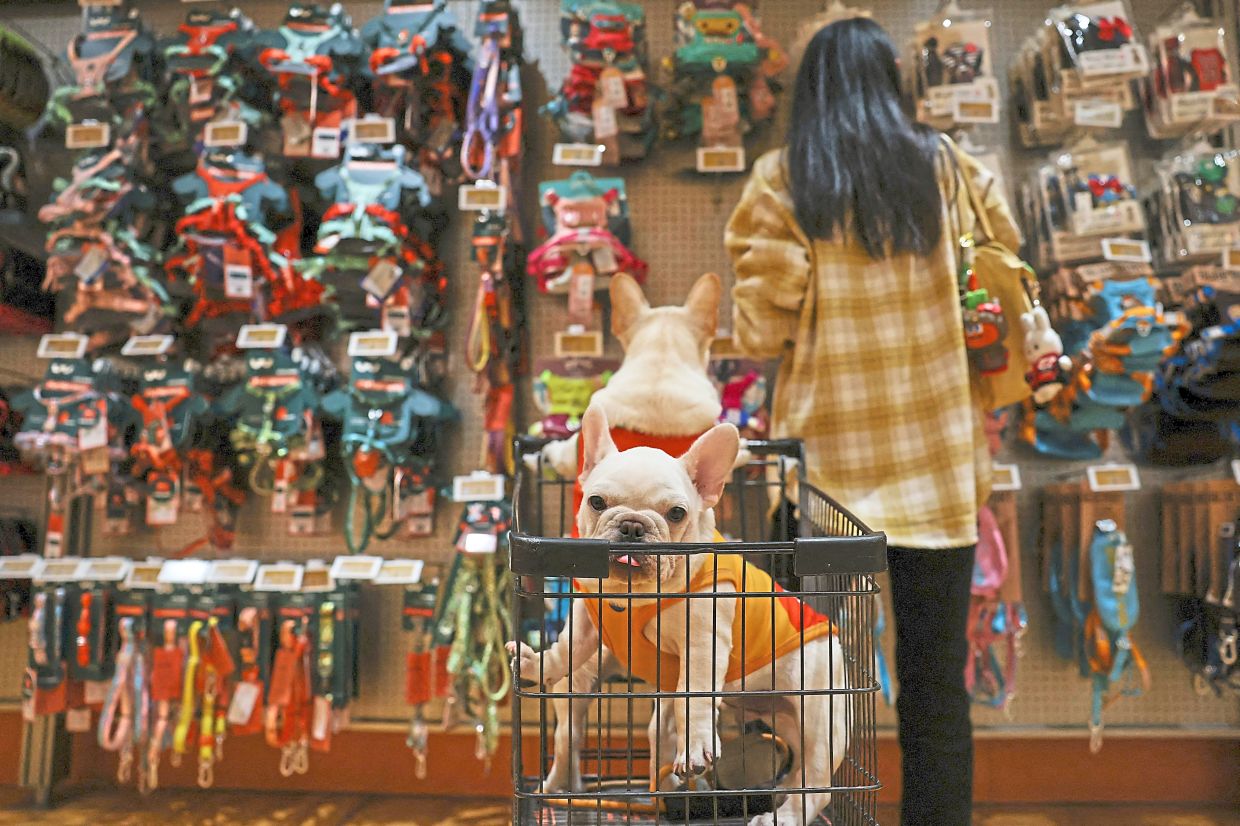
Still, safety concerns dog the local industry.
“There is a low threshold for making pet food; anyone can do it,” said Andy Wong, vice-chairman at the China Association for Quality Inspection’s pet food and supplies committee, which advocates for consumers and assists in government inspection work.
There are no national standards for the industry, which is overseen by the Agriculture Ministry, said Fu Zhenzhen, an analyst at Beijing Orient Agribusiness Consultants.
“Pet food is not the same as animal feed but that’s how they are being categorised and regulated right now,” she said.
The ministry uses livestock feed guidelines for pet food safety, though the livestock industry is focused on fattening animals for reproduction and slaughter, while pet owners want their furry friends to live healthier and longer lives.
“Our pet industry hasn’t reached the same stage as Europe, the United States, Japan and South Korea,” Fu said.
Even as local brands snap at their heels, not all Western brands are struggling. Mars’ Royal Canin remains China’s top-selling pet food brand and is gaining share through what industry observers described as an effective localisation strategy.
“Royal Canin’s strategy is to open factories to reduce costs and localise production. They also invested in pet-store distribution, educating vets and working with breeding centres,” said Wong.
“That era of foreign brands simply exporting or casually hiring an agent to drive sales is over.” — Reuters