
BEIJING: The Hollywood film The Devil Wears Prada 2 is facing accusations of racism in China after it released a clip that shows a nerdy Asian character with a name that allegedly sounds similar to the derogatory “Ching Chong”.
In the clip posted by a Chinese influencer, an Asian assistant character introduces herself as “Jin Chao”, which many online observers believed to sound like “Ching Chong”, a derogatory racist slur used to mock the Chinese language and people.
The character’s name, Jin Chao, was mistakenly referred to as “Chin Chou” in a widely circulated hearsay on social media, a variation that unfortunately sounds even more similar to the racial slur “Ching Chong.”
The offensive phrase circulated in the US amid an anti-Asian, xenophobic sentiment in the 19th and early 20th centuries.
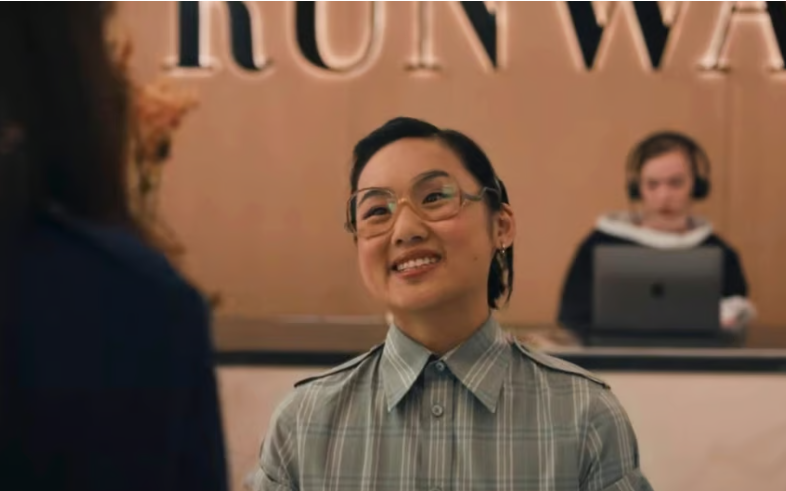
Also, some people on Chinese social media expressed disappointment with the character’s nerdy image.
The character’s outfit looks rather distinct in a fashion setting. The way she introduces her outstanding “Yale”, “3.86 GPA” academic achievements like a machine gun was also thought by some to feed into stereotypes about Asians.
“I have lived in the US for over a decade and cannot find any excuse for that name. I planned to watch the film but now I will not,” said one online observer.
“I can rarely see anyone dressing like this in a second-tier Chinese city, and you are telling me a Chinese girl working in fashion industry looks like this,” said another.
The controversy stirred up ahead of the film’s premiere in China on April 30, ahead of the country’s five-day Labour Day holiday.
The original Devil Wears Prada was released in the US in 2006, and hit Chinese cinemas in 2007.
The film received both box office success and critical acclaim in China.
At the time, it took 10 million yuan (US$1.4 million) in the first week and was the top choice among female audiences around International Women’s Day.
On a top Chinese online platform for film fanatics, the film received 8.2 out of 10 from over 800,000 raters. Some said the film “enlightened them about career attitude”, “cured them whenever they felt exhausted”.
Nearly 40,000 marked the film’s sequel in their watch lists. But the latest controversy sparked a common sentiment of disappointment, with some determining to “boycott” it.
Neither the film nor the actors, including the Asian assistant character’s Chinese-American actress Helen J. Shen, had responded to the accusations.
A few also claimed that the film has “offended China”.
Such criticism faced was rejected by commenters outside China, who described it as an overreaction.
“Nobody discriminates against you. It is only you feeling low self-esteem,” said one person.
Another defended the movie: “It is a bit far-fetched to link “Jin Chao” to “Ching Chong” and a stereotype is not the same as racism.”
The film’s co-stars Anne Hathaway and Meryl Streep were in Shanghai to promote the film on April 10.
Hathaway wore a gown by Chinese designer Susan Fang, and Streep praised Shanghai as “beautiful, vibrant and stunning”.
Their Shanghai premiere was well received by mainland social media users.
However, there were some negative reactions to the pair’s premiere in Seoul on April 8.
The host presented them with two pairs of custom embroidered red heels with flower and crane motifs, which the South Korean media said showed “Korean aesthetics”.
The news sparked discussions in China, with some arguing that the motifs belong to traditional Chinese culture, which had influence on Korean culture.
Previously, Marvel’s Asian-led superhero movie Shang-Chi and the Legend of the Ten Rings stirred controversy in China due to its original comic book’s villain character Fu Manchu, an infamous caricature that represents the West’s racist “yellow peril” sentiment.
Marvel ditched the character and invented a replacement named Xu Wenwu, played by renowned Hong Kong actor Tony Leung Chiu-wai.
Despite this, debates about whether Shang-Chi is racist against Chinese and Asian people still prevail online. The movie was not screened in mainland China despite Marvel’s general trend of box office success. - South China Morning Post