HONG KONG: Local stakeholders and economists cite a lack of transparency and weak oversight in Hong Kong’s fuel market as key factors that have worsened the impact of the city’s soaring oil prices, which are among the highest in the world.
The experts said the city’s opaque fuel market prevents prices from fully reflecting actual costs, leaving local consumers vulnerable, even before recent geopolitical tensions and supply disruptions drove oil costs higher.
Brent crude oil futures rose from around US$70 per barrel in late February to over US$100 per barrel in early April. By Monday, retail prices of diesel and premium gasoline in Hong Kong had jumped 47.5 per cent and 51.8 per cent respectively since Feb 28, when the United States and Israel launched airstrikes on Iran.
A recent survey of nearly 700 motorists indicates that many commercial vehicle drivers in Hong Kong — particularly those in the cargo sector — are struggling to stay afloat, with some of them working longer hours, skipping meals, and using less air conditioning.
According to the survey, over 80 per cent of the commercial drivers saw their monthly income plummet by more than HK$5,000 (US$639), roughly a quarter of the city’s median monthly wage. About 83 percent said the mounting financial pressures were taking a toll on their physical and mental health.
“Drivers working for large companies feel the pinch less, but self-employed drivers and those working for online logistics platforms need to absorb the additional costs on their own,” said Michelle Tsang Wing-suet, chairwoman of the Talk To You Now People Livelihood Progress Group, which initiated the survey.
To offset rising costs, over 60 per cent of surveyed drivers said they had to increase their workload or extend working hours to earn more, while about 80 per cent chose to use less air conditioning. Tsang added that some had to skip breakfast to save money.
To help ease the pressure on the transportation sector, the Hong Kong Special Administrative Region government announced on April 9 a relief package that included a HK$3-per-liter diesel subsidy and halved government tunnel tolls for commercial vehicles.
Although they welcome the relief measures, affected drivers thought their effects “would be rather limited,” Tsang said.
Many motorists complained about opaque pricing mechanisms employed by oil retailers and the lack of effective government oversight, Tsang said.
World’s costliest fuel
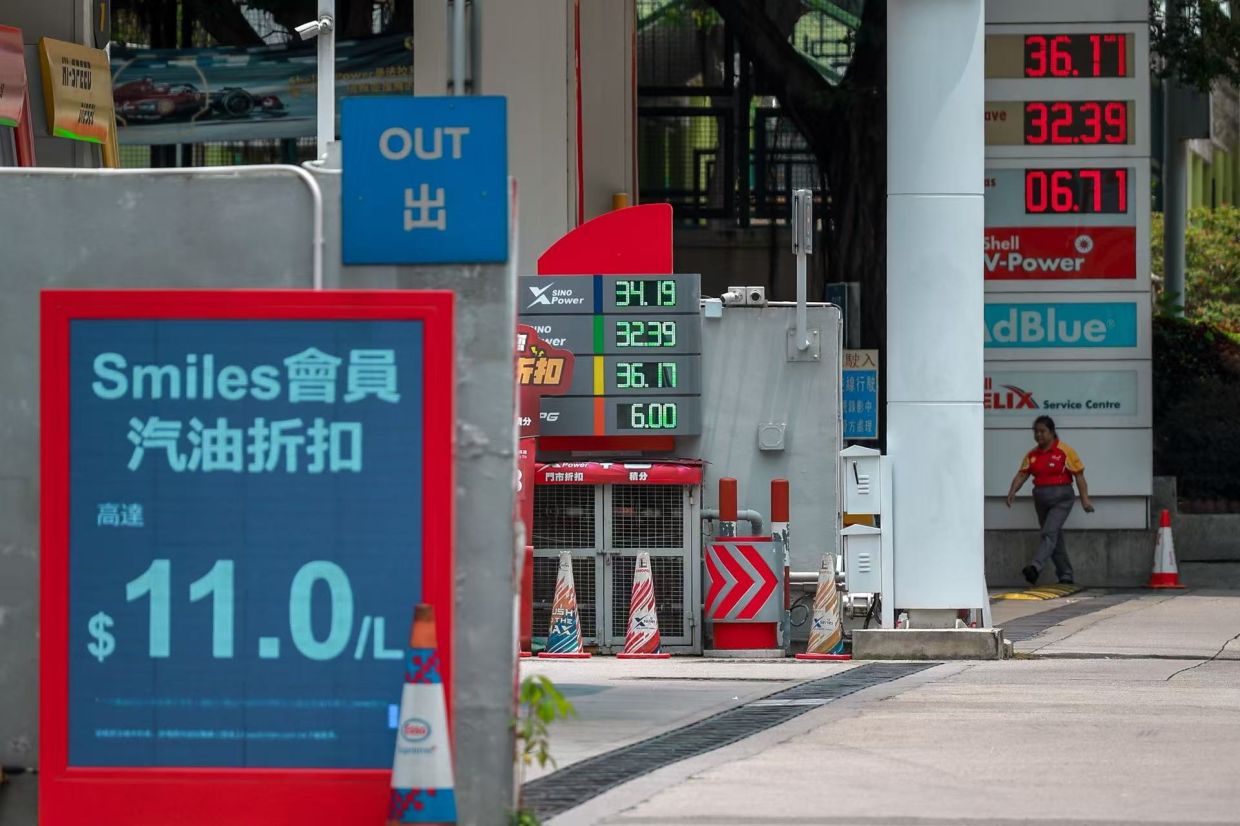
Hong Kong’s fuel prices are among the highest globally, surpassing those in many developed economies such as Singapore, Denmark, and the Netherlands. This has long fueled public suspicion of price-fixing within the market.
A 2017 report by the city’s Competition Commission found no direct evidence of price-fixing, but did identify a pattern of “parallel pricing” — in which companies adjust pump prices in near-unison. It also noted a complex, opaque discount system that makes it difficult for consumers to compare actual prices.
Prices across all gas stations owned by the same company are identical, with no geographical variation, the report found.
Similarly, a 2020 Consumer Council study observed that fuel prices tended to rise quickly but fell slowly in the previous seven years, except for 2014.
A 2020 Legislative Council report said previous studies by the Competition Commission and Consumer Council were stonewalled by a lack of access to crucial data, such as costs, profits and net margin of stakeholders, making it impossible to dispel consumer skepticism.
Oil companies routinely cite Hong Kong’s astronomical land and operating costs as justification for high fuel prices. However, Zhou Wen, associate professor at the University of Hong Kong Business School, said that such claims are not economically sound, adding that land prices are a fixed cost and should not affect prices.
He noted that some stations were built decades ago, when land prices were much lower, but their fuel isn’t cheaper today.
For example, the profit margin on gasoline — after deducting the fixed HK$6.06-per-liter tax and import costs — has soared sixfold over the past 20 years, from about HK$2 per liter to over HK$20 today, far outpacing inflation.
“Given that the increase in retail price far exceeded the increase in costs, we can assume that the growth portion mainly goes to profits,” Zhou said.
He added that fuel is a highly standardised product, allowing companies to maintain similar prices without explicit collusion. Retailers offer diversified, case-by-case discounts to retain consumer loyalty, but overall prices remain nearly identical.
Calls for reform
Stanley Chiang Chi-wai, chairman of the Hong Kong Land Transport Council, said large corporate buyers can secure discounts of up to 70 percent on diesel.
“Oil companies still make a profit even with such significant discounts,” he said. “This indicates how wide the profit margins are on fuel.”
Zhou suggested that regulators conduct targeted interviews and apply public pressure to encourage oil companies to reduce anti-competitive practices.
Based on the survey results, Tsang’s group recommended several measures to increase pricing transparency and stabilise prices. They include a fare-adjustment mechanism for the logistics and transport sector — similar to those used in public transportation — linking fuel surcharges to inflation.
It also proposed a fuel-price stabilization fund, financed by per-liter contributions from traders and supplemented by government subsidies, to support consumers during sudden global oil shocks. Similar initiatives have been implemented in other countries, including Vietnam and the Philippines.
The Consumer Council has expressed deep concern over recent price surges, urging retailers to consider affordability and adopt responsible sales strategies. - China Daily/ANN