




China has issued its first map pinpointing seabed chemical elements in the country’s eastern waters as Japan also races to tap undersea rare earth resources and deep-sea minerals.
The Chinese Ministry of Natural Resources published the results of marine geological surveys over the past two decades for the seas, state broadcaster CCTV reported on Tuesday.
The result was an atlas charting the location, concentration and distribution patterns of dozens of elements in seabed sediments, including rare earths, iron, manganese and copper, the report said.
CCTV described the document as a “master navigation map” for marine development and conservation in the waters.
It said the surveys covered more than 20,000 observation points, culminating in the broadest-ranging, most multidimensional and most reliable geochemical data set produced by China for that maritime area to date.
“By [mapping] the distribution of elements, we can ... precisely target seabed mineral resources, reducing blind exploration,” Dou Yanguang, a researcher with the ministry’s Qingdao Institute of Marine Geology, was quoted as saying.
Dou also said the atlas could help rapidly identify polluted areas and ecologically sensitive zones to draw “red lines” for marine conservation and manage marine pollution risks.
In addition to the Bohai Sea, one of China’s inland seas, the atlas covers the Yellow Sea – between the Chinese mainland and the Korean peninsula – and the East China Sea, where Beijing and Tokyo are still locked in long-standing territorial disputes, particularly over the islets China claims as the Diaoyu Islands and Japan administers as the Senkaku Islands.
Japan is stepping up efforts to explore and extract rare earth elements from the deep sea, targeting mud deposits near the remote Minamitori Island in the western Pacific Ocean and aiming to break the country’s reliance on China for about 70 per cent of its rare earth imports.
Japan’s push gained traction after Beijing – citing dual-use security concerns – introduced tighter export controls in January on rare earth elements and magnets bound for Tokyo as ties between the two neighbours dramatically soured in the wake of Japanese Prime Minister Sanae Takaichi’s controversial remarks on Taiwan in November.
Tokyo announced in February that its test mission had retrieved sediment containing rare earths from about 6,000 metres (19,700 feet) deep within the exclusive economic zone around Minamitori, an uninhabited atoll which is the country’s easternmost territory and nearly 1,900km (1,180 miles) southeast of Tokyo. The waters around Minamitori are not covered by China’s new atlas.
Takaichi said the effort marked “the first initiative towards the industrialisation of domestically produced rare earths in our country”.
“For important materials such as rare earths, we will, with the full involvement of both government and private sectors, pursue initiatives to strengthen supply chain resilience so as not to become overly dependent on any specific country,” she wrote on social media on February 2.
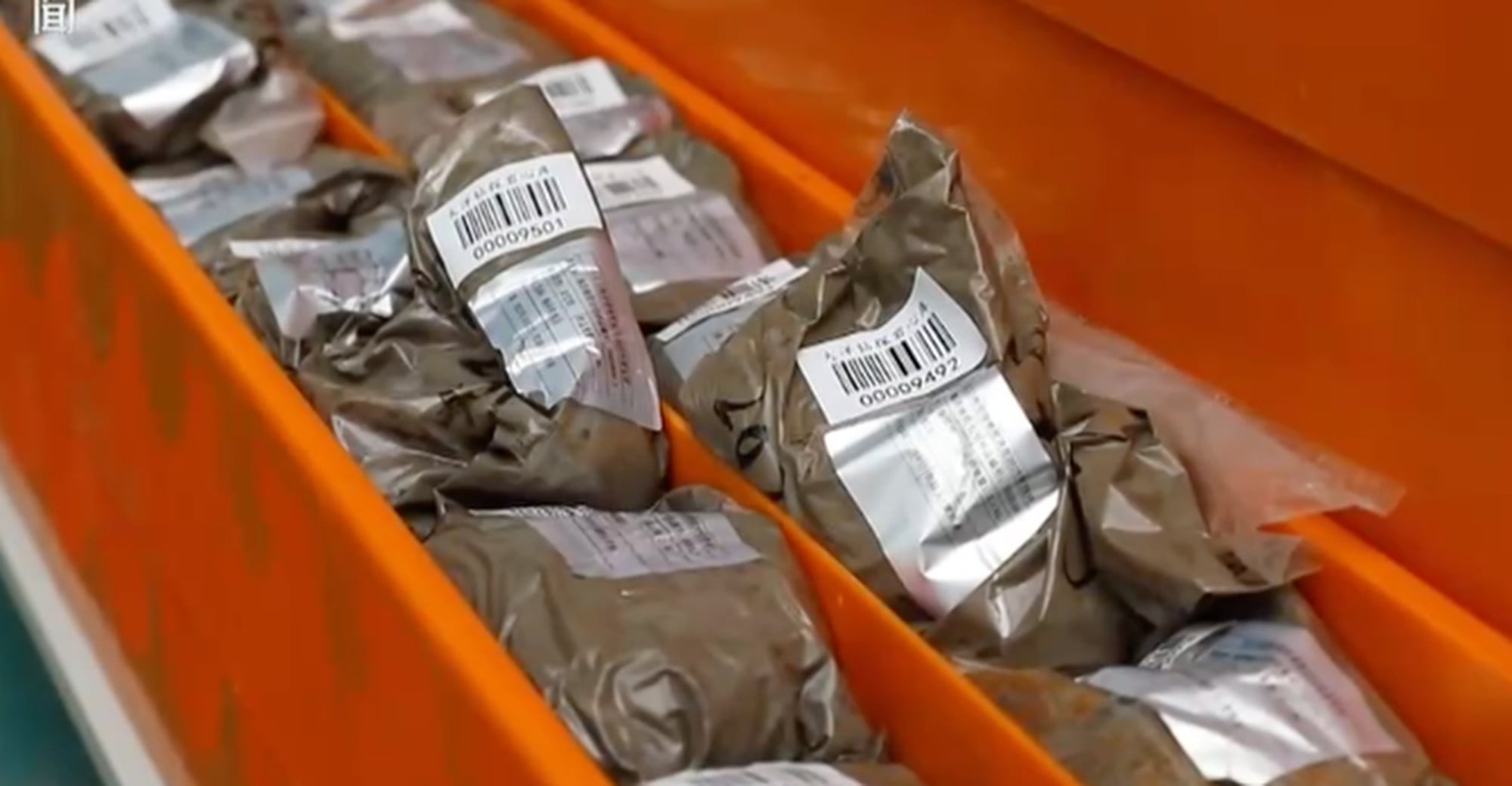
China shrugged off the move.
“We’ve noted that there have been similar reports in Japan in recent years,” Chinese foreign ministry spokesman Lin Jian said on February 3.
In March, Japan and the United States signed a memorandum of cooperation on deep-sea mineral resource development, formalising closer collaboration on seabed mining.
In response to tariffs levied by US President Donald Trump’s administration, Beijing imposed two waves of export controls on rare earths, one in April last year and the other in October.
Rare earths are a group of 17 metallic elements essential to electric vehicles (EVs), wind turbines and high-end electronics. China dominates the global supply, producing about 70 per cent of mined output and more than 80 per cent of refined materials.
With geopolitical competition extending into an ever-increasing number of domains, the deep sea has been emerging as a new arena for great-power rivalry and is expected to help shape the future global landscape.
“The deep sea is rich in mineral, biological and energy resources and is attracting increasing strategic attention from various countries,” said Fu Xiaoqiang, president of the China Institutes of Contemporary International Relations, a leading Beijing-based think tank affiliated with the nation’s Ministry of State Security.
“Breakthroughs in deep-sea mining technology and the regulatory vacuum have begun to spark disputes over resource allocation, with some countries eager to test the limits of international order,” he wrote in an article published last month by China’s top Communist Party journal Qiushi.
Fu added that as the contest between the US, Russia, Canada and others for control of Arctic shipping routes remained tense, “strategic competition in the polar and deep-sea domains continues to escalate”. -- SOUTH CHINA MORNING POST


