The Hong Kong government has proposed short-term measures including diesel subsidies of HK$3 per litre and reduced tunnel tolls to ease pressure on the commercial transport sector, which is grappling with soaring fuel prices.
Confirming an earlier South China Morning Post report, the government said on Thursday night that a recently formed task force monitoring fuel price movements had floated four temporary measures prioritising diesel-powered commercial vehicles and vessels, and ferries.
The government said the measures balanced volatile fuel prices and its prudent fiscal approach to public funds.
“The impact of the situation in the Middle East on Hong Kong’s overall economy largely depends on whether the military conflict continues, expands or escalates,” the Financial Secretary’s Office said.
Just days before the US-Israel strikes on Iran on February 28, Financial Secretary Paul Chan Mo-po had forecast the city’s gross domestic product would grow by 2.5 per cent to 3.5 per cent this year.
The cross-departmental task force led by the office met Chief Executive John Lee Ka-chiu in the morning to work out the measures.
The two-month diesel subsidy of HK$3 per litre aims to relieve pressure on sectors heavily reliant on the fuel, such as franchised and non-franchised bus operations, ferries and fishing boats.
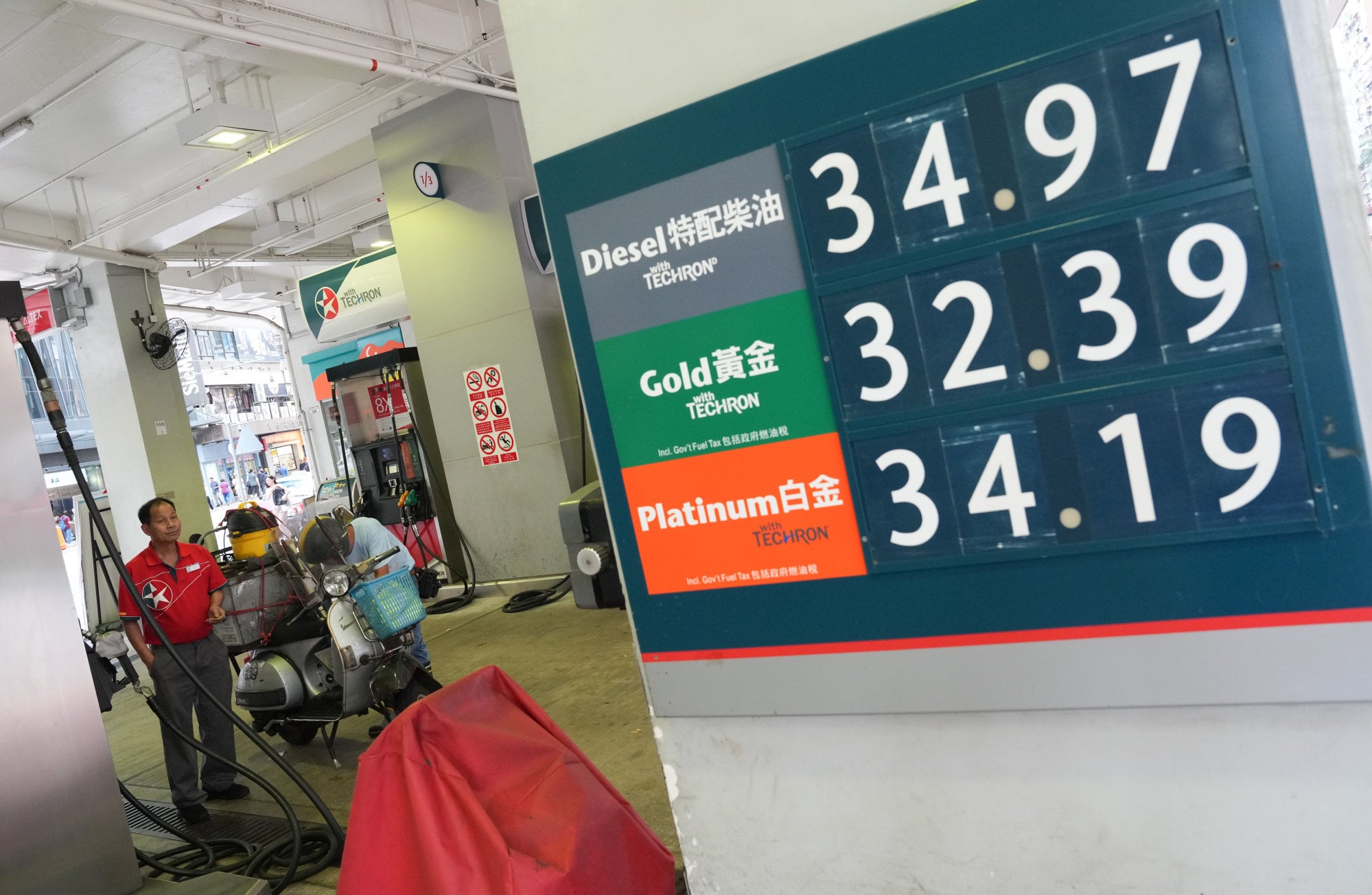
The Consumer Council’s fuel index showed diesel prices ranged between HK$30 and HK$32.97 per litre on Thursday.
The fuel subsidies will cost the government HK$1.8 billion. It will also forgo HK$160 million in tolls as tunnel fees for non-private vehicles – including goods vehicles, buses, minibuses and taxis – will be halved.
“Although international energy prices have corrected slightly recently, the price of vehicular diesel is still high and its trend is unpredictable,” the government said.
The reduced tunnel tolls will be in place for two months.
The task force also proposed establishing a dedicated work group under it to speed up handling applications from public transport service providers in response to the soaring energy prices, while vowing to “dynamically” monitor changes in fuel prices and geopolitical tensions.
However, the government cautioned that the proposals needed funding approval from the Legislative Council. It also needed to coordinate with the tunnel fee e-payment system’s service provider.
Legco’s Finance Committee will hold a meeting on Friday afternoon to scrutinise the proposals.
Hong Kong ranked No 1 in the world for petrol prices, at US$4.134 per litre as of Monday, according to data provider GlobalPetrolPrices.com.
Chau Kwok-keung, chairman of the Hong Kong Taxi and Public Light Bus Association, said about 500 of the city’s 4,350 minibuses used diesel and would benefit from the subsidy.
“We are very happy that the government made such a swift response,” Chau said, while conceding that there could still be challenges as the subsidy only covered a portion of the HK$4 to HK$5 price increase over the past month or so.
He urged the government to monitor liquefied petroleum gas – the fuel used by some minibuses and almost all taxis – and provide subsidies if there was a spike to maintain the price at the current level of about HK$3.40 per litre.
According to Chau, tunnel toll subsidies could boost the taxi trade, as ride-hailing vehicles would not enjoy the 50 per cent discount, making cabs more competitive for customers.
Stanley Chiang Chi-wai, chairman of the Hong Kong Land Transport Council, also welcomed the government’s measures, adding that roughly 100,000 trucks and light goods vehicles would benefit.
He had previously campaigned for a complete tunnel fee waiver, but said the 50 per cent discount was acceptable, stressing that business would remain difficult for drivers.
Ryan Lam Chun-wang, head of research for Hong Kong at Shanghai Commercial Bank, said gross domestic product (GDP) faced increased downward pressure in the second and third quarter of this year. He said the GDP growth would miss the government’s estimate of 2.5 to 3.5 per cent, and would instead grow at 2.2 per cent year on year.
“The government still leaves some leeway for further subsidies if oil stays elevated,” he said. “If the oil shock is short-lived, the government can strike a proper balance between averting moral hazard and easing unexpected shocks.”
The government said relief measures for private transport were beyond consideration because it was a matter of personal decision and alternatives were available.
Economists had warned that a two-week ceasefire between the United States and Iran announced on Tuesday was unlikely to substantially ease fuel prices in the near term. Relief would only come when the conflict ended, they said.
Israel continued to bomb busy commercial and residential areas in central Beirut, Lebanon, without warning on Wednesday.
Earlier this week, Singapore announced a support package worth nearly S$1 billion (US$780 million) to offset the economic impact of the conflict.
The measures include cash handouts to eligible Singaporeans and fuel vouchers for ride-hailing workers, private-hire vehicle operators and taxi drivers. The corporate tax rebate will also be increased to 50 per cent, up from 40 per cent announced in the city state’s budget in February.
Five players dominate the Hong Kong petrol retail market – ExxonMobil’s Esso, Chevron’s Caltex, Shell, Sinopec and PetroChina – which together operate 178 stations and have raised prices since the war started on February 28.
PetroChina raised them the most steeply at 23.1 per cent between February 28 and April 8, followed by Esso and Shell, according to Consumer Council’s auto-fuel price trend. -- SOUTH CHINA MORNING POST