US President Donald Trump has claimed that ordinary Iranians were urging the US to keep bombing their own country in pursuit of “freedom”, as he renewed his warning of sweeping strikes on Iran’s critical infrastructure if negotiations fail ahead of his Tuesday deadline.
Sounding triumphant after what he described as a “dangerous” operation to rescue a wounded American pilot from deep inside Iran, Trump on Monday warned that Iran could be “taken out in a night”, saying US forces had the capability to destroy major facilities within hours if a deal was not reached in time.
“Complete demolition by 12 o’clock ... over a period of four hours, if we wanted to,” he said, but added that Washington did not want to pursue that outcome and could instead help rebuild the country if an agreement was reached.
“We need to have a deal that’s acceptable to me, and that includes free traffic in the Strait of Hormuz,” he added.
While he admitted that he did not know whether the war was winding down or escalating, Trump alleged that the people of Iran were willing to “suffer” and wanted the US to keep “dropping” bombs for “freedom”.
“They would be willing to suffer that in order to have freedom ... We’ve had numerous intercepts: ‘please keep bombing’ – bombs that are dropping near their homes. ‘Please keep bombing. Do it’,” Trump said.
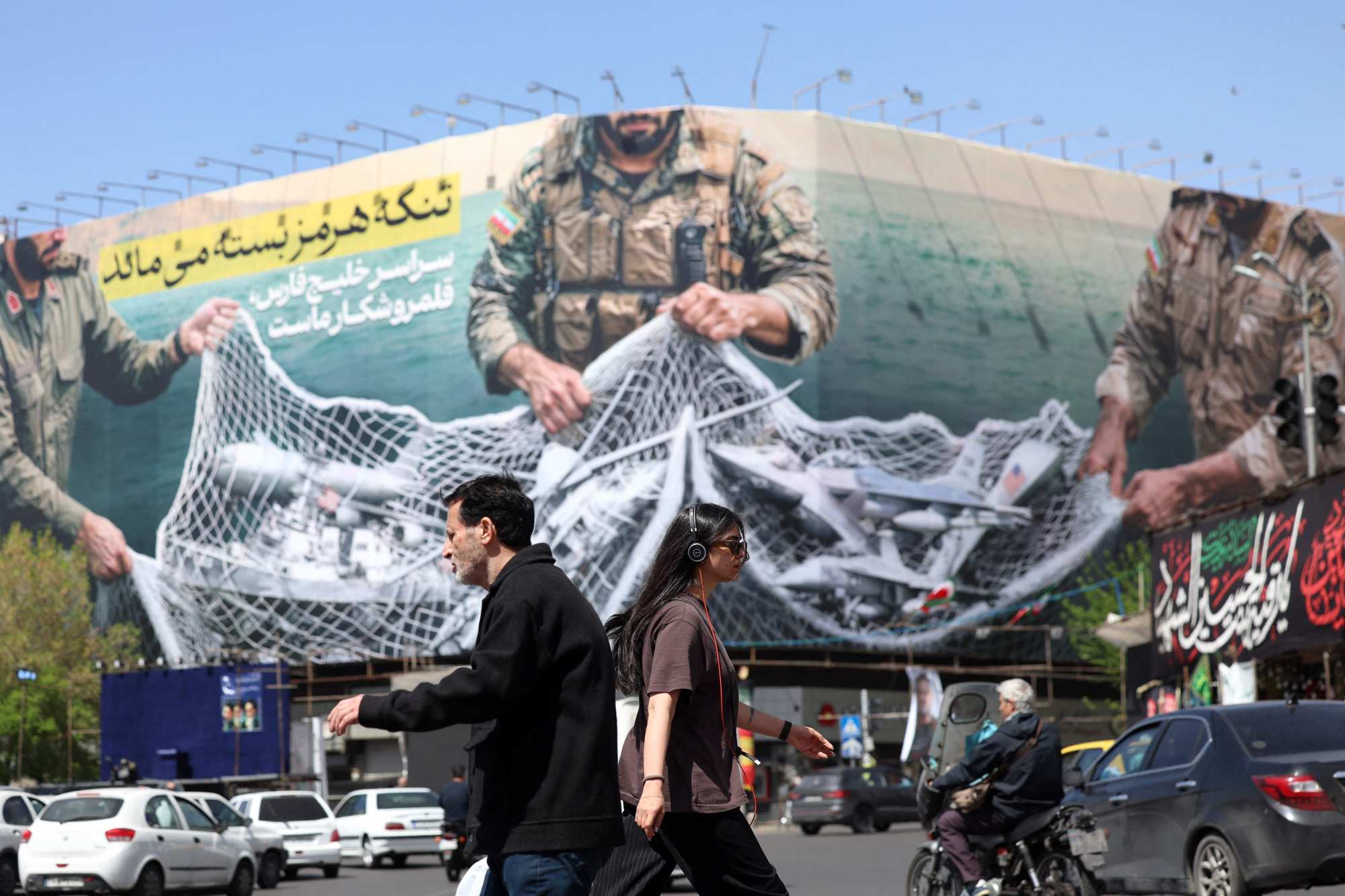
Iran’s top joint military command condemned Trump’s comments as “rude” and “arrogant rhetoric”, labelling the threats from a “delusional” president as entirely “baseless”.
On Tuesday, Iranian officials urged youths to form human chains around power plants to protect them. Meanwhile, Iran’s President Masoud Pezeshkian announced on X that 14 million Iranians had answered calls to volunteer to fight in case of a ground invasion by the US and Israel.
“I too have been, am, and will remain ready to give my life for Iran,” Pezeshkian said.
That came after Trump took to social media on Sunday to issue a series of expletive-laden warnings renewing a 48-hour ultimatum, first issued in late March.
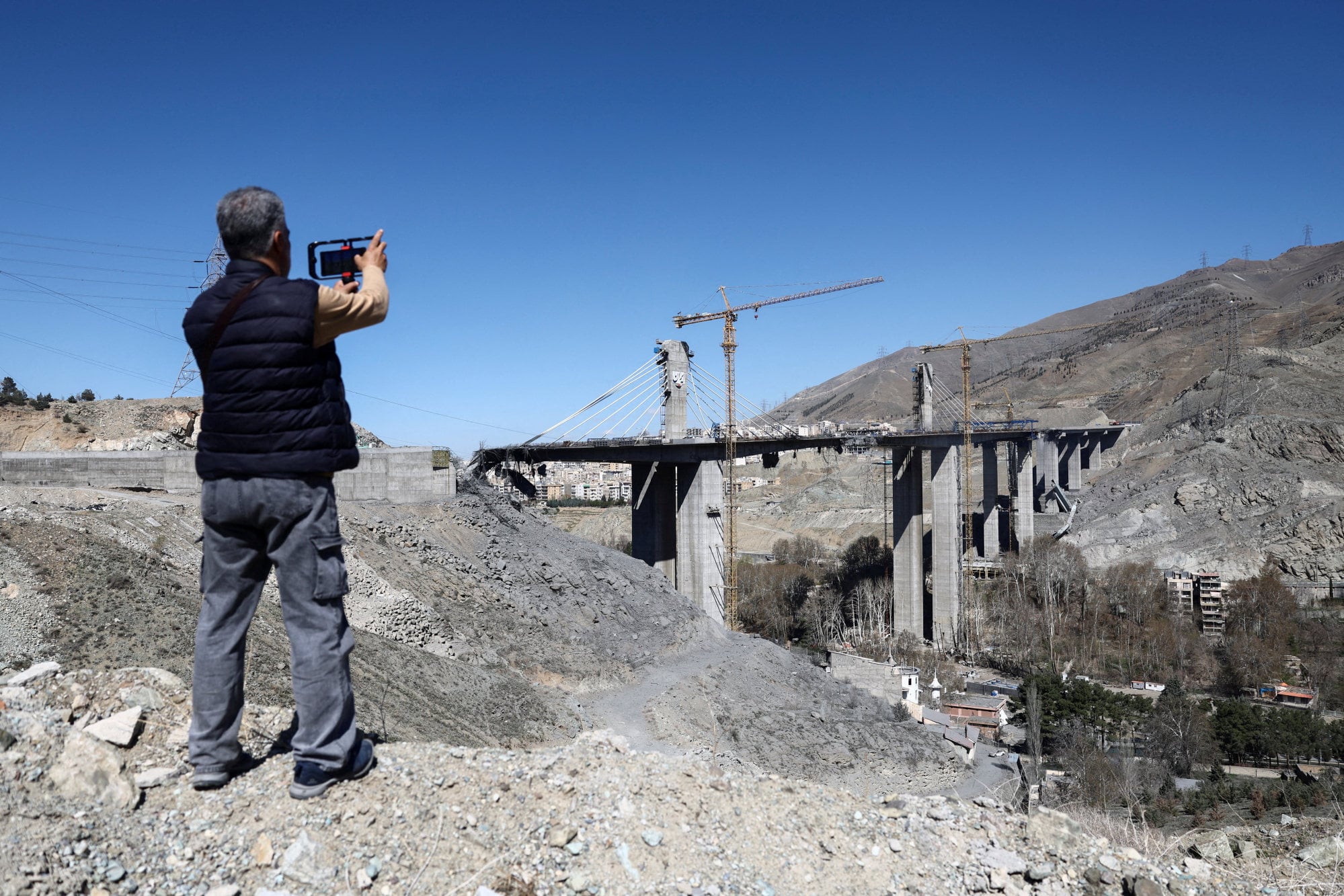
He demanded that Tehran reopen the Strait of Hormuz, a primary artery for the world’s oil, by Tuesday at 8pm EST (8am Wednesday Hong Kong time), threatening a “rain of bombs” targeting Iran’s public infrastructure, including power facilities and bridges.
The price of US crude oil spiked from US$112 to about US$114 per barrel when Trump began speaking on Monday. Brent, the international oil benchmark, jumped to US$111 per barrel, dropping to US$109 since.
Trump told reporters that negotiations were under way and appeared to be conducted in “good faith”, with support from other countries affected by the conflict.
While he did not name Pakistan, with the deadline looming, the South Asian ally of the US floated a ceasefire proposal to halt fighting and reopen the Strait of Hormuz ahead of 15 to 20 days of talks. Tehran rejected the offer on Monday, warning of “more crushing” and “more extensive” retaliatory attacks.
“I can tell you that we have an active, willing participant on the other side,” Trump said, adding that any deal must guarantee free navigation through the strategic waterway.
Trump also took the opportunity to reiterate his displeasure with key allies in Europe and Asia, calling out Germany, Japan, Australia and South Korea for not helping the US with the reopening of the Strait of Hormuz.
He said that the over eight-decade-old North Atlantic Treaty Organization, or Nato, was a “paper tiger”, adding that Russian leader Vladimir Putin was only afraid of the US and not Nato.
“Putin’s not afraid of Nato. Putin’s afraid of us, very afraid of us. And he’s explained it to me a lot of times. I got to know him very well. I know him very well,” he said.
Experts, however, offered a cautious assessment of the current situation, distinguishing between recent operational success and the looming global crisis.
Ali Wyne, senior research adviser with the International Crisis Group, pointed out that Trump’s actions could push the regional conflagration into a “dangerous new phase” and exacerbate the “worst energy shock in modern history”.
“America’s record in the Middle East over the past quarter-century underscores that overwhelming military force rarely produces the intended political results,” Wyne said. “Public bravado betrays anxiety, not confidence.”
Ian Lesser of the German Marshall Fund of the United States, noted that while Trump leveraged the “extraordinary” rescue, which could have “tremendous political mileage” for him, the speech offered little strategic clarity.
“It did not clarify at all the bigger issues regarding the future of the conflict and what happens next. He issued additional threats, but those were known,” Lesser said.
“A tactical victory, no question,” he added, but “strategically, a big open question.”
Samantha Gross of the Brookings Institution warned that the world has only begun to feel the economic brunt of the conflict in Iran.
“As the world works through this oil and feels the full brunt of the disruption, I would expect prices for both oil and LNG to rise further,” she said.
Regarding the Tuesday deadline, Gross said it was difficult to judge how Iran would respond.
“The Strait of Hormuz and lobbing missiles and drones at their neighbours are the most potent weapons Iran has, harming the US and the world economically. I believe they will use these weapons until the war ends,” she contended.
Appearing alongside Defence Secretary Pete Hegseth, Joint Chiefs chairman Dan Caine and CIA Director John Ratcliffe, Trump described the rescue of two crew members from a downed F-15 jet in Iran as a “massive” and “historic” operation.
“It was a breathtaking show of force and precision,” Trump said, adding that both the pilot and weapons officer were recovered without American casualties.
Ratcliffe indicated that as part of this weekend’s rescue operations, his agency ran “a deception campaign to confuse the Iranians who were desperately hunting for our airmen”.
“Our intelligence reflects that the Iranians were embarrassed and ultimately humiliated by the success of this audacious rescue mission,” he added.
Hegseth echoed the words of the president and said that “Iran has a choice. Choose wisely, because this president doesn’t joke around”.
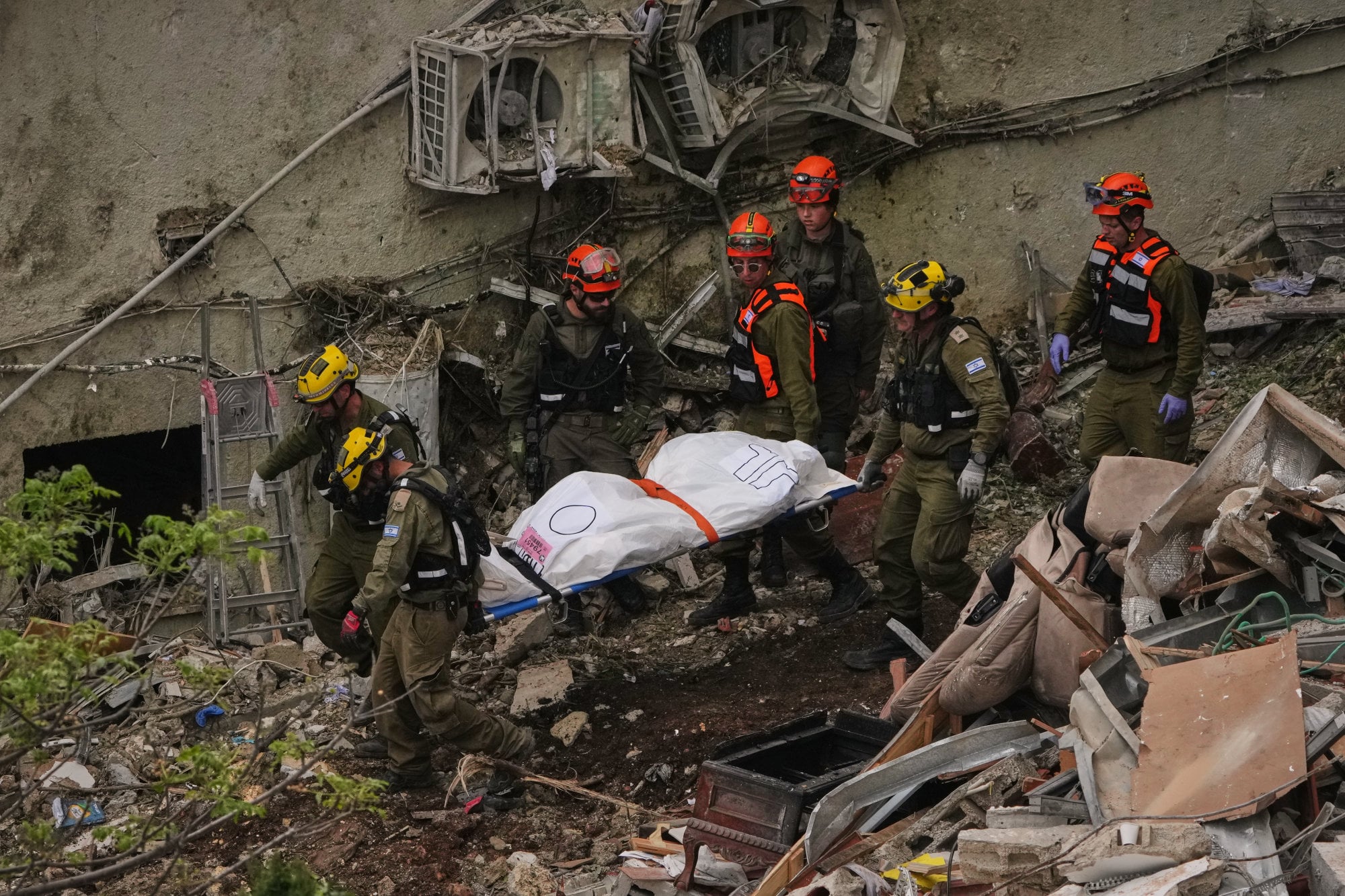
Later, Iran’s semi-official Fars news agency reported that four Iranian army officers were killed in the central Isfahan province during the rescue operation.
These remarks follow intense speculation regarding Trump’s health after he vanished from the public eye over the weekend. The White House dismissed these concerns, attributing his absence to his oversight of what the administration described as a “high-risk” rescue mission.
The conflict began on February 28, when the US and Israel launched a series of surprise joint air strikes – dubbed Operation Epic Fury – targeting Iran’s top leadership, military infrastructure, and nuclear sites, killing Iran’s Supreme Leader Ayatollah Ali Khamenei. Khamenei’s son, Mojtaba Khamenei, has succeeded his late father as ruler.
Iran retaliated by attacking US military bases in the region and closing the Strait of Hormuz. The measure has sent global energy prices skyrocketing and shaken international markets, leaving many Asian and African nations vulnerable to energy shortages.
Trump has claimed that the US has “completely decimated” Iran’s military, asserting that its radar and air defences were “100 per cent annihilated”.
Last week, in a televised address to the nation, the US president said that the “core objectives” of the operation were “nearing completion” and that he needed “two to three weeks” to push Iran back to the “Stone Ages, where they belong”.
-- SOUTH CHINA MORNING POST