
For Zhang Kai, a pioneering scientist who is building an ultra-large-scale cellular structure group data bank with unprecedented precision, returning home to China was the natural choice to fulfil his ambition.
“In the United States, it is almost impossible for a Chinese scholar to take the lead on this project,” Zhang said during a March 26 interview with China Science Daily, the official newspaper of the Chinese Academy of Sciences (CAS), the country’s most prestigious research institution.
On January 12, Zhang resigned from his tenure-track position at Yale University and officially joined the School of Life Sciences and Medicine at the University of Science and Technology of China (USTC) in Hefei, Anhui province.
A month later, a paper for which he was the corresponding author was published in the prestigious journal Nature. It reported a breakthrough in his research field: high-resolution electron microscopy imaging and analysis technology.
This research is widely seen as essential for understanding life, developing new diagnostic and therapeutic technologies, and improving health management.
Zhang’s path to prominence began more than 20 years ago, from modest beginnings.
Hailing from a poor rural area in China’s northwestern Shaanxi province, Zhang in 2004 entered the Harbin Institute of Technology (HIT) in the northeast after taking the national college entrance examination.
In 2008, he graduated with a bachelor’s degree and then gained admission to CAS’ Institute of Biophysics. It was here that he was introduced to cryo-electron microscopy (cryo-EM).
Cryo-EM is an imaging technique that allows researchers to visualise the structure of biological macromolecules – a passion that has shaped Zhang’s career ever since.
“It is quite different from most traditional biology directions, which mainly rely on experiments,” Zhang explained in a 2020 interview with HIT.
“Research in the field of cryo-EM organically combines the three major research methods: experiments, theory and computation.”
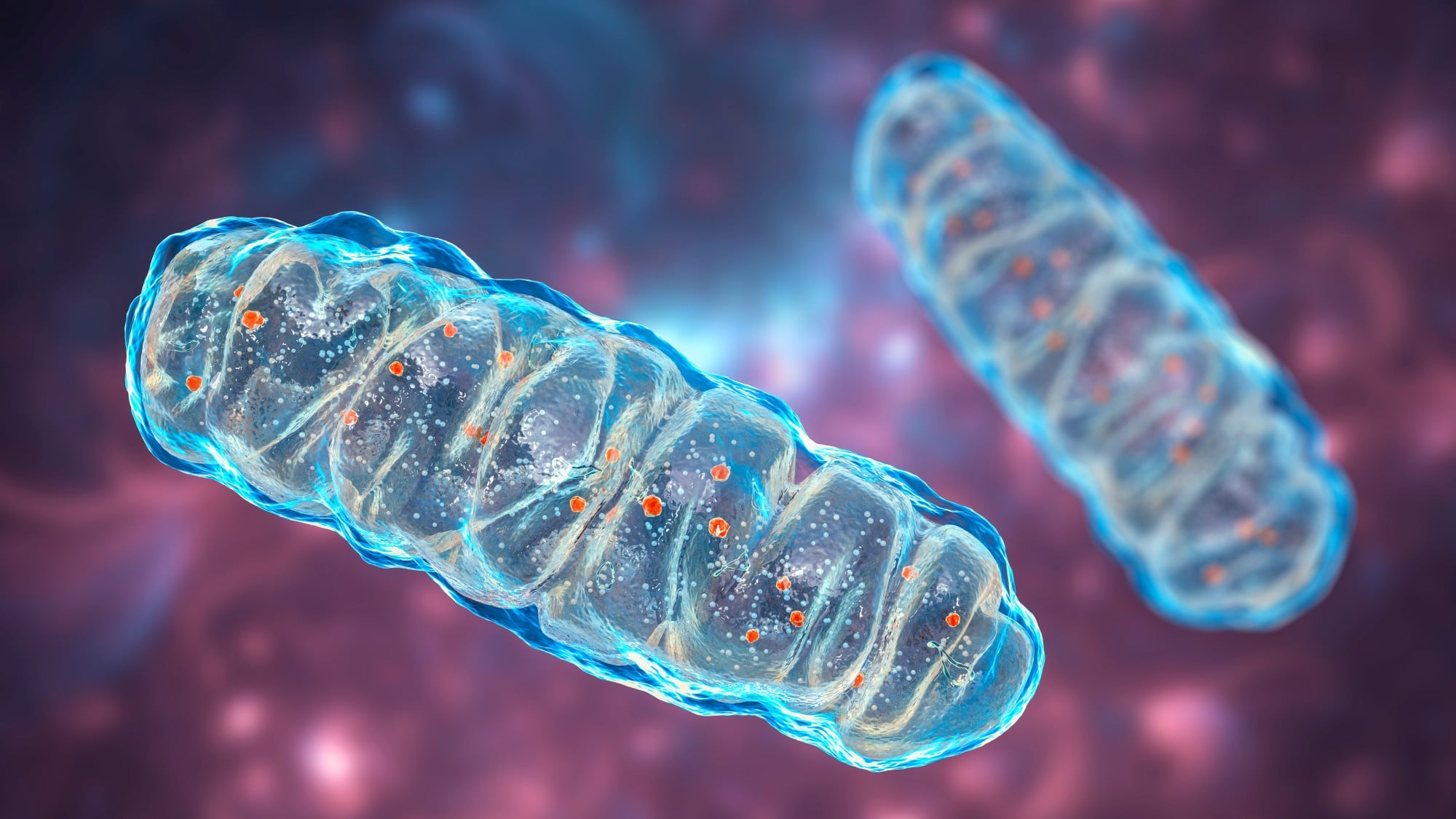
In the interview, he described a sci-fi aspiration that took root at an early age: a wish to directly “see” the atomic structure of the respiratory chain complexes within mitochondria, often called the powerhouse of the cell.
In 2013, after graduating with a PhD in biophysics from CAS, Zhang entered the Medical Research Council Laboratory of Molecular Biology in Cambridge, England, to conduct postdoctoral research.
In 2019, he joined Yale University as an assistant professor.
At both renowned research institutions, Zhang published a number of papers using cryo-EM to study cell structures. These included a cover story in the journal Science and others published in the similarly influential journals Nature and Cell.
In 2024, Zhang collaborated with Zhu Jiapeng of the Nanjing University of Chinese Medicine to publish a paper in Nature that its reviewers described as “pioneering work”.
Traditionally, international research on proteins has mostly involved purifying proteins from mitochondria and then observing and analysing them using cryo-EM.
However, within an organism, proteins are often active and in constant motion, continuously reacting with other proteins and exhibiting different states. Static observation is understood to be insufficient to present their true state.
In the 2024 Nature article, Zhang and Zhu found a way to observe proteins inside the body during exercise, effectively capturing their activity in a natural state.
“It seems that in the past, it was staged photography, but now it is candid photography,” Zhu explained in the article’s introduction.
“Unintentional candid shots help us obtain a more authentic, accurate and reliable form of proteins,” he added. “This holds significant importance for the subsequent scientific analysis and related applications.”
Zhang’s latest paper in Nature, published in February, overturns the “cytoplasmic assembly hypothesis” that has prevailed for more than a decade.
In short, previous studies believed that connector proteins played a central role in protein assembly. However, Zhang’s research found that microtubules contributed about 97 per cent of assembly efficiency, and connector proteins were likely to be “squeezed in” only after formation.
Regarded as a global leader in cryo-EM research, Zhang surprised many by leaving Yale mid-career. He chose not to wait for promotion at the Ivy League university and returned to China earlier this year.
“The USTC is a simple, pure, passionate and idealistic research environment,” Zhang said of his new research home in last week’s China Science Daily interview.
“The USTC leaders are true scientists who are very supportive of young scholars.”
As for achieving his ultimate goal of observing cellular life activities at an atomic level, he said: “I do not know how long this matter will take, but I have enough confidence to accomplish it.” -- SOUTH CHINA MORNING POST