Vendors of palaspas (woven palm fronds) raised prices this year, passing on higher production and transport costs fuelled by continuing oil price hikes amid the conflict in the Middle East.
“All prices have gone up, so we were also forced to increase the price of palaspas,” said Maria Sembrano, 65, who has been selling outside Saint Ferdinand Cathedral.
Sembrano said the braided palm fronds, crafted by her children in nearby Tayabas City, now sell for 35 pesos each (RM2.28), up from 25 pesos (RM1.63) last year.
More elaborate designs adorned with ribbons range from 40 to 45 pesos (RM2.61 to RM2.94).
Tayabas, one of Quezon province’s oldest towns, is known for its long-standing palm-weaving tradition, passed down through generations.
Sidewalks around the cathedral in downtown Lucena have long served as a marketplace for palaspas ahead of Palm Sunday.
Palm leaves are plentiful in Tayabas, with some fronds harvested as early as a week before the celebration and woven in the days leading up to the rites.
Sembrano said every stage of production – from cutting and weaving to transport and retail – has been affected by rising costs.
“I’m glad buyers understand the increase. Some of our regular customers even paid more,” she added.
At Saint Jude Parish in Barangay Cotta, vendors likewise lined the parking area, selling palaspas for 40 to 45 pesos each.
After Mass, churchgoers carried bundles of blessed palm fronds home.
“I understand the price increase. We’re all affected by the current economic situation. Everyone needs to earn, but without taking advantage of others,” said Criselda Manalo, 69, a retired government employee.
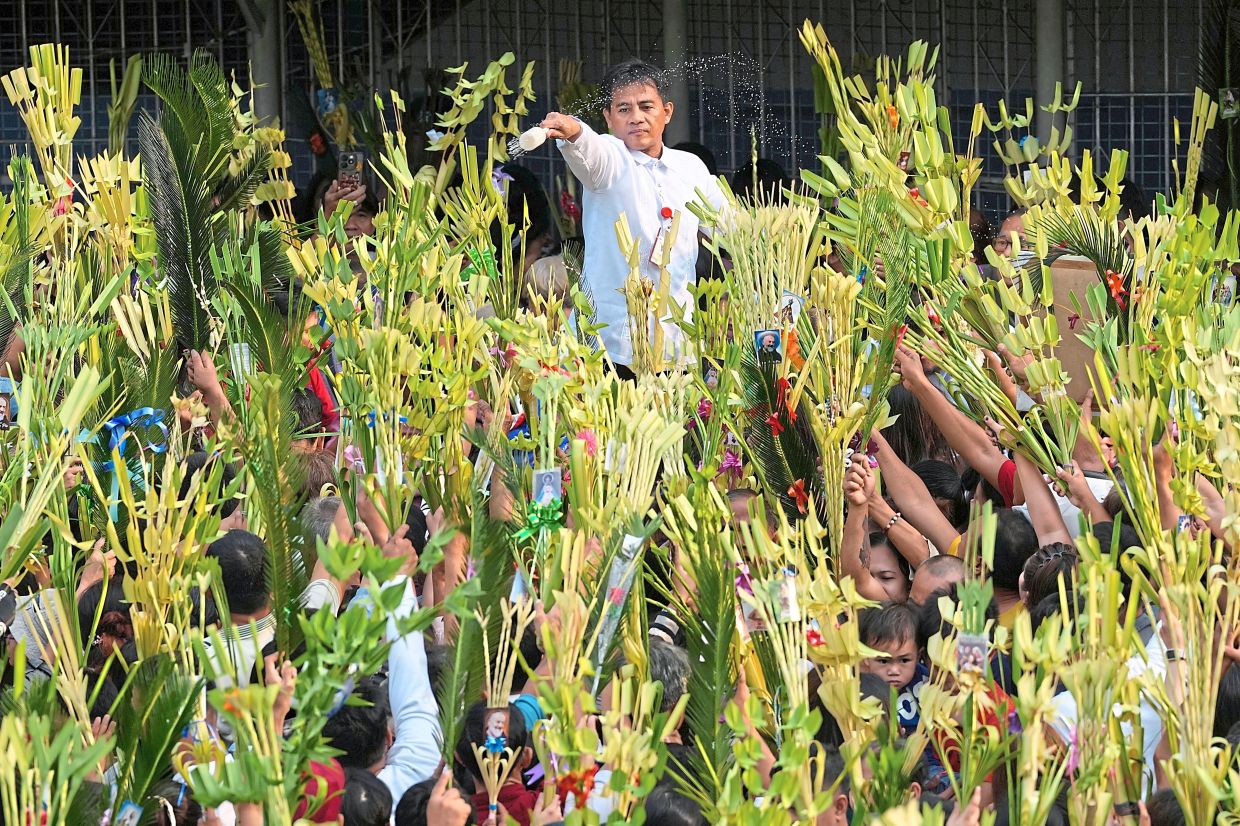
During Palm Sunday rites, some vendors also brought their palaspas into church patios to be blessed alongside the faithful.
The blessing of palm fronds is the highlight of Palm Sunday, commemorating the entry of Jesus Christ into Jerusalem.
The blessed palms are later placed near doors or windows, a practice believed to offer protection. — Philippine Daily Inquirer/ANN