
After weeks of speculation and behind-the-scenes intrigue over the delayed summit between President Xi Jinping and US President Donald Trump, the White House announced on Wednesday new dates for the long-anticipated, high-stakes meeting.
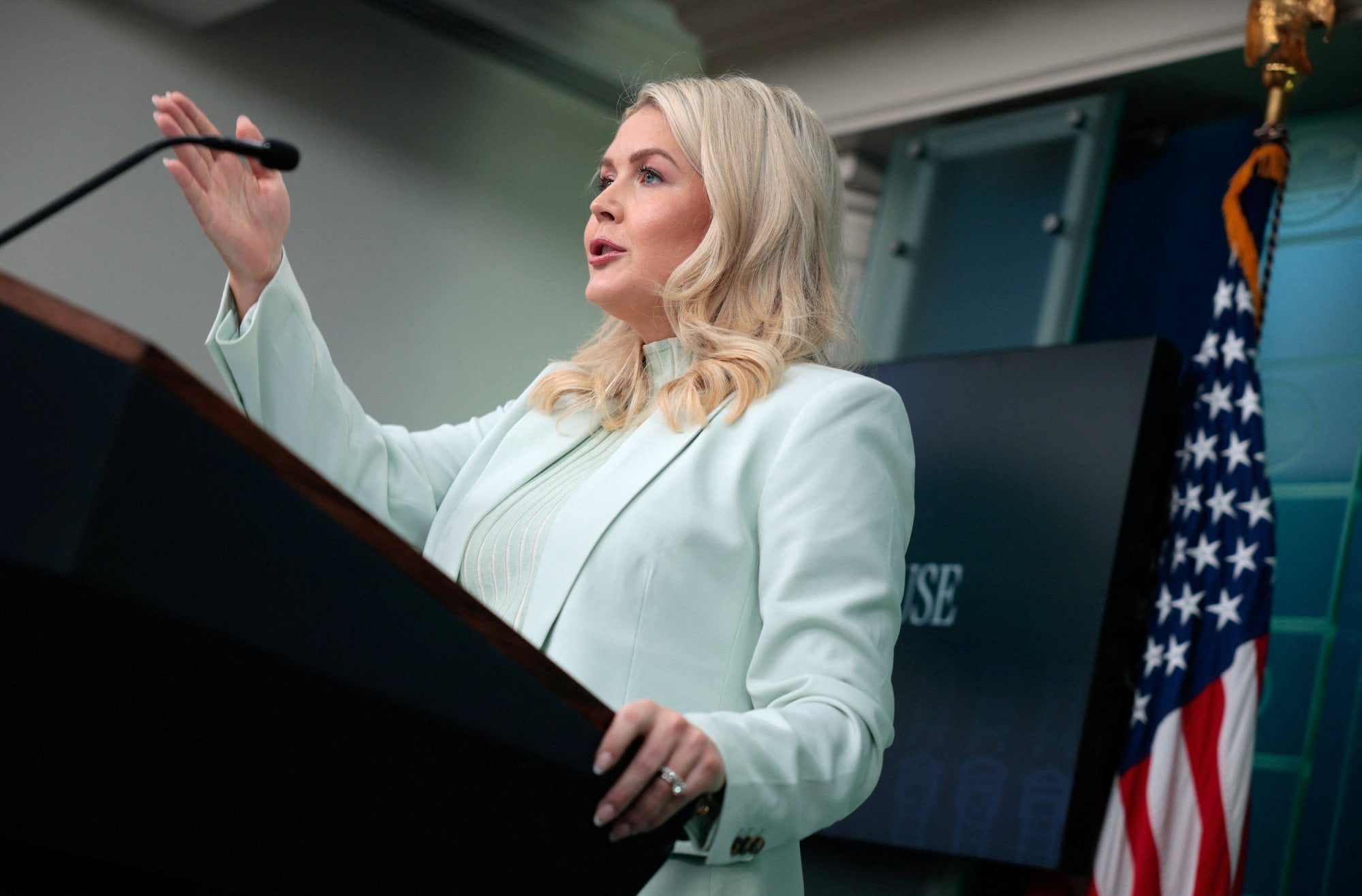
“I’m pleased to announce that President Trump’s ... long-awaited meeting with President Xi in China will now take place in Beijing on May 14 and 15,” White House spokeswoman Karoline Leavitt said.
In a social media post, Trump described Xi as “the highly respected president of China”, adding that “representatives” on both sides were “finalising preparations” for the “historic” visit.
“I look very much forward to spending time with President Xi in what will be, I am sure, a monumental event,” he added.
The White House press secretary also announced that Trump, along with his wife, first lady Melania, will host “Xi and Madam Peng Liyuan for a reciprocal visit in Washington, DC, at a later date to be announced this year”.
When asked whether the Xi-Trump summit depended on the end of the US-Israel war against Iran, Leavitt said that Trump and Xi had discussed rescheduling, adding that the Chinese leader understood it was “very important” for the president to stay in the US “throughout these combat operations”.
In the past, Trump has announced phone calls with Xi that were never acknowledged by Beijing and the Chinese side has yet to confirm the new dates.
In Beijing on Thursday, Chinese foreign ministry spokesman Lin Jian said head-of-state diplomacy played an irreplaceable role in providing strategic guidance to China-US relations.
“The two countries have remained communication regarding President Trump’s visit to China,” Lin said.
In February, the White House announced that the Xi-Trump summit was scheduled for March 31 to April 2, but Beijing made no official announcement. The White House then said the meeting was postponed as the Iran war took priority, while Beijing stated the two sides were still discussing the trip.
“China and the US remain in communication on President Trump’s visit to China, including the dates,” said Liu Pengyu, spokesman with the Chinese embassy in Washington, last week. “I have nothing to add.”
Iran conflict may still make final dates uncertain
Jeremy Chan, senior analyst with the Eurasia Group, a New York-based consultancy, expected planning to begin for new dates “whether China confirms them or not, but Beijing will keep its guard up a bit more this time around given that the Iran war shows no sign of slowing down”.
“Trump needs to go to China before too much longer if he truly hopes to host Xi in Washington later this year. Otherwise, the two countries will run out of time,” he said.
Chan noted that the updated travel dates were a day shorter than his previous planned trip “which suggests more modest expectations”.
Wendy Cutler, vice-president of the Asia Society Policy Institute, a think tank in Washington, described it as “not unusual” for the announcement of the visit to be made just by Washington and not Beijing.
“Beijing normally confirms meetings like this close to the actual date, providing them flexibility to reschedule should meeting preparations reveal major disagreements,” she added.
According to Christopher Padilla, senior adviser at Brunswick, a global advisory firm, the “most interesting” thing about the announcement was that it “presumes the Iran war will be over by mid-May”.
Padilla, who served as the undersecretary for international trade within the US Department of Commerce under President George W. Bush, said “if the conflict continues until then, especially if there are US ground troops engaged in Iran, it’s hard to imagine the US-China summit will take place”.
The dates have been a moving target, sparked in part by Trump’s belief that he could wrap up his Middle East war in short order. In mid-March, Trump said the delay would be in “five or six weeks”.
Last week, in an interview with Fox News, Leavitt had signalled the new timeline could slip beyond May, citing Trump’s domestic priorities and noting that Xi, too, was a “busy man”.
Shortly after the announcement of new dates on Wednesday, US Representative Nancy Mace, a Republican from South Carolina, shared on social mesia that she stormed out of a House Armed Services briefing on Iran, adding “let me repeat: I will not support troops on the ground in Iran, even more so after this briefing”.
Analysts said that holding a glitzy summit in Beijing while a war was raging would not be good optics for the president, who is slipping in the US polls as petrol prices rise and military body bags return.
Trump has urged other countries, including Japan, Britain and China, to help the US in reopening the Strait of Hormuz, a critical global shipping route that Iran has blocked in response to joint US-Israeli strikes.
Urgency builds, but groundwork remains key to summit success
To Cutler, the “quick rescheduling” of the meeting suggested that both governments “see the urgency in meeting, particularly at a time when the global economy is facing serious headwinds due to the Iran war”.
She suggested this time could be used to finalise specifics on Chinese purchase agreements and the mandates for the Boards of Trade and investment.
While she did not rule out another high-level meeting between Treasury Secretary Scott Bessent and Vice-Premier He Lifeng, she emphasised that the success of the summit depended on this “detailed preparatory work”.
Chinese and American delegations led by Bessent and He met in Paris earlier this month. Both sides described the meeting as “productive”.
Bonnie Glaser of the German Marshall Fund of the United States, another Washington think tank, contended that “although Beijing wants more preparations, I doubt they will take place”.
“If Paris didn’t produce an agreement on tariffs, I don’t rule out another Bessent-He Lifeng meeting, but the focus would be narrow,” she said. -- SOUTH CHINA MORNING POST