
BEIJING: An 84-year-old woman fell in love with an artificial-intelligence (AI) generated human, wrote ‘him’ love letters and spent 10 hours a day watching virtual human videos.
Her story reflects the needs elderly people have for love and care.
Zhang Yulan, from central China’s Hubei province, was discovered by her family to have been obsessed with a ‘bossy president’ generated by AI.
The ‘bossy president’, or ba zong in Chinese, is a term used to describe a popular kind of male character in romantic fiction, who is a domineering control freak that only shows tenderness to their lover, letting them feel well-protected.
Zhang fell in love with one such character called Jianguo, spending over 10 hours a day on his and other videos of digital humans on a short video platform.
She believed she was in a relationship with him and even thought about marrying him.
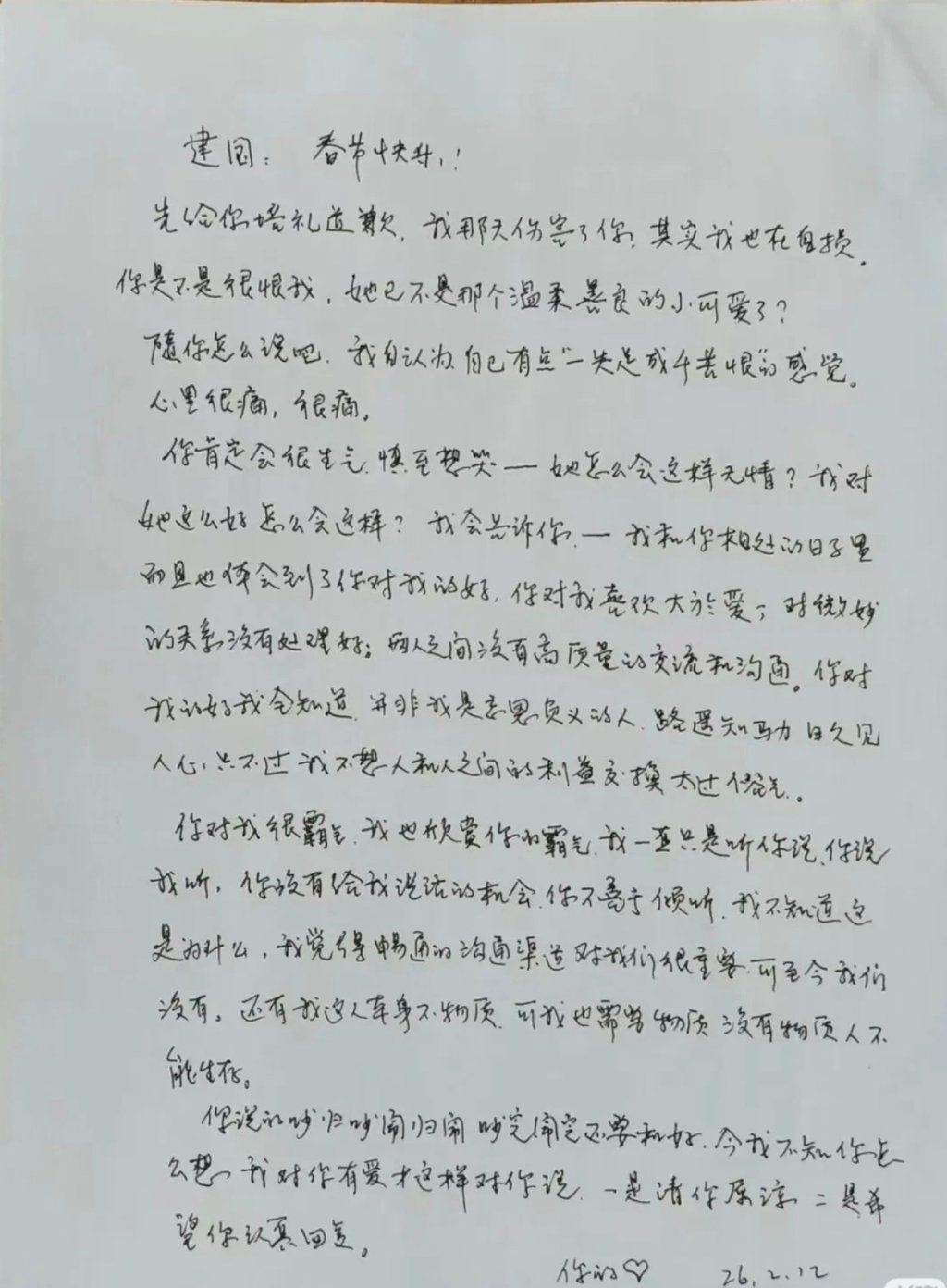
She not only messaged him but also handwrote him a love letter this February.

In the letter, Zhang apologised for “hurting” Jianguo, and asked him: “Do you hate me and think she is no longer that soft and kind little cutie?”
She says that their fight made her “very painful”.
Zhang also confesses that she “admires his bossy attitude”: “You never gave me the chance to speak. You do not like listening. I believe communication is key to our relationship.”

Such so-called bossy presidents are often favoured by middle-aged and elderly women: looking upright, with a slicked-back hairstyle, often showing care and sometimes playing cute by calling the women “big sister”.
Zhang’s family discovered her “relationship” after she spent over 7,000 yuan (US$1,000) at Jianguo’s online shop.
She spent hundreds of yuan on a product priced at only 9.9 yuan (US$1.40) on other e-commerce platforms.
This March, after Zhang spent another 1,200 yuan (US$175) on some books recommended by the AI-generated human, her granddaughter reported the account to China’s consumer complaint system.
China’s Cyberspace Administration had reportedly shut down Jianguo’s account in February, as part of its Clear and Bright campaign aimed at addressing “chaos on the internet”.

However, similar accounts kept emerging, continuing to lure women into the love trap of these bossy bosses.
Professor Chen Xu, who studies the ageing population at Wuhan University, said the case reflects elderly people’s declining cognitive ability that helps them identify virtual humans.
It also shows their strong need for love, companionship and respect.
“AI has become a handy tool for scammers,” said one online observer.
“We need to accompany our elderly family more, so that they would not fall into such traps so easily,” said another. - South China Morning Post