The sun was not quite up as Eric Helera unlocked the doors of his jeepney, wiped down its two long passenger benches, and checked his brake fluid before another day ferrying Manila commuters.
The makeshift minibus named Princess is part of a smoke-belching, colourfully decorated fleet that forms the backbone of a Philippine transportation sector being hammered by surging fuel prices driven by the US-Israeli war with Iran.
Like most jeepneys, Princess runs on diesel, the cost of which has hit historic highs in the archipelago nation since the partial closure of the Strait of Hormuz.
Helera, 43, is driving shorter routes but longer days in response, routinely working 18 hours to ensure he has something left over after buying fuel and covering “the boundary”, the amount he owes the jeepney’s owner each day.
“The margins are really thin now because of the skyrocketing diesel prices,” he said while sipping instant coffee from a paper cup outside his neighbourhood grocery.
“Sometimes I earn less than 500 pesos (about RM33) a day,” he said of shifts that can stretch until midnight.
Before the Middle East conflict, he could comfortably clear the same amount by lunchtime.
“There’s been a huge adjustment at home,” he said of life in the two-story Manila house he shares with his wife, seven children, and two other families.
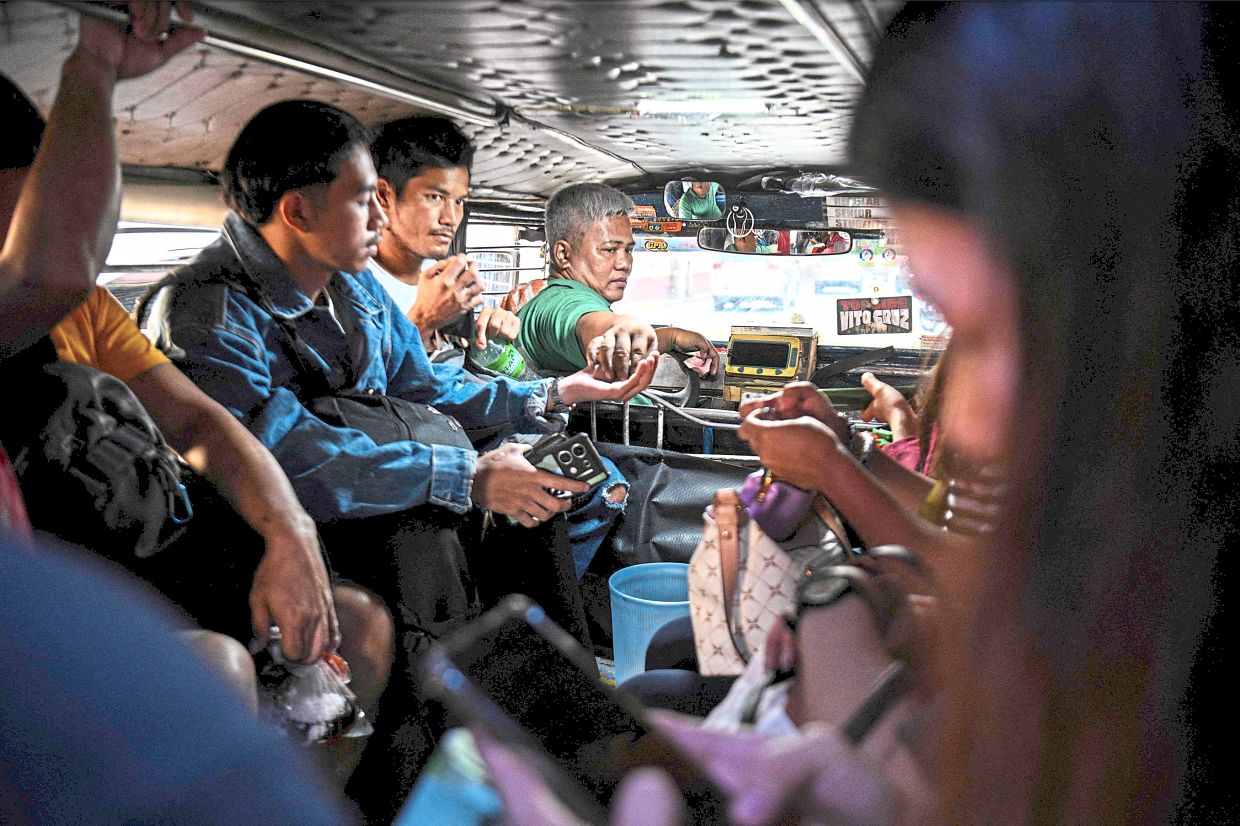
“My children ... need money for school projects and stuff like that, and we don’t have it now,” Helera told AFP journalists who spent part of the day travelling with him.
A “full breakfast with rice” was now a luxury to be enjoyed on only top earning days, he said.
“I need 10 passengers or more for each trip. Below that, and I don’t earn anything,” he calculated, adding the jeepney ran at its full 16-person capacity only half a dozen times a day.
Fuel hikes he called the “most severe” he had ever seen had forced him to drop longer routes where the passenger load could not justify the cost of diesel.
“It feels as though you want to give up, but you also know you can’t surrender because you have a family.”
Yesterday, the price jumped again by around 16%, with prices up to 134.30 pesos (RM8.90) per litre at some pumps, the highest in the country’s history.
Jeepney driver unions have been demanding fare increases to help cover the burden, with one last week organising a “strike” that few drivers could afford to join.
A fare hike authorised by the country’s transport regulator, meanwhile, was quashed by President Ferdinand Marcos a day after it was announced.
“I’m on the side of the jeepney drivers,” salesclerk Trixie Brumuela said of potentially pricier rides.
“Fuel prices rose but fares didn’t, so they’re losing money,” the 35-year-old said while conceding she was struggling to make ends meet herself.
“I told myself to stop spending on anything apart from my basic needs. I resolved to stop buying other stuff,” she said.
College freshman Juliana Tonelete said that while she sympathised with the plight of drivers, her own financial situation took priority.
And while a government cash handout expected today would be welcome, “5,000 pesos (RM330) ... won’t carry you that far,” Helera said. — AFP