China said Tuesday it remained “in communication” with the United States over President Donald Trump’s visit to Beijing, after Trump said he had requested a delay of about a month because of the ongoing war with Iran.
“China and the US are in communication on the timing of President Trump’s visit to China,” foreign ministry spokesman Lin Jian said when asked to comment on Trump’s remarks about the much-anticipated visit.
When pressed further about what dates were under discussion, Lin said he had “no further information to add at the moment”.
Lin’s comments came hours after Trump said that his planned trip to Beijing later this month might be postponed, adding uncertainty to a visit expected to include talks with Chinese leader Xi Jinping.
Trump said on Monday that the timing of the visit was still under discussion, citing the need to remain in Washington as the US managed its military campaign against Iran. The trip had been scheduled for March 31 to April 2, according to a White House announcement last month.
“I don’t know, we’re working on that right now. We’re speaking to China. I’d love to, but because of the war, I want to be here. I have to be here, I feel,” Trump told reporters at the White House.
The US had requested Beijing that “we delay it a month or so”, he added.
“I’m looking forward to being with them. We have a very good relationship. But because of the war, there’s no tricks to it either ... We got a war going on. I think it’s important that I be here. So it could be that we delay a little bit, not much.”
Wendy Cutler, senior vice-president at the Asia Society Policy Institute think tank in Washington, said that while a delay was not “ideal”, it should not be viewed as a setback in relations if both sides quickly agreed on another mutually convenient date in the not-too-distant future.
“Both sides privately must be somewhat relieved as they could use more time to flesh out possible deliverables for a leaders’ meeting,” said Cutler, a former US trade negotiator.
She pointed out that with China hosting the Asia-Pacific Economic Cooperation summit and the US chairing the Group of 20 this year, the two leaders would have multiple opportunities to meet.
Earlier on Monday, Trump intensified pressure on China and other major oil importers to help secure the Strait of Hormuz, the world’s most critical energy chokepoint.
Sharply criticising nations that depended on the vital waterway, Trump underscored America’s energy independence and suggested that the US might not provide free protection for oil shipments indefinitely.
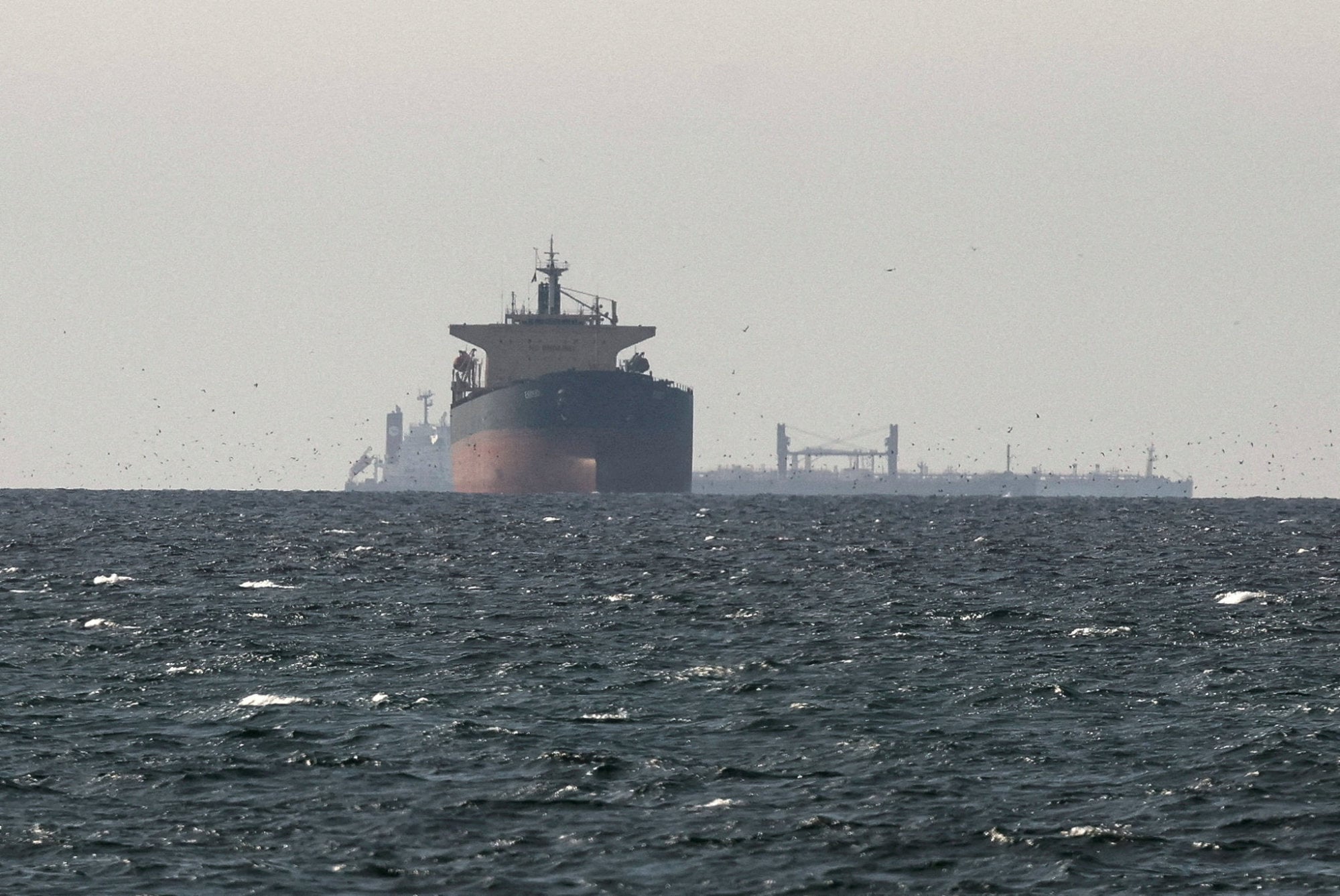
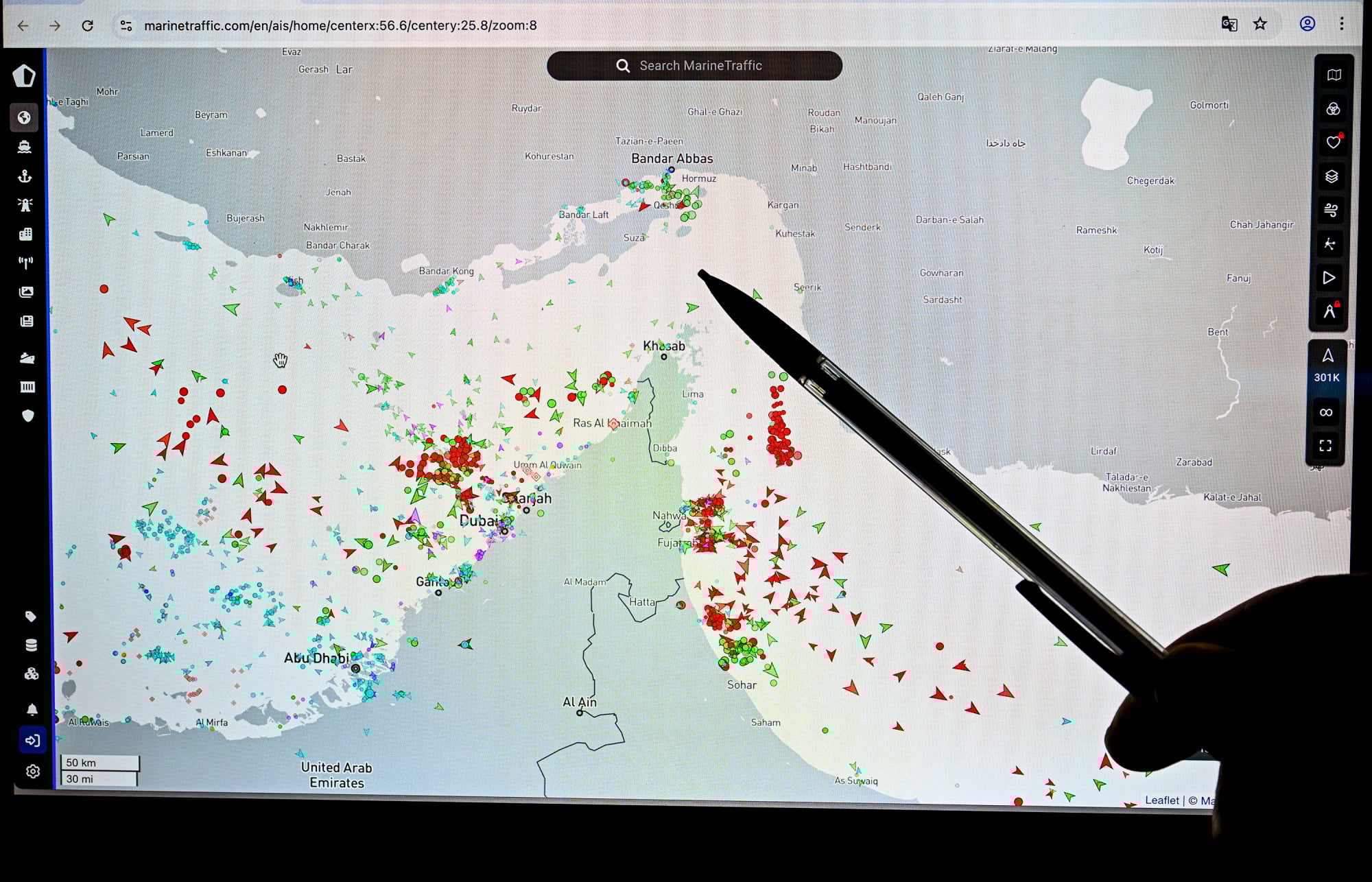
About one-fifth of the world’s traded oil passes through the Strait of Hormuz, a narrow waterway linking the Persian Gulf to the Arabian Sea.
Describing China as a “great example”, Trump claimed “they get 91 per cent of their oil from the Strait of Hormuz, which we protected for years”.
Independent analysts, however, place the figure at roughly 40 to 50 per cent.
He said that it had always bothered him that “we are protecting them” and “never asked for reimbursement”.
The US had “all the oil we need for ourselves”, he noted.
“China should be thanking us,” Trump added later in the day.
According to analysts, as Iran’s largest trading partner and primary buyer of its oil, China holds significant leverage over Tehran. However, so far Beijing has called for an immediate end to military actions to prevent wider fallout but has not committed to naval involvement.
Denis Simon, a senior fellow at the Quincy Institute, contended that Trump’s “threat to perhaps postpone the visit may be his way of pressuring the Chinese to help with the Strait of Hormuz issue but no one thinks we are going to see the [People’s Republic of China] navy coming to the rescue”.
Simon called indications that a delay might be tied to Trump’s need to remain at home during the war “probably an excuse”, since “clearly, Trump is very weak at this point”.
He said the two-day US-China trade talks in Paris, which wrapped up on Monday, were “not a big failure or a big success”, and that while stabilising US-China relations was important, the summit might be less substantive than originally anticipated.
“Renewing the truce in tariffs and trade is good for both sides but it is not ‘the big deal’ that Trump had been seeking,” Simon added.
Following talks with the Chinese delegation, led by Vice-Premier He Lifeng, US Trade Representative Jamieson Greer told reporters that both sides had discussed what might be called a “US-China Board of Trade” to achieve managed trade.
The board, he added, would help to “identify what kinds of things should we be importing from China, what kinds of things should we be exporting to China, to really make sure that we can focus on areas of mutual benefit ... That’s what we expect the leaders to be talking about when they meet.”
David Zhang, macroeconomics and policy analyst at Trivium China, said: “Trump clearly hopes Beijing can use that same leverage to press Tehran toward restraint, if not a ceasefire outright.”
He noted that for Beijing, “it’s plainly irritating that the Iran crisis has consumed so much of the White House’s bandwidth for summit preparation”.
“That may lower Beijing’s expectations for near-term deliverables, but won’t change its core objective of preserving a detente with the US.”
Zhang added that official readouts from Paris suggested both sides were aiming for major accomplishments beyond a trade truce extension, but as any agreements required Trump’s sign-off, a US delay of the trip was likely.
Sourabh Gupta, a resident senior fellow at the Institute of China-America Studies, a think tank in Washington, argued that Beijing would want to avoid hosting Trump at a time when the US was engaged in a bombing campaign against Iran, a fellow Brics member.
Brics is a bloc of emerging economies that China helped found, which later expanded to include several other Global South states.
Gupta added: “[It] seems fairly clear to me that the Chinese side sought a postponement of the Trump-Xi meeting during their talks in Paris.”
Trump’s remarks on Monday echoed his Financial Times interview over the weekend, where he first signalled that his coming meeting could be at risk.
He directly linked the Hormuz issue to his scheduled summit in Beijing, saying he would “like to know” China’s position on assisting beforehand and adding: “We may delay.”
Speaking to reporters on Air Force One shortly afterwards, he described China as an “interesting case study” due to its heavy dependence on Gulf oil and questioned why the US should continue shouldering the full protection burden.
White House press secretary Karoline Leavitt addressed questions about Trump’s Beijing trip earlier on Monday.
She suggested that the visit later this month could be delayed, as leader-level discussions on the timing of the visit continued.
“I don’t think the meeting is in jeopardy, but it’s quite possible the meeting could be delayed,” Leavitt said in an interview with Fox News, adding that “leader-to-leader conversations are currently taking place”.
She said both Trump and Xi were looking forward to the visit and that the issue was “really just a matter of timing”.
“I know President Xi was very excited to welcome President Trump to Beijing, and I know President Trump looks forward to this trip,” she added.
Leavitt emphasised that if the trip was delayed, the White House would announce new dates soon. Trump’s “utmost responsibility right now as commander in chief is to ensure the continued success of Operation Epic Fury”, she added, referring to the US-led campaign against Iran.
In Paris, US Treasury Secretary Scott Bessent said that if Trump’s visit was postponed, “it would have nothing to do with the Chinese making a commitment to the Strait of Hormuz”.
“It would obviously be in their interest to do so, but a postponement would not be as a result of any ask from the president.”
Iranian threats and actions have severely disrupted tanker traffic, driving oil prices near US$105 per barrel and heightening global economic risks.
Trump has demanded that beneficiary nations, including China, Japan, South Korea, France and Britain, deploy warships or other support to a coalition effort.
No major allies have publicly pledged warships to the proposed coalition.
Trump on Monday said that Iran had always used the Strait of Hormuz as an “economic weapon, and it’s not going to be able to use it for very long”.
He added that “numerous countries” had told him “they’re on the way”.
“Some are very enthusiastic about it, and some are countries that we’ve helped for many, many years, we’ve protected them from horrible outside sources, and they weren’t that enthusiastic,” he said. -- SOUTH CHINA MORNING POST