




Hong Kong will cancel the two-decade-old “A Symphony of Lights” within the year, with the South China Morning Post learning that the fixture will be replaced with immersive projections across various districts to upgrade the city’s offerings.
The revamp is among a raft of new tourism measures announced in finance chief Paul Chan Mo-po’s latest budget, with others including a push for Hong Kong to become a destination for study tours and a HK$200 million (US$25.6 million) fund to revitalise rural villages.
The blueprint also earmarked HK$1.2 billion for the sports sector to “further promote sports development”.
Chan revealed on Wednesday that the Hong Kong Tourism Board (HKTB) would receive HK$1.66 billion in funding – a 35 per cent increase from the previous year.
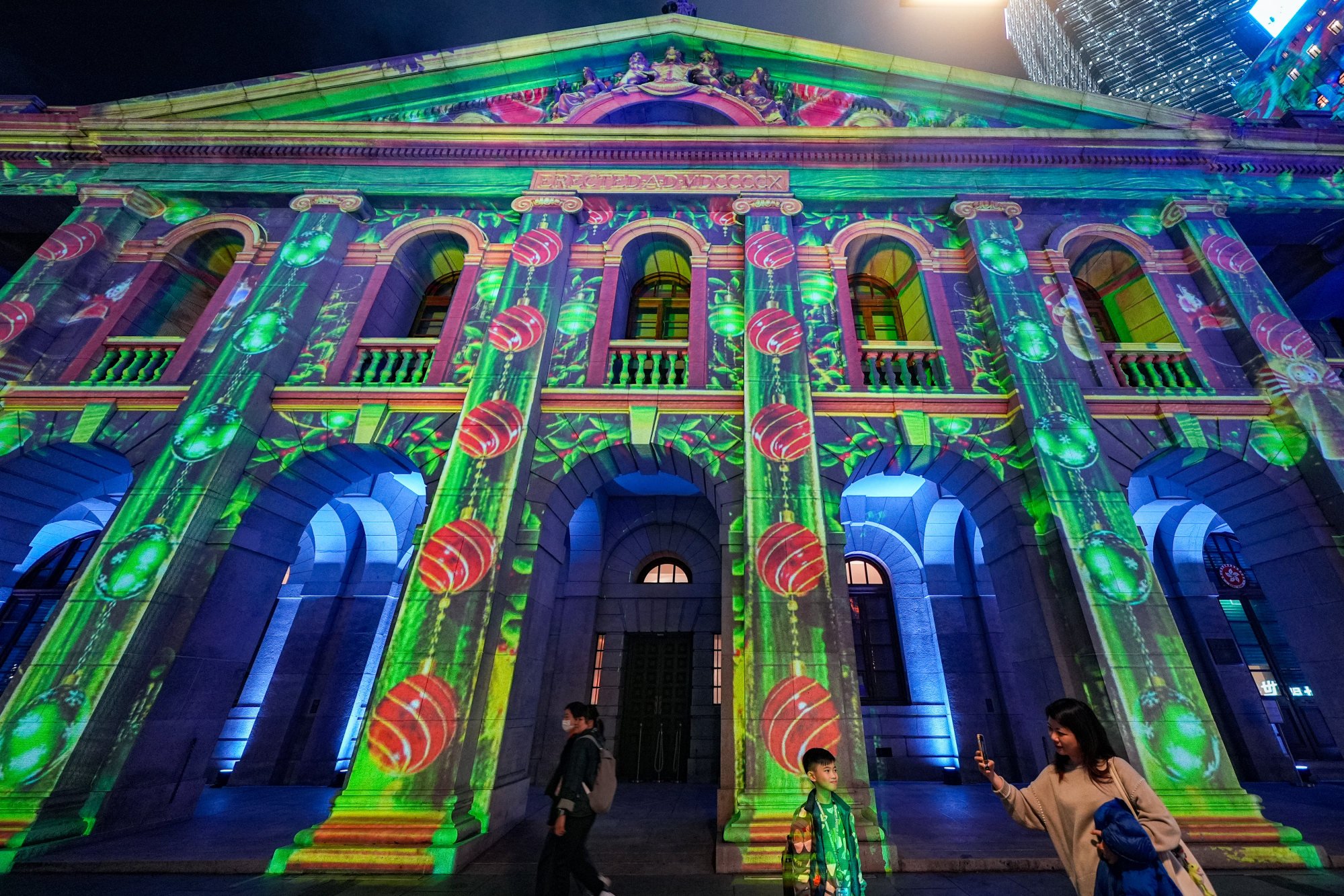
“Building on the success of last year’s ‘Immersive Light Show in Central’ featuring spectacular 3D light shows, the HKTB will launch a brand new show with the theme of light festivals across various locations at different times of the year to replace A Symphony of Lights,” Chan said.
He was referring to light projections concentrated around the Statue Square Gardens over the Christmas and New Year periods.
A source told the SCMP that similar installations would be set up in several districts across the city, including those popular with tourists, such as Central and Tsim Sha Tsui, although authorities had yet to finalise the list of places.
The insider added that the nightly A Symphony of Lights show would be gradually phased out “later this year”.
“The harbour is already very bright and beautiful nowadays, so it was decided we should go in a different direction,” the source said.
The overhaul will use residual funds from the 2024-25 budget, under which Chan gave HK$1.09 billion to the tourism industry, including HK$354 million for the HKTB to revamp the decades-old light show.
Timothy Chui Ting-pong, executive director of the Hong Kong Tourism Association, said he supported the move as a projection show would be able to do more.
He said that the measure would also be able draw tourists to other lesser-known locations.
The HK$1.66 billion allocated to the HKTB this year would go towards upgrading and promoting flagship events and festivities, among other areas.
The source said authorities were keen to concentrate more on holidays and festivals that are “not as prominent, or cannot be experienced, on the mainland,” including Halloween and the Mid-Autumn Festival’s Tai Hang Fire Dragon Dance.
“The HKTB will draw more overnight visitors by stepping up marketing efforts in source markets with potential, including mainland cities outside Guangdong, as well as emerging markets such as Asean and the Middle East,” Chan said.
The minister added that efforts would be made to promote the city’s “meetings, incentives, conferences, and exhibitions”, or MICE, economy.
The source said that government efforts to promote tourism to Middle Eastern travellers had been satisfactory so far, noting visitors from the region had increased by 37 per cent year on year to about 92,000 in 2025.
The city welcomed 9,700 visitors from the region in January 2026 alone, up by 78 per cent from the same month last year.
The source added that such visitors were considered “high value” as they tended to be “young, fast-growing and wealthy”, spending an average of HK$11,300 per trip per capita - nearly twice as much as the HK$5,500 spent by the average overnight visitor.
Chan also proposed allocating HK$200 million to launch a pilot “NM Urban-rural Integration Fund” to encourage more northern rural villages to “take forward rural tourism projects and bring economic vitality”.
A source said “non-governmental organisations and relevant bodies” would be required to submit proposals on hardware upgrades, such as simple structural enhancements for facilities and installations, or “software” plans, such as coming up with tour itineraries for visitors.
Details would be further announced as the government pitched the scheme to the Legislative Council in mid-2026, the source added.
Walk in Hong Kong co-founder Paul Chan Chi-yuen said authorities would have to consider several areas, including how to make better use of the existing vacant spaces in rural villages and ensuring there were enough support measures to facilitate tourism.
He noted that rural villages typically had vacant land and homes, adding that some makeshift installations could be used to elevate the tourism value of those sites.
On the education front, authorities expressed hope on Wednesday morning that tertiary education institutions would launch more short-term study tours, especially during summer breaks when campus resources were idle, to encourage non-local participants to study in the city.
“Through quality study tour experiences, students can deepen their understanding of Hong Kong, helping local tertiary institutions expand their student recruitment channels and attract talent to Hong Kong,” the Education Bureau said, adding that such tours could generate additional income for the institutions.
A government source said such tours could focus on themes such as technology and innovation, arts and culture, or commerce and creativity, describing them as areas where Hong Kong had advantages.
Participants could visit laboratories, attend master-class talks and workshops, and immerse themselves in cultural experiences, the insider said.
Finance chief Chan also said the sports portion of the Arts and Sport Development Fund would receive HK$1.2 billion to “further promote sports development, including strengthening training for team sports athletes, improving the professional standards of coaches, as well as supporting and exploring more diverse and higher-level sports competitions to be held in Hong Kong”.
Lawmaker Kenneth Fok Kai-kong, whose constituency covers the sports sector, welcomed the funding and said it would inject fresh momentum into the sector.
“Hong Kong’s sports development has long leaned heavily on subsidies,” he said. “In the long run, we must consolidate the economic benefits of professionalisation and industrialisation to enhance the industry’s sustainability.”
Fok also called for more support for team-based sports training, while urging a broader review of athlete treatment, coaching support and resource allocation to help promising projects reach elite status. -- SOUTH CHINA MORNING POST


