




Hasan Piker knew his first trip to China would provoke backlash. What he did not expect was how quickly the debate would collapse into a binary: propaganda or patriotism.
The live-streamer, and one of the most influential political commentators on the left among young Americans, travelled to China last year and live-streamed his experiences to over 3 million followers across platforms, including Twitch and YouTube.
Clips of his visit circulated widely, some carried by Chinese state-linked outlets – in one viral video Piker was heard saying “I have no patriotism in my heart”, leading many Western commentators to accuse him of acting as soft power for Beijing.
China trip: personal observation or propaganda?
When asked directly what his core political motivation was for the trip and how that intention aligned with the way his visit was framed in Chinese state media, Piker rejected the premise that visibility equals endorsement.
“My motivation was to show that China isn’t this hermit kingdom the way it’s often presented,” he said in a recent interview with the South China Morning Post. “It’s actually developed tremendously. It’s yielded real prosperity for its citizens.”
Pressed on whether that framing dovetailed uncomfortably with Beijing’s preferred narrative, Piker acknowledged the risk but argued it was unavoidable.
“Any time you show something positive about a geopolitical rival, it’s treated as propaganda,” he said. “That doesn’t mean it isn’t real.”
Instead, dismissing what he called “Western propaganda”, Piker, known for his bold commentary, said that “Americans have been taught to hate China, this country that we heavily rely on. And I find that to be not only hypocritical, but also very stupid”.
One of the most talked about moments of Piker’s Beijing trip was a brief encounter with police near Tiananmen Square, which sparked online debate and criticism, particularly from conservative and anti-Communist Party voices casting it as emblematic of Chinese censorship, or ironic given Piker’s pro-China remarks during the visit.
During a live stream near the square, officers approached Piker and asked him to stop filming and move along, questioning his intentions and the nature of his broadcast. The interaction was brief and non-confrontational, but the clip quickly went viral, amplified by critics who framed it as proof of China’s intolerance of dissent or free expression.
In his conversation with SCMP, when asked if the incident contradicted his own political beliefs and ideas of liberty, Piker attributed it to cultural differences rather than authoritarian malice.
“I saw that as like someone being overzealous and assuming that I’m there to do some kind of mockery,” he said, claiming that he had been “detained in worse ways by my own government”.
“I’ve been arrested, shot at by American police, hit with stun grenades at protests. But a two-minute conversation with a Chinese cop became proof of how China ‘really is’,” Piker added.
Still, Piker did not deny the existence of censorship or surveillance in China, describing it as part of a different social contract between the state and its citizens.

Citing his regular criticism of US President Donald Trump, he noted that “I would not be able to do what I’m doing in America, in China, of course”.
“I have Chinese relatives ... and I talked to my Chinese friends all the time about this sort of stuff, where the attitude is as long as you keep your head down, you don’t say certain things, it’s broadly understood that the government has your back,” Piker said.
Piker on ‘thinking Chinese thoughts’
The backlash to his buoyant depiction of China was perhaps most visible in how he chose to frame the trip on social media, captioning an Instagram photo dump from China “I’m thinking Chinese thoughts”.
But Piker, raised between Turkey and the US, is no stranger to being disliked. Frequently dismissed as “woke”, the 34-year-old has achieved the rare feat of alienating the right, frustrating liberals and irritating parts of the left simultaneously.
US media outlets, including The New York Times, have devoted lengthy profiles to him – alternately branding him the Joe Rogan of the left, or a “liberal” in a Maga body to which Piker jokingly described himself as the “first victim of male objectification”.
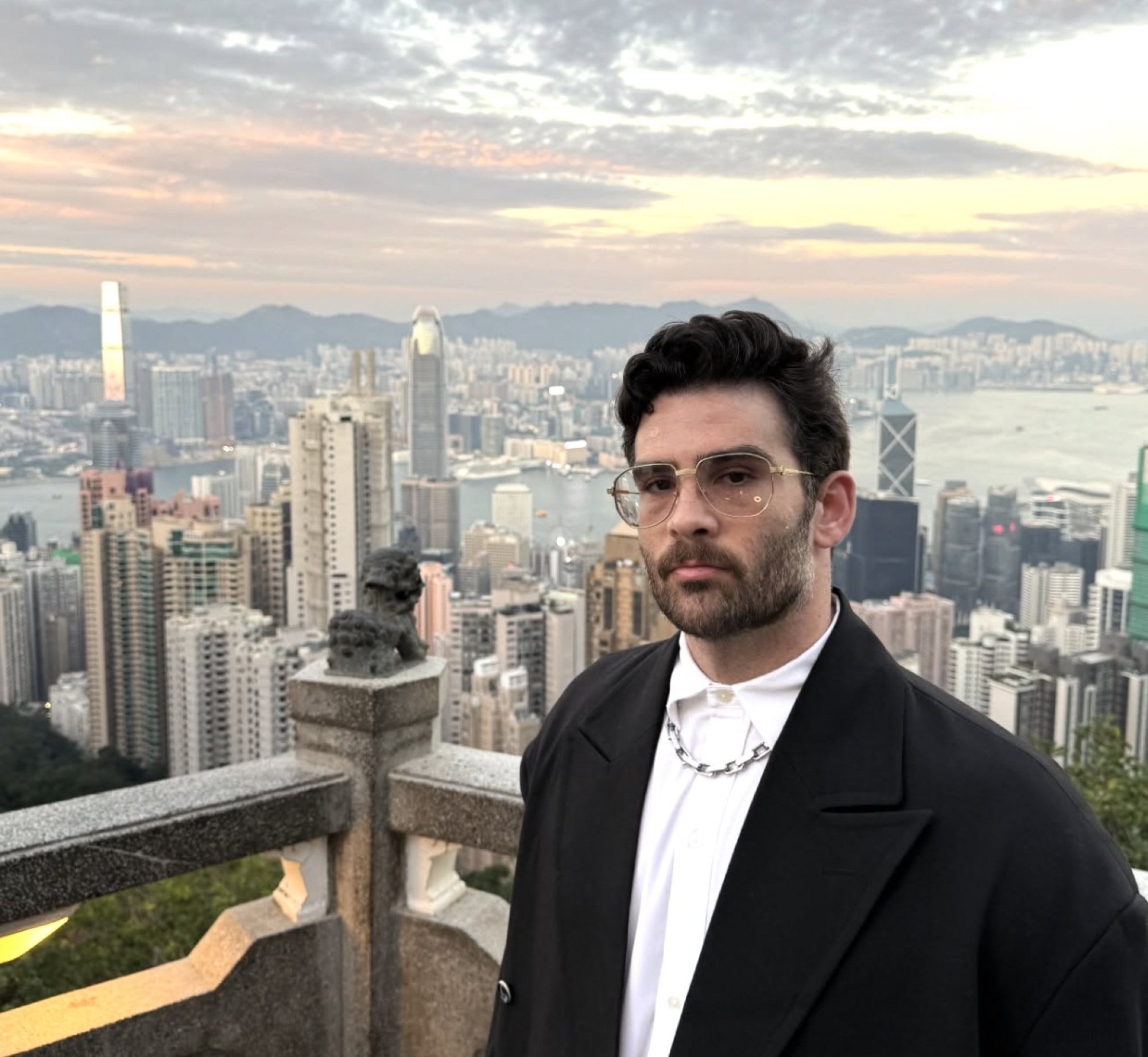
And while segments of the American left have rallied around Zohran Mamdani, New York City’s new democratic socialist mayor, Piker himself is often a target of criticism from within the same ideological camp.
Rejecting the “liberal” label, describing himself instead as a socialist, he drew a clear distinction between himself and figures such as Mamdani, whom he supports but views as operating in an entirely different lane.
Mamdani is a “politician, so of course, he’s a lot more careful and a lot more optically sound, and has a way with moderating his commentary in a way that is suitable for liberal audiences”, Piker said.
“My job isn’t to reassure liberals,” he said. “My job is to snap them out of the belief that liberalism isn’t failing.”
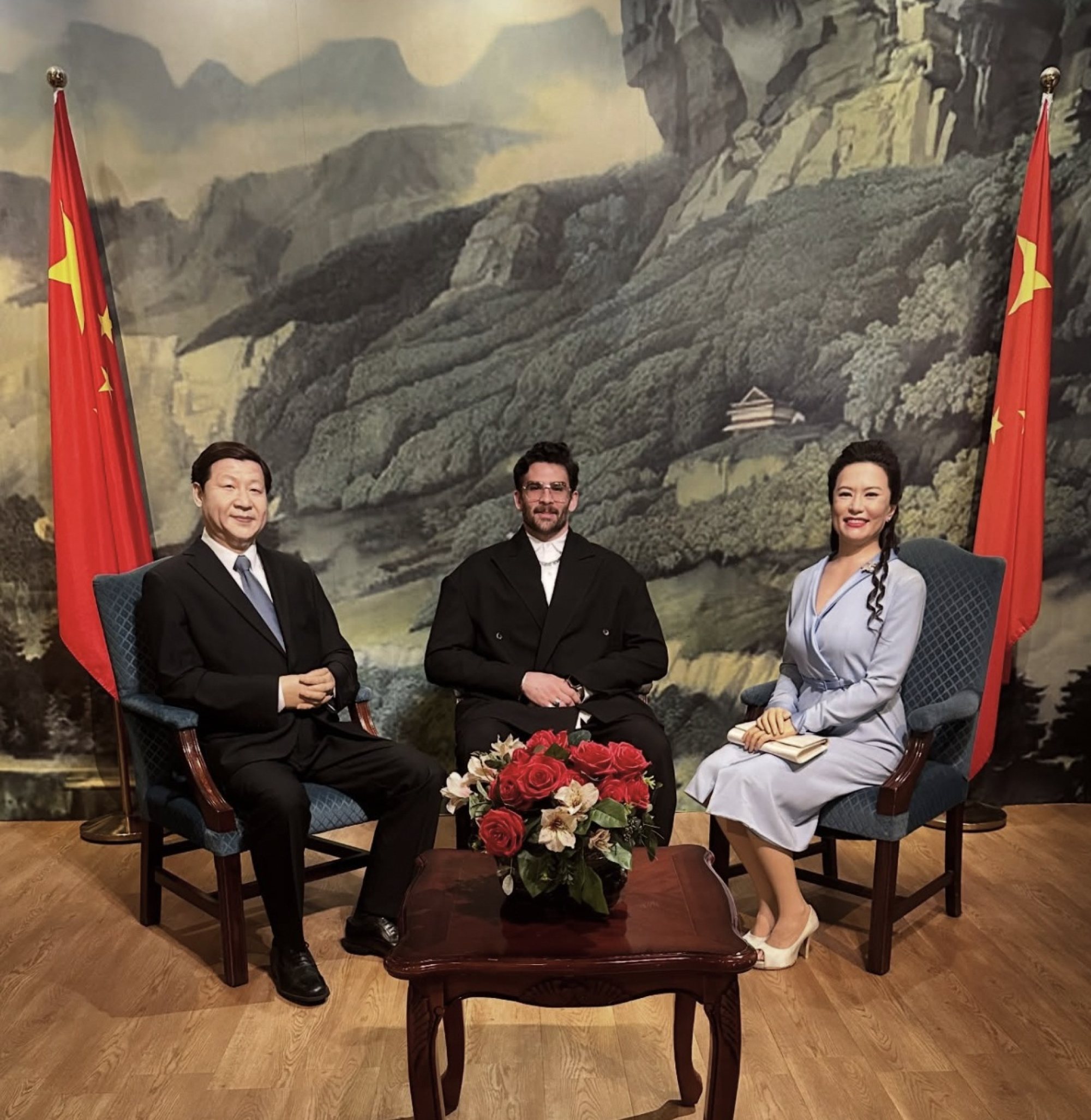
That same willingness to defy ideological expectations shapes Piker’s views on China’s political system, where he expressed unabashed admiration for socialism with Chinese characteristics.
“I don’t measure socialism by ideological purity,” he said. “I measure it by efficacy. Socialism, at its root, is about improving the material conditions of the working class, and China has been able to do that very effectively.”
While praising outcomes, Piker emphasised that China’s system was neither flawless nor beyond criticism.
“Are there issues? Absolutely,” he said. “Do I have disagreements with how the state operates? Yes. But I’m not audacious enough to say I know better than the million-plus people inside the Communist Party trying to govern a country of 1.4 billion.”
That stance places Piker at odds with much of the American left, which remains deeply wary of praising any aspect of China’s governance. But he insists that recognising reality is not the same as endorsing a system wholesale.
The China mirror
For Piker, the uproar over his China trip highlights a deeper Western neurosis: why does acknowledging Chinese success feel like a provocation? He argues that Western audiences are blind to their own conditioning, mistaking a specific media ecosystem for objective reality.
“A lot of people living in liberal societies don’t even realise that they’re being propagandised against, because they’ve so internalised everything that they’re seeing as the simple objective reality,” Piker said.
China, he argues, has become a convenient vessel for projecting those anxieties. While Beijing undoubtedly uses state media and soft power, Piker claimed Western accusations often collapse into bad faith.
“It’s not when I go there and I’m like, ‘Look at how high-speed rail is.’ That’s not, you know – you can say, or people might say, ‘This is Chinese propaganda,’ but it’s also the truth, right? ... Does it make China look good? Sure, it does. But also it’s the truth, right?” he said.

His critique extends to Washington’s attempts to “de-risk” from China. Piker argues that meaningful decoupling would require the very central planning American leaders routinely reject.
“In order for America to decouple from China, it must become like China,” Piker said. “We need central planning instantly. We have a version of it now, but it’s done at the behest of capital, not the proletariat.”
Asked about rising hostility towards Chinese students and immigrants in the United States, Piker is blunt. “There is no reason for the average American to hate China,” he said. “It’s our largest trade partner. And more importantly, it’s made up of people who want the same things everyone else wants: a stable life, a job, a future.” China is currently the United States’ third-largest trading partner based on total goods trade, after Mexico and Canada.
For all the controversy, Piker insists his message is ultimately simple.
“My hope is that we develop a better understanding of other people and recognise that the countries that our government in the United States of America ... have presented as foreign adversaries are actually comprised of people with the same exact interests as us,” he said. -- SOUTH CHINA MORNING POST



