




A bipartisan chorus of lawmakers and national security experts in Washington is calling on the administration of US President Donald Trump to convene a Quadrilateral Security Dialogue leaders’ summit ahead of Trump’s expected meeting with Chinese leader Xi Jinping in April.
The push aims to project a unified front among Indo-Pacific democracies and prevent potential misunderstandings during high-stakes negotiations with Beijing. The Quad, an informal grouping that also includes Japan and Australia, is widely seen as a mechanism to counter China’s influence in the strategically vital region.
“There is real potential for misunderstanding or misalignment on China policy,” Lindsey Ford, an adjunct senior fellow at the Center for a New American Security, a think tank in Washington, told the US-China Economic and Security Review Commission on Tuesday. The USCC is responsible for providing recommendations to Congress.
Ford, who served as former US president Joe Biden’s senior adviser on South Asia policy, added that US policymakers should make it a “priority to engage at the highest levels with India, both before and after high level meetings” and better coordinate on China policy.
Tanvi Madan, senior fellow at the Brookings Institution, a prominent public policy institute in Washington, testified that there should also be “bilateral or Quad consultations to coordinate ahead of key regional and global summits”.
She urged “stepping up of Quad activities quantitatively and qualitatively in the security, economic security and technology domains”, describing the Quad as a minilateral “designed in part to offset Chinese advantages regionally and globally”.
The group was unable to hold a leaders’ summit in India last year as New Delhi and Washington stalled on tariff negotiations.
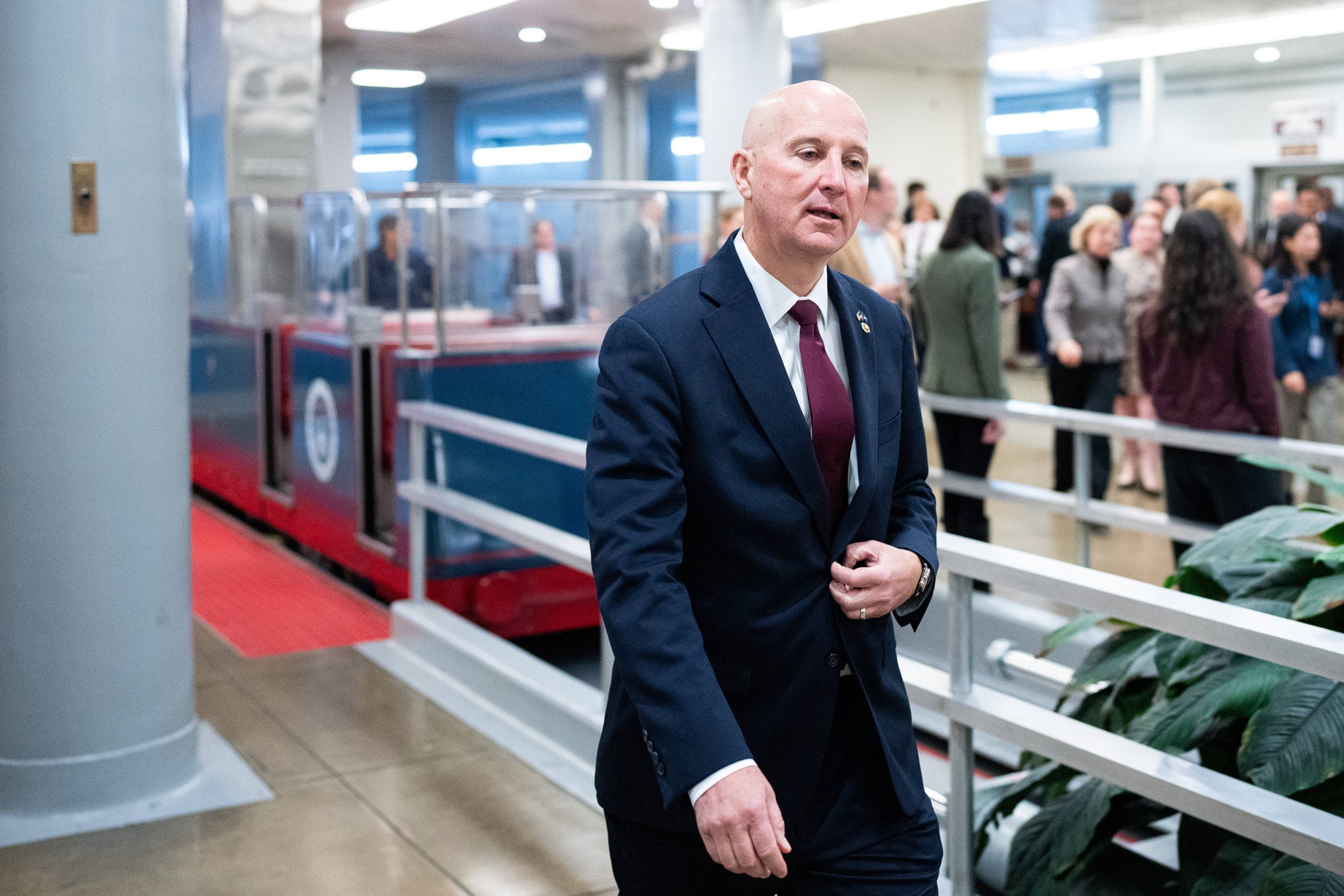
Last week, US Senators Tim Kaine, a Democrat from Virginia, and Pete Ricketts, a Republican from Nebraska, wrote to US Secretary of State and National Security Adviser Marco Rubio encouraging the Trump administration to convene a Quad summit before the president’s meeting with Xi.
“Convening a Quad summit prior to President Trump’s planned meeting with Xi Jinping in April would be a decisive demonstration of US leadership in the Indo-Pacific prior to the president’s visit to Beijing,” the senators told Rubio.
They added that a “successful Quad summit beforehand would allow President Trump to engage from a position of greater leverage”.
Earlier this month, the US announced that it had reached a trade deal with India, lowering tariffs for the South Asian country from 50 to 18 per cent. A full and final trade treaty has not yet been officially signed by the two sides.
Experts believe that the trade deal has paved the way for Trump to visit India – a trip he had cancelled last year due to frictions over his trade tariffs.
Lisa Curtis, director of the Indo-Pacific Security Program at the Center for a New American Security, a think tank in Washington, said that “a trade deal was always a prerequisite for President Trump to travel to India”.
Following the announcement of the deal, she added, “it is likely we will see planning resume for a Trump visit to New Delhi, which would likely also include a gathering of the Quad leaders”.
Curtis, who served as deputy assistant to the president and senior director for South and Central Asia during Trump’s first term from 2017 to 2021, noted that making a successful visit to India and attending a Quad summit before he goes to China in April “would strengthen Trump’s hand in his negotiations with President Xi”.
“However, April is coming up soon, leaving little time for planning such a major visit to India,” she added.
In October, Australian Prime Minister Anthony Albanese indicated that a Quad leaders’ summit could take place in the first quarter of 2026. Australia is the rotating chair for this year but has been open to letting New Delhi host the summit, since it could not be held last year.
Senior US officials, including Paul Kapur, assistant secretary for the Bureau of South and Central Asian Affairs, are expected to visit India in March.
Indian Foreign Minister Subrahmanyam Jaishankar also travelled to Washington earlier this month for the US-led Critical Minerals Ministerial hosted by Rubio.
The White House has remained tight-lipped on any plans for Trump to stop in India around his trip to China, which the SCMP reported was previously proposed for March 31. A summit with Xi is expected in the first week of April.
Sarang Shidore, director of the Global South Program at the Quincy Institute, another think tank in Washington, contended that while the trade deal “definitely removes a major barrier to the revival of the Quad”, the group “does not easily fit into America’s evolving grand strategy”.
Shidore emphasised what he called the “basic mismatch” between Trump’s national security strategy’s enhanced focus on the First Island Chain, which includes Taiwan, and the continued deepening of US-Philippines ties.
“India’s role more in logistics support and providing regional public goods remains,” he said.
But Sameer Lalwani, non-resident senior fellow in the German Marshall Fund’s Indo-Pacific programme, on Tuesday told the USCC that while India may not be a formal treaty ally, it possesses the geographic and naval capacity to significantly impact a conflict around Taiwan.
“New Delhi’s stakes in Taiwan’s security are rising, and in the event of a cross-Strait conflict, India has the potential to make meaningful military contributions to help deter a conflict around the First Island Chain and support a coalitional defence of Taiwan.”
Beijing regards Taiwan as part of China to be reunited by force if necessary and has stepped up military and political pressure on the island in recent years.
Most countries, including the US and India, do not recognise Taiwan as an independent state, but Washington is opposed to any attempt to take the self-governed island by force and is committed to supplying it with weapons. -- SOUTH CHINA MORNING POST


