IN an era where cyberattacks can cripple hospitals, disrupt economies and compromise national security within minutes, cybersecurity expertise is mission-critical.
As artificial intelligence (AI) accelerates both innovation and cybercrime, organisations worldwide are racing to secure digital infrastructure against increasingly sophisticated threats.
The demand for highly skilled cyber professionals has surged dramatically. Yet the true challenge lies not merely in producing graduates but in developing defenders who are workforce-ready.
At the Asia Pacific University of Technology and Innovation (APU), cybersecurity education is immersive, industry-embedded and operational by design.
A structured academic pathway in cybersecurity
Its undergraduate programmes – the Bachelor of Science (Honours) in Computer Science (Cyber Security) and the Bachelor of Science (Honours) in Computer Science (Cyber Security) with a specialism in Digital Forensics – provide strong foundations in network defence, ethical hacking, secure systems, cryptography and threat analysis. Students who specialise in digital forensics gain investigative expertise critical for cybercrime analysis and incident response.
At the postgraduate level, the Master of Science in Cyber Security deepens strategic, governance and research capabilities – preparing graduates for advanced technical roles and cybersecurity leadership positions.
This structured education pathway takes students from foundational competence to strategic mastery.
Competence-driven teaching and learning
At the core of its education ecosystem is the Cybersecurity Talent Zone, featuring a fully operational Security Operations Centre (SOC) and a high-fidelity Cyber Range simulation environment.
Students practise their skills using workflows aligned with industry standards. Crucially, they will complete 50 hours of live SOC operations, performing Tier-1 detection, incident response and threat escalation while monitoring real-time network traffic.
This mandatory hands-on exposure ensures graduates do not merely understand cybersecurity frameworks but are able to execute them.
When the Cybersecurity Talent Zone was launched, Cyber Test Systems chief executive officer and founder Greg Fresnais said that it established APU as “the university with the best-equipped cyber centre of any university in the Asia Pacific.”
Recognition that reflects substance
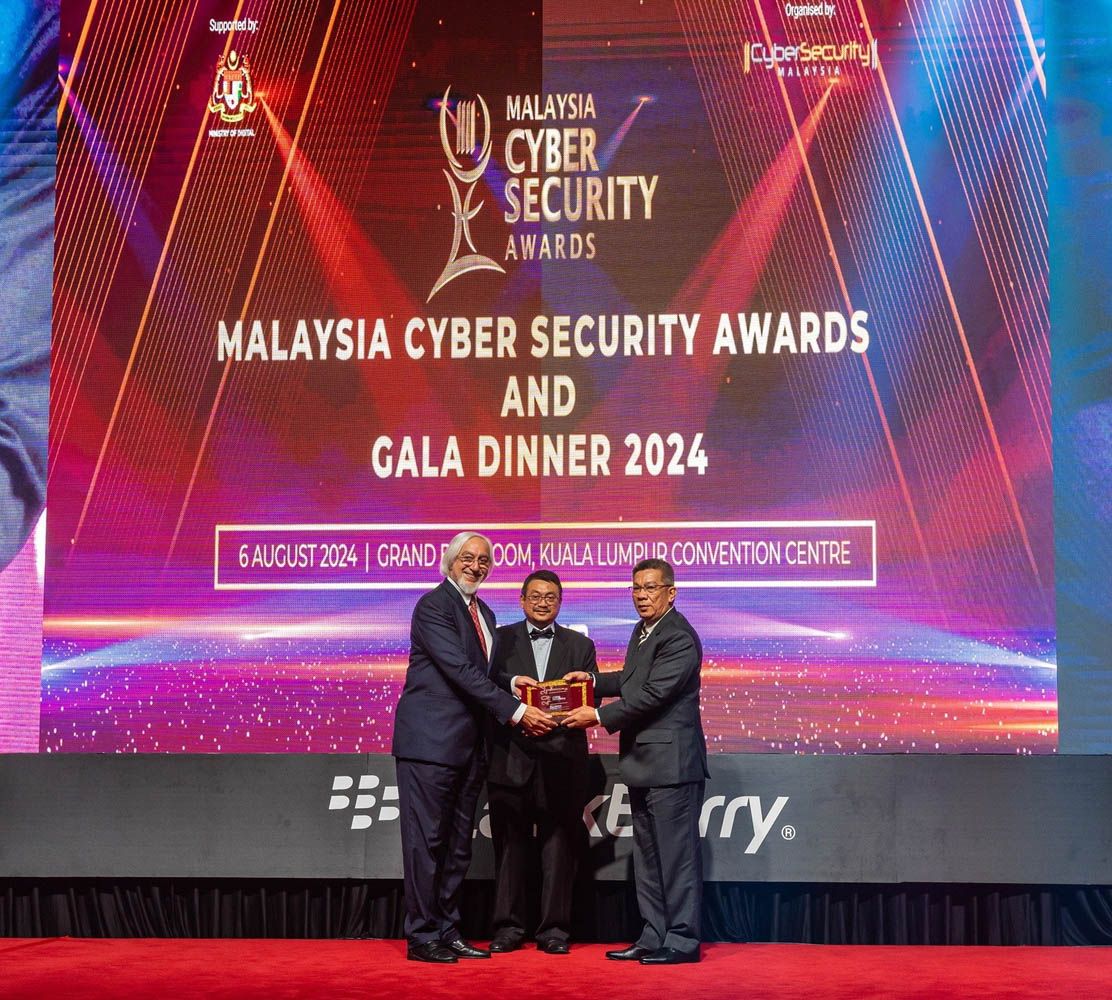
APU’s education model has translated into significant industry recognition.
The university had previously received the Cyber Security Innovation (Education) of the Year Award from CyberSecurity Malaysia.
APU chief executive officer Datuk Parmjit Singh described this accolade as “a testament to APU’s relentless pursuit of excellence in cybersecurity education. It affirms our commitment to equipping the next generation of cybersecurity experts with the skills and knowledge needed to address the complex challenges of today and tomorrow.”
Regionally, APU has also received Gold Awards for Best Asia Cybersecurity Education Provider since 2019 at the Cybersecurity Excellence Awards.
Industry leaders have echoed this sentiment. Kaspersky’s Asean and Asia Emerging Countries (AEC) general manager Simon Tung said that, “APU’s cybersecurity student community is among the strongest in the country.”
Meanwhile, former CyberSecurity Malaysia chief executive officer Datuk Dr Amirudin Abdul Wahab praised APU and its students during the 2025 International Battle of Hackers (IBOH).
“I congratulate APU and the Forensic and Cyber Security Research Centre - Student Section (FSEC-SS) for ten successful years of organising this event, which has grown from a national initiative into an international benchmark,” he said.
What sets APU apart
While many private institutions offer cybersecurity as a specialisation, the university distinguishes itself through its immersive campus environment.
Students are not passive recipients of knowledge. They are active defenders within a simulated yet industry-aligned infrastructure.
“Our collaboration with industrial partners to host competitions, hackathons and capture the flag (CTF) tournaments ensures that students are constantly exposed to real-world cyber scenarios.
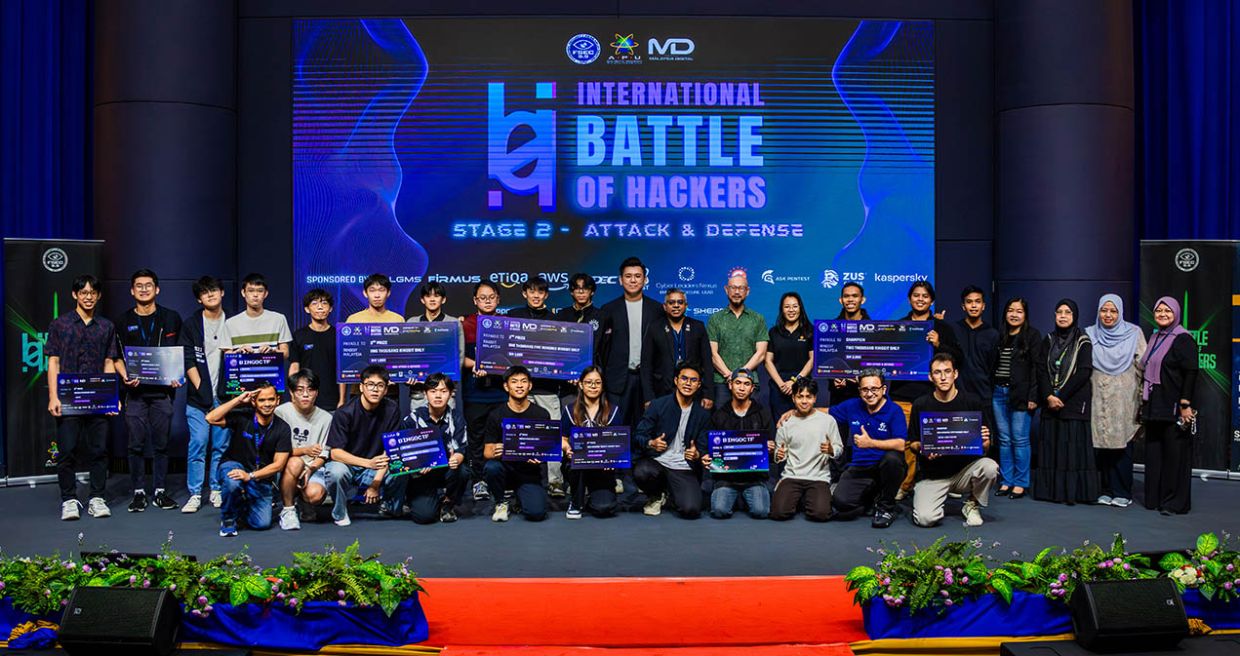
“These platforms familiarise undergraduates with real-world scenarios early, building confidence and professional readiness,” said APU School of Technology senior head Assoc Prof Dr Thang Ka Fei.
“Cybersecurity demands resilience and critical thinking under pressure. By embedding students in competitive and collaborative ecosystems, we cultivate the mindset required for today’s threat landscape,” he added.
A three-layer ecosystem for job-market readiness
Beyond curriculum, APU’s School of Technology develops talent through three integrated layers:
- Operational training: The SOC and the Cyber Range enable students to practise detection, countermeasures and incident response using real-time workflows – narrowing the gap between classroom learning and workplace expectations.
- A structured cyber community: Through the FSEC-SS, students organise and participate in high-impact events such as the IBOH CTF, attracting teams across Asean. Campus competitions like the CyberNexus further strengthen technical depth and peer leadership.
FSEC head Asst Prof Dr Julia Juremi said, “FSEC was established to create a research-driven and industry-aligned cybersecurity ecosystem. Beyond technical skills, we cultivate investigative thinking, ethical responsibility and strategic awareness – essential qualities for safeguarding digital ecosystems.”
- Industry-grade cybersecurity-as-a-service: In late 2025, APU, through the FSEC, was elevated as the first and only higher education institution licensed by Malaysia’s National Cyber Security Agency (NACSA) under the Cyber Security Act 2024 to provide cybersecurity-as-a-Service (CaaS), including Vulnerability Assessment and Penetration Testing (VAPT) and managed SOC monitoring.
This milestone exposes students to professional service delivery standards such as compliance, reporting, client engagement and operational accountability – extending learning beyond simulation into industry-aligned execution.
Cultivating cyber resilience for the region
APU’s cybersecurity strength lies not in isolated achievements but in a cohesive ecosystem built on structured programmes, comprehensive infrastructure, competitive excellence and industry endorsement. It stands at the forefront of cultivating cyber defenders ready to secure the future.
Join APU’s open day on April 4 and 5 at its Technology Park Malaysia campus in Bukit Jalil. To learn more, visit the university’s website.