




BEIJING (SCMP): As the Chinese community all over the world celebrate the Chinese New Year on Tuesday (Feb 17), a new type of partner is heading towards becoming the next big thing in China’s dating market – so-called hunter-style lovers.
This does not mean they work as hunters or see their dates as prey, but instead bring their lovers “prey” in the form, for instance, of tasty snacks they receive at work or beautiful items they discover on the street.
According to Chinese social media users, the value of the “prey” does not matter. Even a milk tea costing less than 20 yuan (US$3), or even a cost-free fallen leaf that looks beautiful.
What matters is the lover’s true sense of caring revealed in the gift-bringing gesture.
That said, a “hunter-style lover” cannot just bring anything; they should put thought into the choice of gift.
So, while a milk tea is not expensive, it may well be extremely popular and difficult to buy, or sold at a shop far away from home.
This type of lover needs to be observant and understand your real needs.
For example, they could notice that you often work overtime and buy you a back cushion as a surprise.
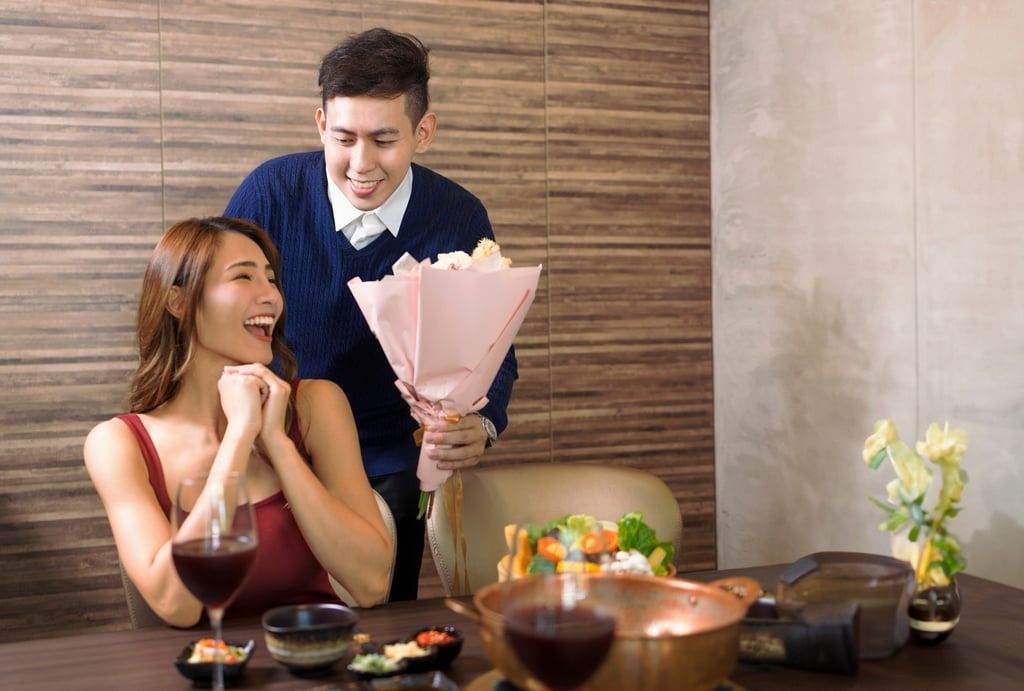
In another case, a cartoonist posted that her “hunter-style boyfriend” often saves snacks his company distributes for her.
Some women also showed off the items they had been given, such as two cherries and two shrimps from a company dinner.
Such sweet and warm characters have always been popular in the Chinese dating market.
Although a “hunter-style lover” can be of any gender, a similar type of lover, a nuan nan, or “considerate guy”, obviously denotes a male.
Nuan nan became popular especially thanks to the influence of Asian romance and idol television dramas that feature this kind of male character.
Famous nuan nan characters include Gwan-sik in the 2025 hit Korean drama When Life Gives You Tangerines, and Li Da-ren in the 2011 Taiwan drama In Love with You.
Some in the feminist community believe the word nuan nan is stereotyping because it suggests that women are by default warm and careful, whereas the same type of person in male form is considered rare.
While nuan nan describes a general sunny atmosphere generated by male lovers, the “hunter-style lover” is seen as more practical.
One online observer said: “Offering real things to someone is more practical than telling them you love them 100 times.”
The cartoonist who showed off her “hunter-style boyfriend” said: “I feel happy to have a boyfriend that cares for his family.”

A psychology expert said the popularity of this type of lover is scientific, as the gift-offering gesture is an explicit expression of love, an important element of a healthy relationship.
A PhD candidate in neuroscience at Zhejiang University in eastern China, Xie Shize, also wrote in an article that our genetic codes decide that “hunter-style lovers” provide us with a sense of security.
“Partners who are willing to spend time on and share resources with their family give us confidence that we have a better chance of survival,” Xie wrote.
On social media, some people described food-sharing as a Chinese way of showing love.
“It is not about giving you good things, but about giving everything he has to you,” said a woman who said she would opt for a “hunter-style lover”.
In contrast, those who do not share even the smallest things with their partners are believed to be selfish and untrustworthy.
Under the posts that show off their “hunter-style lovers”, many also expressed envy, saying it is rare to find such partners.
“I prefer to remain single rather than make do with someone selfish,” one person said.
China had a population of single people of 240 million, or 17 per cent of its total in 2024.
A total of 6.1 million couples registered their marriage in 2024, down 20.5 per cent year on year, a drop of more than half compared with 13.5 million couples registered in 2013.
According to research by iiMedia last year, having high requirements for their partners was a significant reason young Chinese people chose to live solo. Other reasons were work and life pressure. -- SOUTH CHINA MORNING POST



