
China will support Cuba “in the best way possible” as the island grapples with an energy crisis following tougher measures imposed by US President Donald Trump’s administration, a Chinese foreign ministry spokesperson confirmed on Wednesday.
Speaking at a regular press briefing in Beijing, Foreign Ministry spokesperson Lin Jian said China “will do what it can” to assist Havana and again condemned what he described as “inhumane actions that deprive the Cuban people of their right to survival and development”.
When pressed on specific measures, however, Lin declined to confirm any concrete programme, saying the next moves would “depend on bilateral consultations” with Havana.
The remarks reinforce positions adopted by Beijing in recent days as Cuba’s energy situation has deteriorated rapidly.
On Tuesday, Lin signalled political backing for the government of Cuban President Miguel Diaz-Canel, saying China opposes “external interference” in the island’s affairs.
China’s support comes as Cuba faces a critical fuel shortage after the United States blocked shipments of Venezuelan oil.
Following the abduction of Venezuelan President Nicolas Maduro by US forces in early January, Washington moved to halt oil deliveries from Caracas to Havana – Cuba’s energy lifeline – and declared a “national emergency” over Cuba.
Trump further increased the pressure when he signed an executive order threatening to impose additional tariffs on countries that sell oil to the island, arguing that Cuba poses a threat to US national security and maintains ties with adversaries such as Russia, China and Iran.
With the blockade in place, the country may have sufficient oil reserves for only 15 to 20 days, according to data cited by international media.
Havana has introduced emergency measures to conserve dwindling supplies. On Tuesday, the government suspended the supply of aviation kerosene, forcing international airlines to make technical stopovers in other countries to refuel.
Tourism, especially from Canada, is a major source of Cuban hard currency, and the move left many international visitors stranded.
Officials also ordered a reduction in daily working hours in the public sector and decreed that universities switch to online classes.
Last week, the BBC reported that the Cuban capital was experiencing power cuts lasting up to 20 hours a day, affecting hospitals, schools and public transport. The British broadcaster said residents have been using charcoal and firewood for cooking and that there are shortages of basic foodstuffs and medicines.
Cuba estimates it needs around 100,000 barrels of oil per day but produces roughly 40,000, leaving it heavily dependent on imports. Venezuela has historically been its main supplier, but shipments were halted after the US action against Maduro.
Defying Washington’s warnings, Mexican President Claudia Sheinbaum said this week that Mexico would continue “humanitarian shipments” of oil. However, local media have reported that deliveries have been reduced and that the most recent cargo arrived in early January.
Sheinbaum also said on Monday that imposing tariffs on countries supplying oil to Cuba could trigger a humanitarian crisis and announced the dispatch of food aid.
“No one can ignore the situation the Cuban people are living through at this moment because of sanctions being imposed in a very unjust way by the United States on any country that sends them oil,” she said.
Meanwhile, in Beijing, Chinese Foreign Minister Wang Yi met his Cuban counterpart, Bruno Rodriguez, last week and, according to an official statement, said China “opposes unjustified external interference” and is willing to provide help within its capabilities, adding that both countries should deepen cooperation amid “complex changes” in Latin America.
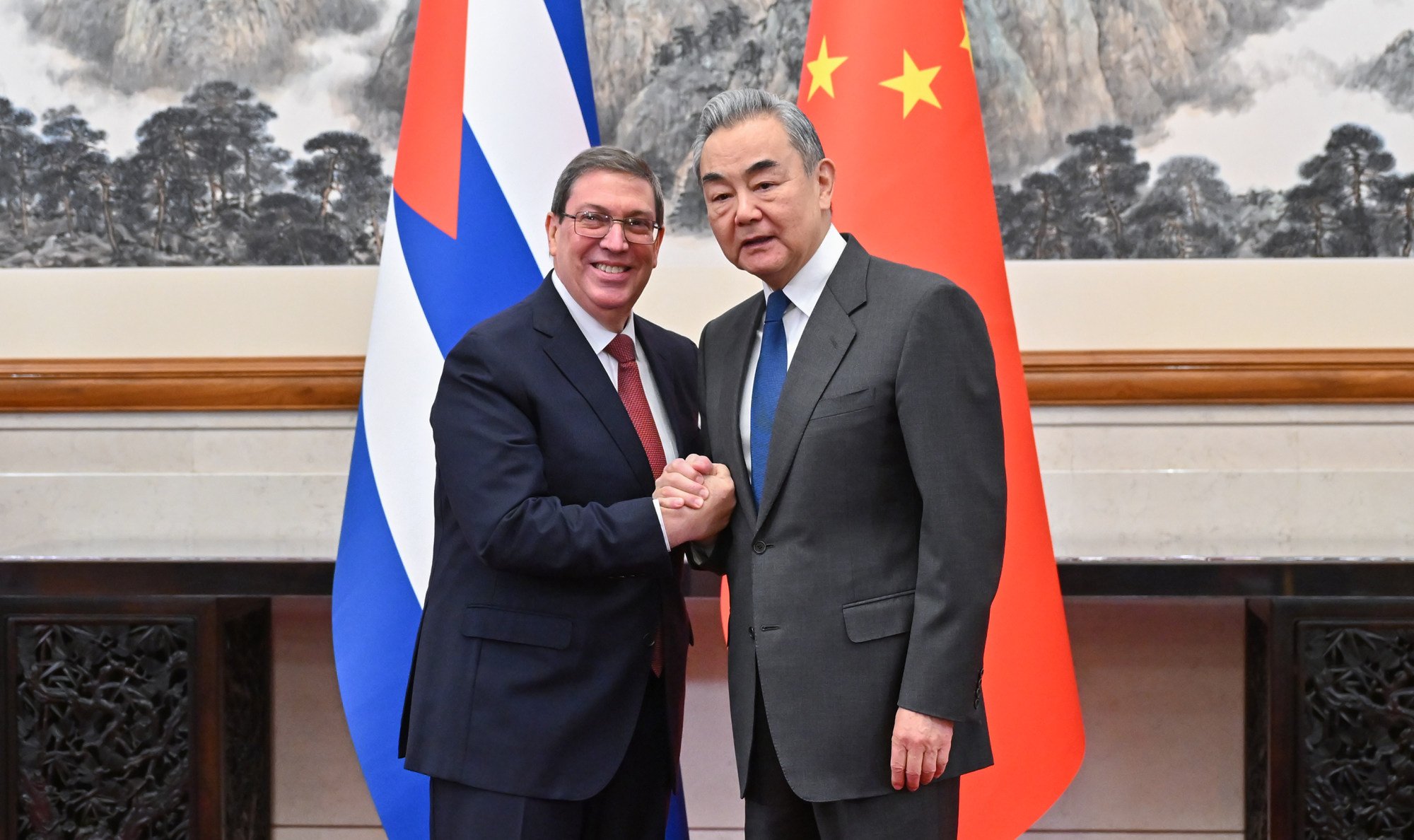
China’s avowed support comes as the Trump administration earmarks the western hemisphere as its principal strategic “sphere of influence” and warns other major powers to respect its regional authority.
Critics counter, however, that the US has little chance of matching China’s economic clout in the region.
In January, Beijing announced it would send 60,000 tonnes of rice and provide US$80 million in emergency help to Cuba.
In Washington, however, Republican lawmakers from Florida are pressing the Trump administration to further tighten restrictions.
US Representatives Carlos Gimenez, Mario Diaz-Balart and Maria Elvira Salazar, elected in districts with large Cuban exile communities, have called for a review of export licenses they say still permit transactions benefiting entities controlled by the Cuban state. -- SOUTH CHINA MORNING POST