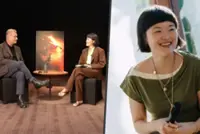
After 30 years in the United States, world-leading computational biologist Bao Zhirong has taken up a full-time position at the Southern University of Science and Technology (SUSTech) in Shenzhen.
Bao, who pioneered imaging technologies that allow scientists to track the behaviour of individual cells in real time as organs form and diseases emerge, has been a chair professor at SUSTech’s life sciences school since January, according to his new faculty profile.
He was previously at New York’s Memorial Sloan Kettering Cancer Centre – one of the world’s most distinguished cancer hospitals – where he oversaw multimillion-dollar research projects funded by the US National Institutes of Health (NIH).
One of Bao’s most influential contributions was AceTree, a cell-tracking software developed in his lab that has become a critical tool in developmental biology. It has been widely used to study how birth defects arise, how cancer cells hijack normal growth pathways and how stem cells might be guided to repair damaged tissues.
Recognition for Bao’s work has included the Basil O’Connor Starter Scholar Award and the NIH Director’s Transformative Research Award, which supports high-risk ideas with the potential to reshape biomedical science.
Bao did not immediately respond to a request for comment.
At his new lab, according to a recruitment post on social media, Bao is exploring how brain circuits mature and begin to function, work that could shed light on how abilities like movement, perception and cognition emerge in early life, and how that process might differ in conditions such as autism.
He is also studying the biological shift that takes place around birth, known as the perinatal transition, when newborns must rapidly adapt from relying on the mother to functioning on their own. Understanding this process could help to explain complications in newborns and improve care for those at risk.
Bao received his master’s degree in biochemistry from Jilin University in 1996 and completed his PhD in genetics and computational biology at Washington University in St Louis in 2002. After postdoctoral research there, he joined Memorial Sloan Kettering in 2008 and rose to full professorship a decade later.
At Sloan Kettering, Bao’s lab developed advanced imaging tools that captured high-resolution, three-dimensional snapshots of an entire nematode embryo every minute as it developed, tracking each cell as it divided, moved and switched genes on or off.
The tiny worm has only about 300 neurons, simplifying study of its nervous system, and is commonly used by scientists to observe how living worms develop. However, studying the embryos once muscles had formed was more challenging.
The minute-by-minute “movie” allowed Bao and his team to reconstruct how organs form from scratch, providing a detailed playbook for understanding normal development and how that process can be distorted in cancer and other diseases. -- SOUTH CHINA MORNING POST