
China has achieved a breakthrough in its decarbonisation efforts by successfully repurposing a long-haul oil pipeline to transport carbon dioxide, in a trial run that offers a potentially scalable solution to accelerate the nation’s ambitious climate goals.
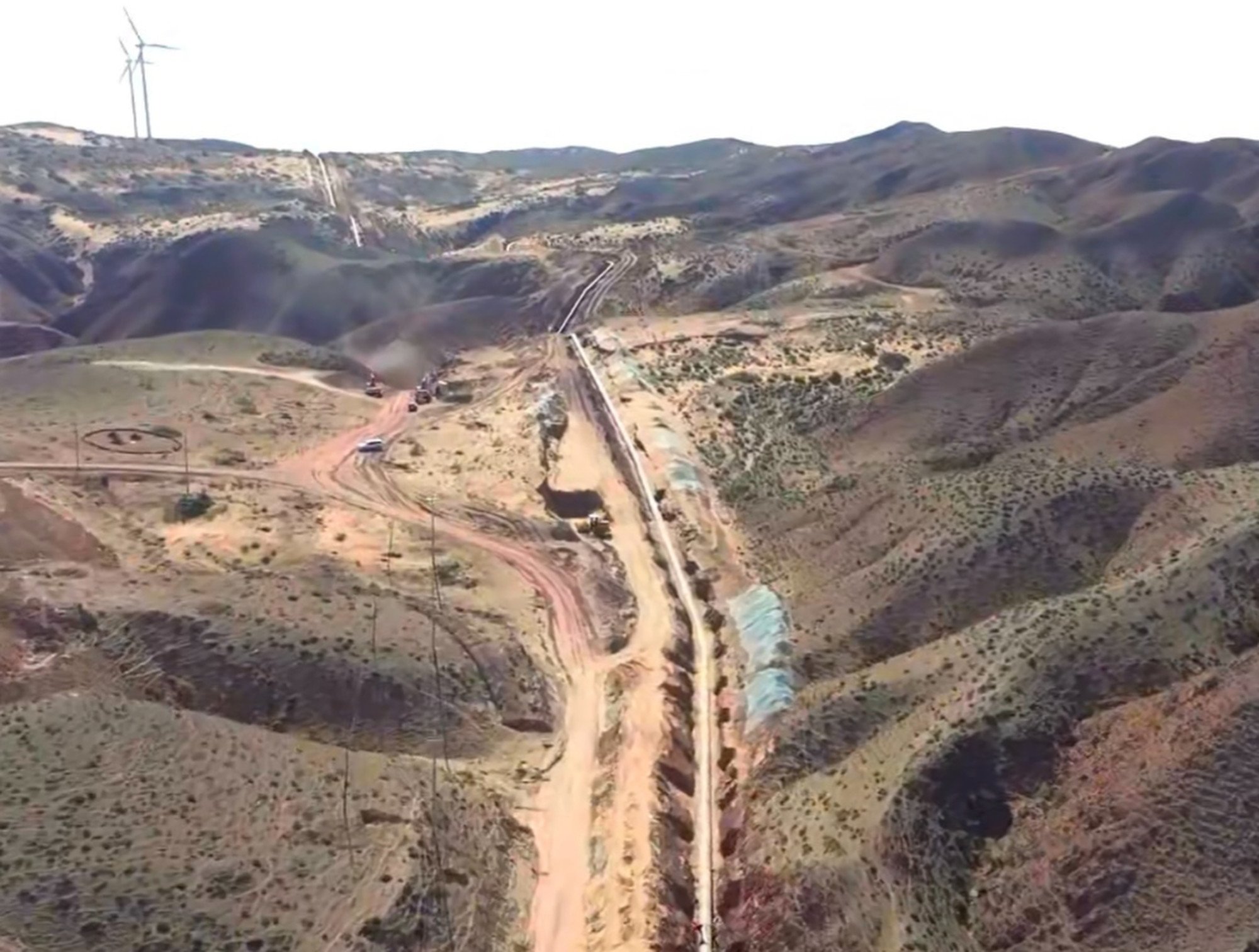
The 27km (16.8-mile) route delivered carbon dioxide to an oilfield in central China’s Henan province earlier this month, according to China Oil and Gas Pipeline Network Corporation, also known as PipeChina.
In an online statement, the state-owned infrastructure giant said that the trial provided a “replicable and scalable” model for carbon capture, utilisation and storage (CCUS). And its success was deemed a significant step in China’s green transition, with an aim to propel CCUS from isolated pilots towards large-scale deployment.
CCUS comprises a suite of technologies that capture carbon dioxide emissions, such as from power plants or industrial facilities, to prevent the detrimental by-product from entering the atmosphere. The captured gas is compressed, transported and typically reused in industrial applications or stored.
The effective deployment of such technologies is seen as crucial in executing Beijing’s “dual-carbon” strategy – aiming to peak carbon dioxide emissions by 2030 and achieve carbon neutrality by 2060. The policy serves as the backbone of the nation’s green transition, driving continuous resources into renewables and carbon-reduction technologies.
CCUS is a vital decarbonisation tool. By injecting captured carbon dioxide into oilfields, the process not only securely stores the greenhouse gas deep underground within the same impermeable geological formations that have naturally trapped oil and gas for millions of years, but it also facilitates the recovery of additional crude oil – a technique known as enhanced oil recovery, or EOR – thereby boosting production.
Beyond this dual benefit, captured carbon can also be utilised for various industrial applications, as highlighted in a May report by the Chinese Society for Environmental Sciences.
However, a major challenge for China’s CCUS ambitions remains the geographical mismatch between its industrial carbon sources, which are concentrated in the east and coastal regions, and the primary storage and utilisation sites in the north and west, according to PipeChina.
“Therefore, building an economical, safe and efficient long-haul carbon dioxide transport network is critical for the large-scale deployment of carbon dioxide,” the company statement said.
Compared with building new infrastructure, repurposing existing long-haul pipelines offers a compelling solution, potentially slashing investment costs by 40 to 80 per cent and reducing construction time by 20 to 60 per cent, according to PipeChina.
Complementing these efforts, new dedicated infrastructure is also under development. In April, construction began on a 400km (249-mile) carbon dioxide pipeline in northeast China’s Jilin province. Once operational, the project is expected to sequester more than 4 million tonnes of carbon dioxide annually and boost crude oil production by 1 million tonnes per year, China National Petroleum Corporation said in an April statement.
The broader decarbonisation effort is also reflected in the nation’s latest power data. By 2025, China’s renewables made up more than 60 per cent of its capacity, generating a total of 4 trillion kilowatt-hours – an amount exceeding the entire power consumption of the European Union, according to National Energy Administration data released in late January. -- SOUTH CHINA MORNING POST