




China has successfully completed a crucial safety test and fired off a new-generation rocket as part of the country’s preparations for a crewed mission to the moon.
Wednesday’s escape test on board the Mengzhou crew carrier was designed to ensure that astronauts could be safely returned to Earth if something went wrong during the launch.
The Chinese space programme had already carried out a ground-level safety test in June, but the latest test was designed to check that crew members would be able to escape after lift-off.
The test also featured the first flight and a controlled vertical splashdown of a Long March-10 carrier rocket, which is being developed to launch Chinese astronauts to the moon.
The uncrewed vessel took off from the Wenchang Satellite Launch Centre on the southern island of Hainan aboard a Long March-10 prototype test rocket at 11am on Wednesday.
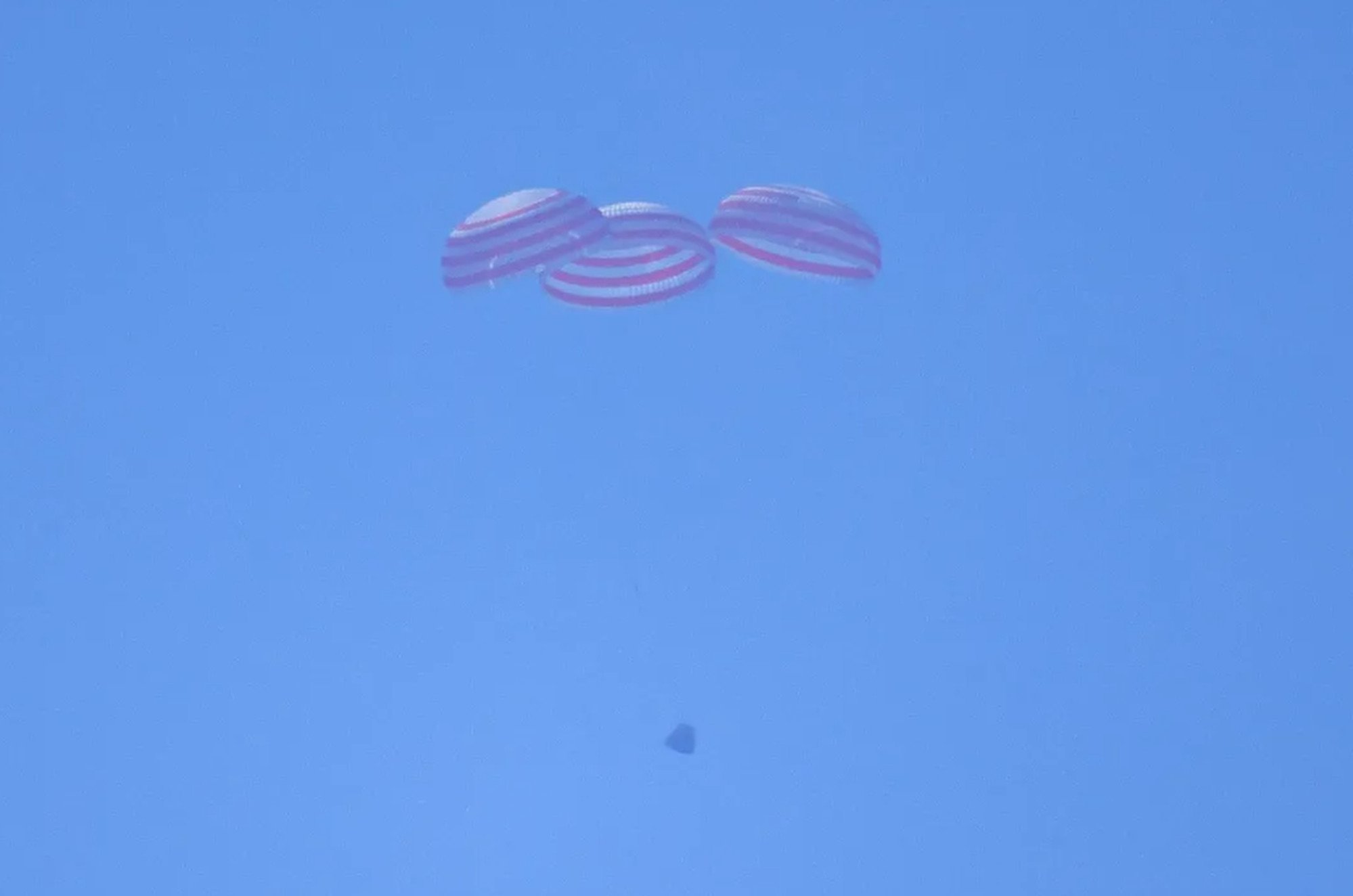
The Mengzhou vessel separated from the rocket shortly after launch, before splashing down in the ocean at its designated landing spot, according to the China Aerospace Science and Technology Corporation (CASC).
The first stage of the Long March-10 rocket also safely splashed down in its designated ocean landing spot, CASC said. The state-owned aerospace contractor developed both the rocket and the crewed spacecraft.
In a statement posted on social media on Wednesday, CASC said the “successful completion of the first stage’s return flight and controlled splashdown marks a significant advancement for [China] in the field of reusable rocket technology”.
This included the reliability of multiple engine ignitions and navigation control during the return phase, which would pave the way for future flight tests and sea-based recovery of the Long March-10 carrier rocket, CASC said.
China and the US are racing to land astronauts on the moon’s surface for the first time since Nasa’s last Apollo mission in 1972. China is aiming to land its first astronauts on the moon by 2030, while Nasa is aiming for a 2028 landing, though its Artemis programme has faced major delays.
The US and China are now also racing to set up permanent settlements on the moon in the next decade, with Elon Musk’s SpaceX – which pioneered reusable rocket technology – leading the charge in the US.
Wednesday’s abort test was carried out once the rocket reached “max q” – or maximum dynamic pressure, the moment during launch where the rocket faces the highest degree of stress – and was a critical test of whether astronauts could escape the rocket if something went wrong.
Wednesday’s test was a key step towards the full launch of the Mengzhou crew carrier. Currently the country relies on the Shenzhou vessels – based on the old Soviet Soyuz spacecraft – to carry its astronauts into space.
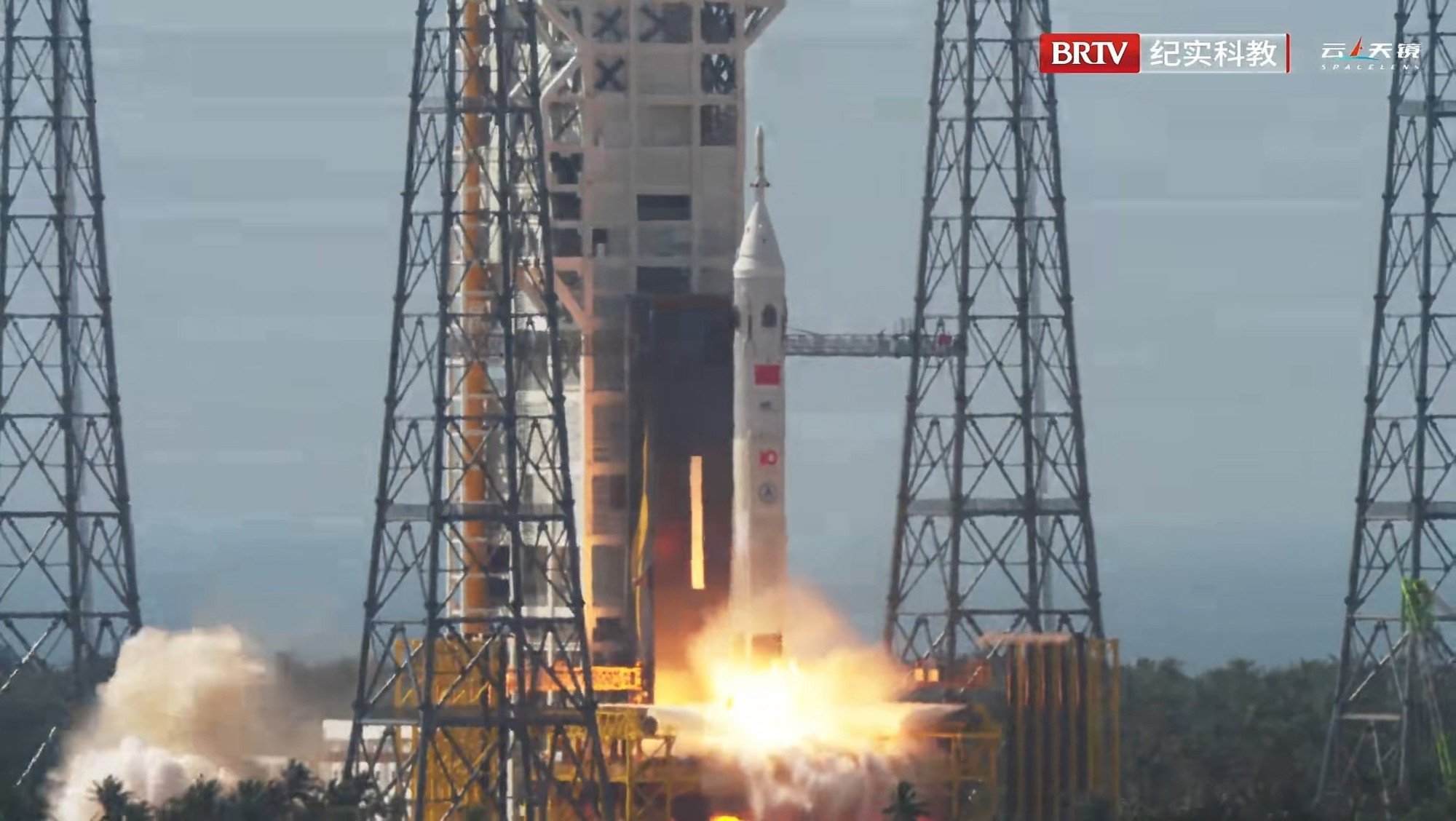
Those vessels rely on rocket-mounted escape systems, but the Mengzhou spacecraft have solid-fuel engines that can independently execute emergency escape and crew recovery operations.
The modular Mengzhou spacecraft has two variants: a seven-astronaut near-Earth model designed to support the country’s Tiangong space station and a model with a smaller crew capacity for missions to the moon.
The latter is expected to work in tandem with the Lanyue lunar surface lander, designed to carry two astronauts to the moon’s surface.
In August, a prototype Lanyue lander successfully completed a take-off and landing test under conditions designed to simulate lunar gravity.
The Long March-10 is a new-generation heavy-lift rocket that is expected to help support the country’s future crewed missions. The Long March-10A rocket is a partially reusable model that will feature a recoverable first stage.
Images posted on Chinese social media showed the Ling Hang Zhe, the ship designed to recover the first stage of a Long March-10 series rocket, being prepared ahead of Wednesday’s launch.
The ship features a catch tower with nets designed to catch hook structures located on the rocket’s first stage.
After landing astronauts on the moon, China aims to build an international research station near the lunar south pole by 2035 – plans that could see it racing with Musk who said this week that he wanted to set up a “self-growing city” on the moon within the next 10 years.
While Nasa’s Artemis programme has faced numerous delays, the United States still has an advantage over China in the race to land humans on the moon, as it conducted a full uncrewed flight test of its launch system and spacecraft in 2022.
Nasa also tested the ability of its Orion spacecraft to abort a mission back in 2019. -- SOUTH CHINA MORNING POST



