
A profound energy transformation is reshaping Shanxi, China’s traditional coal heartland, where renewable power capacity has officially surpassed coal-fired generation, marking a historic turning point for one of the nation’s most carbon-intensive economies.
The central province’s installed capacity for new energy surged to 90.48 million kilowatts in 2025 – a year-on-year increase of 18.29 million kW – vaulting renewables past the halfway point to claim 55.1 per cent of Shanxi’s total power-generation capacity, Xinhua reported on Monday.
The milestone comes as Beijing strives to achieve “dual carbon” goals – leadership’s intention to peak China’s carbon emissions by 2030 and achieve carbon neutrality by 2060.
With its vast offering of proven coal reserves – Shanxi’s 48.3 billion tonnes accounted for nearly a quarter of China’s total in 2024, according to a People’s Daily report – the province’s pivot is seen as a litmus test for the country’s broader energy overhaul.
Under the provincial government’s recent proposals for its 15th five-year plan (2026-2030), released in early December, leaders discussed their ambitious goal of transforming Shanxi from a “major coal province” into a “comprehensive energy powerhouse”.
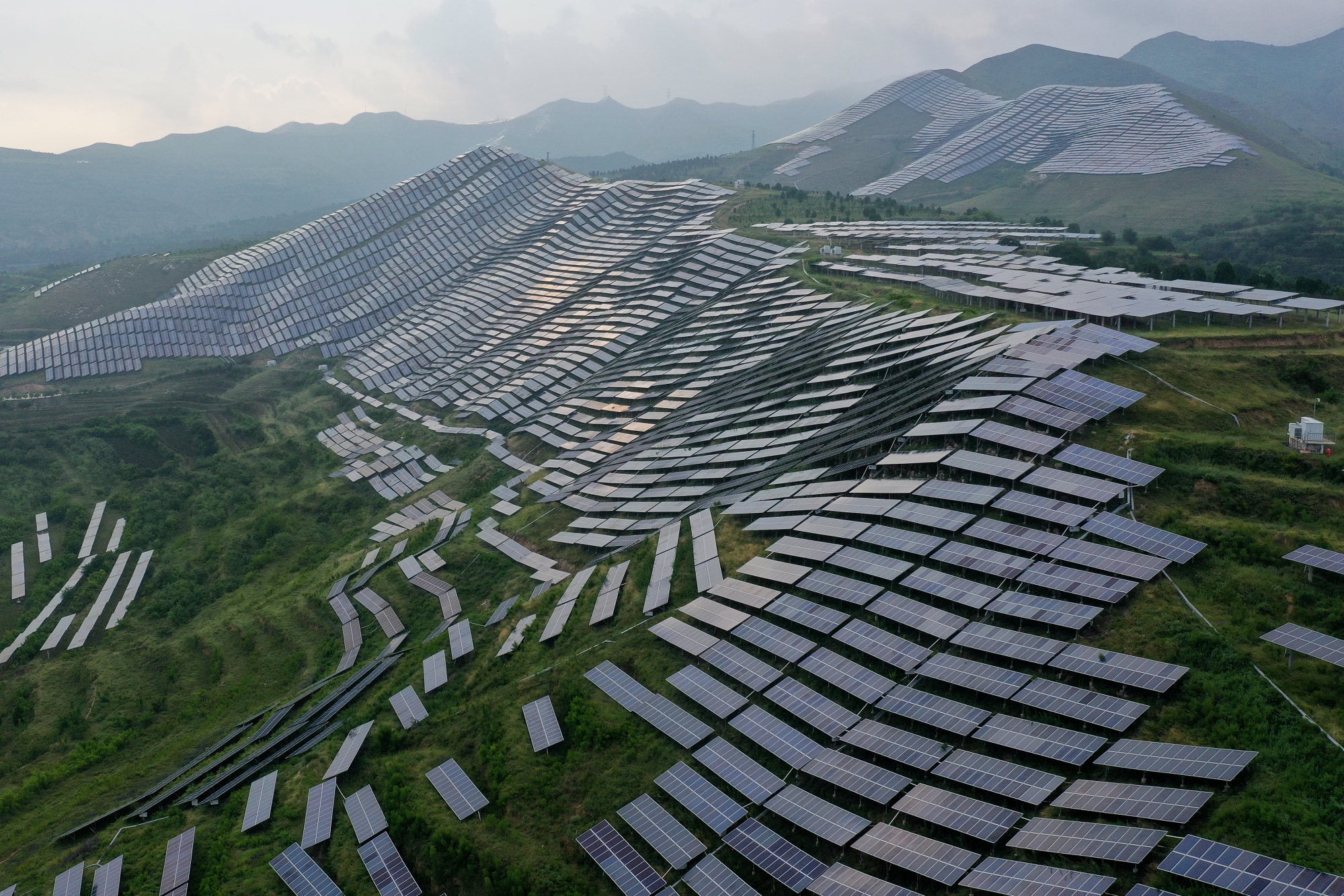
The blueprint seeks a delicate balance: maintaining coal’s role as a “bottom line” guarantee for national energy security while aggressively scaling up renewables.
Beyond leveraging coal power as a ballast for energy security, Shanxi outlined a push to expand its clean-energy sectors. According to the proposal, the province will promote the synergy of wind, solar, hydro and thermal power integrated with advanced storage, while also developing comprehensive industrial chains for hydrogen and methanol.
Shanxi also pledged to enhance its electricity-transmission infrastructure to continuously bolster power supplies to other provinces, reinforcing its role as a critical energy hub for the nation, the document showed.
Between 2021 and 2025, Shanxi’s cumulative coal production was around 6.5 billion tonnes, while its net electricity exports exceeded 740 billion kilowatt-hours.
With an excess of 30 per cent of its total output supplied to more than 20 provinces, Shanxi has provided a solid backbone for China’s west-to-east power transmission project, Xinhua reported in December, referring to a national strategic initiative that moves energy from the resource-rich west to major demand centres in the east.
China’s renewable-energy sector continues its rapid expansion, with solar-power capacity expected to overtake coal for the first time in 2026, according to a forecast report released on Monday by the China Electricity Council.
The nation’s total installed power generation capacity is projected to reach around 4.3 billion kW by the end of 2026, with non-fossil fuel sources expected to account for 63 per cent, while coal-fuelled power’s share would be around 31 per cent, the report said without giving a provincial breakdown estimate.
Renewable energy accounted for more than 60 per cent of China’s total installed power generation capacity in 2025, the National Energy Administration said last week. -- SOUTH CHINA MORNING POST