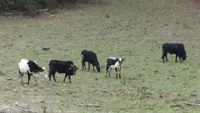
Bhutan is home to about 39 livestock breeds, six of which are indigenous and unique to the country. Their survival is now at serious risk due to shrinking populations. - Kuensel/ANN
THIMPHU: Native animal breeds in the country are facing a steep decline, with several species on the brink of extinction due to crossbreeding, climate change and economic shifts favouring higher-yielding exotic livestock.
Bhutan is home to about 39 livestock breeds, six of which are indigenous and unique to the country. Their survival is now at serious risk due to shrinking populations.

Minister of Agriculture and Livestock Younten Phuntsho said that the ministry views the situation as a serious and urgent challenge.
He said that the issue is directly linked to food security, cultural heritage and biodiversity conservation.
“Indigenous livestock, including native chicken, sheep, pigs, and cattle, are under pressure from crossbreeding, reduced economic competitiveness, and changing farming practices. Several breeds are already at risk of genetic erosion,” he said.
On genetic erosion, Lyonpo said that the situation is worsening. “Exotic breeds offering higher productivity are increasingly replacing local varieties,” he added. Traditional breeds such as nublang or thrabum cattle, native chicken, and indigenous pigs are experiencing marked population declines.
Lyonpo said that indigenous livestock breeds are not merely economic assets but form an integral part of Bhutan’s cultural identity. These animals are closely tied to festivals, rituals, and traditional livelihoods, meaning their disappearance would constitute a loss of intangible cultural heritage.
Economically, farmers become more dependent on imported breeds, which are costlier to maintain and less suited to the country’s rugged terrain. The decline also represents a form of cultural erosion, the loss of traditional knowledge and farming practices, and contravenes the constitutional mandate to protect biodiversity.
Officials from the ministry stated that current efforts are insufficient, warning that without stronger incentives and broader participation, the country risks losing several indigenous breeds within a single generation.
“Activities are currently being implemented to conserve these important native animal genetic resources of our country,”Lyonpo said.
Current efforts are promising but require scaling up, particularly through subsidies, cultural valorisation valorisation (enhancing or trying to enhance the price, value, or status by organised and usually governmental action), and integrating native breeds into ecotourism and organic farming, Lyonpo added.
The National Biodiversity Centre has led conservation efforts since 1998. Key interventions include establishing gene banks and cryopreservation facilities, over 29,000 doses of germplasm from key native species have been preserved.
Ex-situ (artificial habitat) conservation centres, such as the Centre for Nublang Conservation and Development in Trashiyangphu, Trashiyangtse and the Centre for Yubja Conservation and Development in Sertsam, Lhuentse, have also been set up.
Community-based in-situ nucleus farms have been developed for cattle, yubja, and native pigs to keep breeds integrated within farming systems.
Currently, three farms exist for native pigs, two for native chickens, and one for native cattle is under development.
Policy frameworks are being strengthened, with livestock genetic resource conservation integrated into national biodiversity strategies, including the National Biodiversity Strategies and Action Plans.
To balance agricultural modernisation and commercial farming with breed protection, the ministry is developing niche products derived from native livestock in the 13th Plan.
“By harnessing the unique qualities of these breeds, such as distinctive flavour, resilience, and cultural symbolism, the ministry aims to create specialised products and promote premium markets that reward farmers for conserving genetic resources,” Lyonpo said.
Ecotourism is another key avenue, with native breeds featured in farm stays, cultural festivals, and breed showcases to strengthen rural economies and raise awareness.
“By investing in processing, packaging, and branding of native livestock products, we aim to diversify farmers’ income and build a sustainable model where conservation conservation and commercial viability reinforce each other,” Lyonpo said. - Kuensel/ANN