When the first cohort of elite foreign captains parachuted into Chinese airlines in the 2000s, their sky-high pay – sometimes reaching 1 million yuan a year – raised eyebrows among their Chinese counterparts.
These hotshot aviators, with their international exposure and qualifications, enjoyed a stratospheric level of success in the burgeoning Chinese market. Facing a shortage of experienced pilots, Chinese carriers embraced them with open arms, granting generous benefits and speedy paths to promotion and making few demands in return.
“Other than the warm reminder of no smoking or drinking – part of Chinese regulations on a pilot’s physical condition – overseas captains in China were put on a fast track career runway and cleared for take-off,” recalled one foreign captain still flying with a budget carrier, who requested anonymity due to company policy.
“These were the heady years.”
This period of prosperity aligned with the rise of the domestic industry as more Chinese started to fly, many for the first time.
Two decades on, however, the number of foreigners flying in China has dwindled to a near-negligible amount, even as the country has overtaken the United States as the biggest global aviation market by some metrics.
According to the Civil Aviation Administration of China (CAAC), the national industry regulator, more than 500 million people took at least one flight during 2025, making China’s “aviation population” the largest in the world.
As with many other industries, foreign talent was highly sought after in China’s aviation sector until domestic carriers caught up with their global counterparts.
“I arrived in China in 2016, when the country could not ‘mass produce’ enough local captains,” said Jang Kwang-chol, a Korean instructor captain at Chengdu Airlines in western China’s Sichuan province.
People like Jang were heavily recruited at the time. Airlines, both state-owned and private, were stepping up their pitches to top-flight overseas personnel, dangling fat pay cheques and other perks to entice them into fast-growing fleets.
While critical in filling these gaps, foreign pilots were a minority even during their heyday; at their peak in 2018, they represented about 9 per cent of all certified captains actively serving in China, according to CAAC data. These elite professionals mostly operated international trunk routes, in greater demand as Chinese carriers stepped up their global expansion.
But six years later, that share had dropped to less than 2 per cent.
There has also been a steep decline in the share of foreigners licenced to fly in China. By the end of 2024, 1,926 foreigners held airline transport pilot (ATP) licences, compared with a nationwide total of 29,995. By comparison, in 2020, China had 3,802 foreign holders of ATP licences against a total of 26,241.
The falling numbers are to be expected amid the sector’s shifting fortunes and hiring patterns and as Chinese pilots mature in skills and multiply in number, according to Brian Yang Bo, a veteran aviation consultant.
First-class treatment
Since the early 2000s, Chinese airlines began scouting professionals overseas, favouring those with experience at international conglomerates. Hiring increased after requirements were standardised by CAAC in 2005, and reached its crescendo in the 2010s.
“Pilots are the core asset, and the number of captains determines an airline’s staffing power and operating capabilities,” Yang said. “To expand your fleet and network, you first need to get enough pros on board.”
Five to seven captains, including backups, are needed to operate a plane on a daily basis, since most commercial aircraft are in near-constant operation.
The Chinese aviation industry suffered from a lack of captains in the 2000s and 2010s, given the lengthy process necessary for training first officers – second in command on the flight deck – to take the helm.
“It normally takes seven years or longer for a first officer to accrue enough flight hours – usually 1,500 – and pass tests before graduating into a competent captain,” Yang said.
“Compared with the lengthy process of cultivating a cadet from the ground up, carriers opted for hiring foreign captains ... It’s a short cut.”
To lure top-tier talent at the necessary volume, Chinese airlines were generous.
“I had a strong desire to work in China, where working conditions and compensation were more flexible and attractive compared with the Korean firms I had worked with,” said Jang, the Korean captain.
His qualifications ticked all the right boxes: a stint at Seoul-based Asiana Airlines after piloting fighter jets in the South Korean Air Force. Versatile with Boeing and Airbus models, he is also qualified as an instructor.
“[Lured by the good pay], captains from all over the world wanted to come and work in the country,” Jang added.
For 13 years and counting, Italian national Pietro Soddu has flown with Shanghai-based Spring Airlines.
“China was flashing on my radar when I began to hunt for a job, when Italy’s aviation was in crisis,” said the captain, who has three decades of flying experience.
After landing the job with Spring, which included what he called the “best contract” he had ever seen, he settled down in Shanghai, later marrying there. Career and family ties have kept him in the country, even as others seek opportunities elsewhere.
“I have no regrets choosing China,” Soddu said.
Chinese airlines further fuelled the demand in the 2010s, expanding their route networks and buying an armada of new aircraft.

For instance, between 2017 and 2018 at state-owned giant China Southern, foreigners represented nearly a third of the captains who could operate advanced widebody jets like the Boeing 777 and Airbus A330 on routes to Southeast Asia, Europe and North America.
“Foreign professionals brought to the table a wealth of expertise and experience as China Southern accelerates internationalisation,” read a company journal in 2018, citing the carrier’s then chief of flight operations, Luo Minghao.
Luo said China Southern had poached personnel from international carriers like Emirates, Qatar Airways and Lufthansa, which also helped the Chinese airline adopt best practices to elevate its competitiveness.
The trend seemed likely to continue until 2019, when CAAC formulated new guidelines on the hiring and management of overseas pilots.
Notably, the regulator requested the percentage of foreign pilots be capped “within a reasonable range”. It also cautioned against hiring those with “personality or communication issues”.
“Airlines should be cautious when hiring foreigners who, despite strong skills, have any issues that may make it difficult for them to comply with regulations or work effectively with other crew members,” it read.
The warning followed several high-profile incidents involving expat pilots.
One occurred in August 2018, when a Xiamen Air jet steered by a Korean overshot the runway at Manila Airport. The captain had reportedly ignored warnings from the rest of the crew and attempted to land during lightning and heavy rain. Though no one was hurt, the accident resulted in a total hull loss.
Another case in April 2021 involved a foreign captain with Sichuan Airlines who failed a breath alcohol test before his flight, leading to a last-minute crew change and disciplinary actions by regulators.
Turbulence ahead
The guidelines, an early sign the high-flying days of foreign captains in China would soon come to an end, came shortly before what industry insiders called a double whammy.
“First, it was China’s grounding of the Boeing 737 Max in March 2019 following two crashes abroad, then a bigger blow: the Covid-19 pandemic, which led to a tsunami of flight cancellations,” said an executive with a Chinese airline, who commented on the condition of anonymity.
“Those expats hired to fly the Max were immediately furloughed ... When the coronavirus struck, though falling ridership affected all, expats found themselves first in the firing line as they were more expensive.”
China’s complex, changing quarantine regimen led many to quit and deterred other foreigners from joining, he added.
The pandemic years were tough for expats, and the weaker-than-expected post-pandemic recovery has not yet fully reversed those dim prospects.
China recorded 770 million air trips in 2025 – up 5.5 per cent year on year, according to CAAC data. The country’s airlines and airport operators reported a combined profit of 6.5 billion yuan (US$931.5 million) last year, having ended a years-long streak of annual losses in 2024. However, in 2019, the sector’s total profit was 54.1 billion yuan (US$7.7 billion).
Consequently, the sector’s journey to recovery remains an uphill battle as the Chinese economy, the world’s second largest, searches for new growth drivers and ways to boost domestic demand.
Intercontinental routes, previously profit pillars for the industry, are of particular concern, with frequencies in 2025 still below pre-pandemic levels according to data from the International Air Transport Association.
Trips between China and the US, typically reliable sources of revenue for carriers, are especially laggard compared with 2019, a result of the pandemic as well as diminished business ties amid heightened geopolitical and trade tensions.
Chinese airlines have also slowed their fleet renewals and expansions, limiting demand for talent trained on foreign aircraft. Most notably, carriers have refrained from any major purchases from US manufacturer Boeing since 2017.
While the country’s “big three” airlines have each committed to buy at least 100 units of the home-grown narrowbody C919 jet, no expat captains are known to be flying them. Deliveries from the state-owned Commercial Aircraft Corporation of China fell behind their initial schedule last year, a delay likely related to supply chain issues.
And the total number of widebody jets in service under Chinese livery – models most often deployed for international flights and an area of expertise for overseas pilots – fell to 464 in 2024, down by nine from the previous year.
Amid these shifts in fortune, there has also been a change in the geographical background of the expat captains who remain.
Many Americans and Europeans – the largest demographic of overseas captains in the 2010s – have left China, opting to return to the West. In 2024, the top four nationalities of expat captains were South Korean, Russian, Mexican and Brazilian.
More Chinese captains have also emerged from the years-long training pipeline, a trend which began before the pandemic.
In 2019, CAAC said in its annual pilot development report that a talent shortage had been “significantly eased”.
“There is an increase in the average on-reserve and standby time among certified captains,” read the report.
“Since the CAAC called for capping the percentage of expats at ‘reasonable levels’, airlines responded by looking at ways to rev up the promotion of local pilots. Heavy recruitment and training investment led to the big reserve of captains we are seeing today,” said the airline executive.
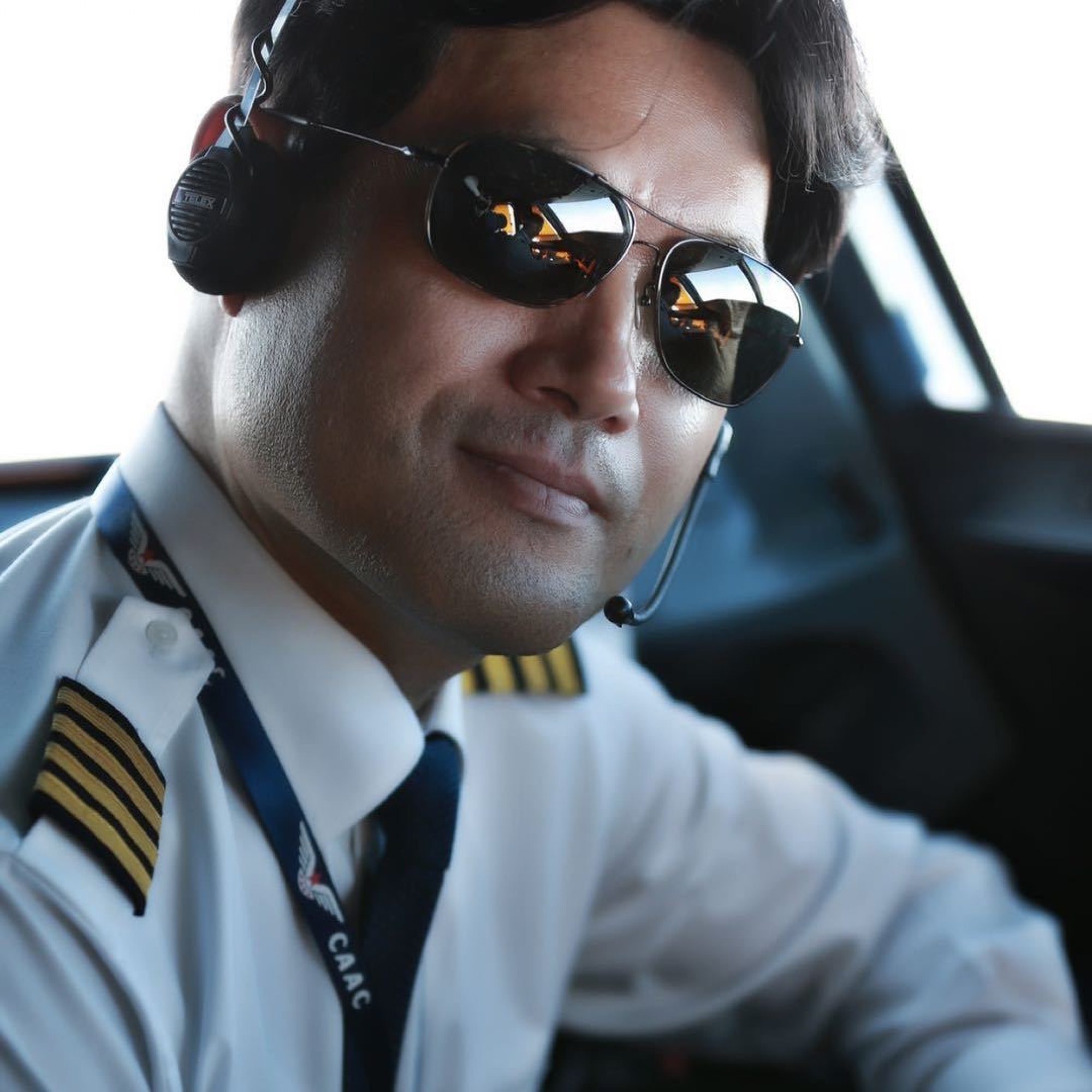
While many expats have logged their departures from China, Jang, the instructor captain with Chengdu Airlines, said those who have stuck around are the “lucky ones”.
Despite the exodus, industry stakeholders and foreign captains say the country still needs talent from overseas.
“Expat captains in China will form a tiny but necessary group going forward, complementing Chinese counterparts to suit the diversified needs of airlines,” said the executive.
“Civil aviation is a sector that is international by nature. The key to success is retaining and utilising talent.”
Leading low-budget carrier Spring Airlines, an early adopter of foreign talent, is proving an exception to the trend. It had 64 foreign captains in 2024, representing over 10 per cent of its roster – the highest proportion in the industry.
Soddu, the Spring captain from Italy, said he is proud of the values he has helped instil in his younger Chinese peers, a group he said has matured quickly.
“They also feel flying is beautiful, not just a job. That’s the passion I tried to pass to them when I arrived. Now I can see the same airmanship in them.”
While foreigners are a small minority at Chinese carriers today, Soddu said, those remaining are “highly satisfied” with their work and life.
As for Jang, the Korean pilot at Chengdu Airlines, he still has faith in China. Now marking his 35th year in the cockpit, he has logged around 13,000 flight hours and plans to add even more at his current home.
“The Chinese market is extremely attractive and has very strong growth potential in the future. I hope the system becomes more open so it will still present opportunities for foreigners.” -- SOUTH CHINA MORNING POST