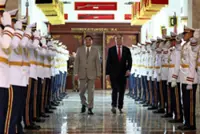
JAKARTA: One of the biggest selloffs in Indonesia since the Asian Financial Crisis in 1998 is deepening worries among investors about where President Prabowo Subianto (pic) is taking South-East Asia’s biggest economy.
A warning by MSCI Inc this week about Indonesia’s investability triggered the two-day rout. While the benchmark Jakarta Composite Index pared losses on Jan 29 after regulators pledged measures to address the index compiler’s concerns, fund managers including Aberdeen Investments and Valverde Investment Partners are expecting things to get worse for the nation’s equities.

Underpinning the concerns are moves by the former general - a protege of ousted dictator Suharto - to shoehorn the president’s nephew into the top leadership of the central bank not long after the removal of Sri Mulyani Indrawati, an internationally respected economist, as finance minister.
The government earlier this month reported its budget shortfall surged to its highest in more than two decades, apart from the pandemic years, as Prabowo pursued his social spending plans.
The Indonesian leader is also expanding the state’s role in the economy through Danantara, a sovereign wealth fund he formed last year that reports directly to him.
Some US$5 billion in annual dividends from Indonesia’s state enterprises, which would otherwise flow into the national budget, have been funnelled into Danantara already.
Another state firm - led largely by retired military officers - is taking charge of palm oil plantations seized by regulators over the past year on alleged infractions or misuses, covering an area roughly the size of Switzerland.
The MSCI move and fallout "accelerates the decision to exit the market for anyone who was on the fence,” said Xin-Yao Ng, a fund manager at Aberdeen.
"We’ve already been concerned about their policy developments, which are excessively socialist without concrete benefits to consumption growth, while the risk for private sector has spiked.”
Prabowo, who travels often but was in Jakarta this week, has remained silent amid the market swings, letting his ministers lead talks with regulators to fast-track reforms, which would meet MSCI’s requirements to maintain its weightings in key indexes and remain classified as an emerging market.
A downgrade to "frontier” status by MSCI would be the first since Pakistan lost its emerging-market status in 2021.
On Friday, the head of the market regulator, the Financial Services Authority, and the chief executive of the Indonesia Stock Exchange both resigned within hours of each other.
Indonesia’s bonds are trading about 35 basis points over emerging markets peers, just below similar premiums that emerged in Brazil and Colombia amid similar policymaking concerns, Jason Tuvey, deputy chief emerging markets economist at Capital Economics, said in a note this week, Indonesia’s cost to borrow money indicates "quite a lot of bad news is now priced in,” he said.
The rupiah, which touched record lows last week, has dropped 0.6% against the greenback since Jan 29, on track for the biggest two-day decline since September.
To be sure, Indonesia can’t easily be set aside by emerging-market investors. It boasts the world’s fourth largest population, steady consumption, high-demand commodities like palm oil and nickel and a fast-growing electric-vehicle manufacturing ecosystem.
While the stock market rout has been "unsettling,” the reforms initiated in response would improve investability in Indonesia’s equity market, said Daniel Lau, an Asean fund manager at Eastspring Investments in Singapore.
He added that they are continuing to monitor and engage with high-quality local firms.
"As long-term investors, some turbulence is not uncommon,” he said. "And fundamentals remain our north star.”
Prabowo has pitched his moves as necessary for Indonesia’s economy to grow at around 8% a year, well above the 5% average of the past two decades.
He sees the sovereign wealth fund and ramped-up social spending as necessary to improve the living standards of its nearly 300 million people and take back national wealth he says has been squandered by elites and resource firms. - Bloomberg