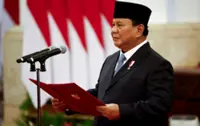
JAKARTA: National Police Chief Gen. Listyo Sigit Prabowo has firmly opposed proposals to place the force under the supervision of a ministry, warning he would rather step down than see the police no longer report directly to the President.
His statement came during a Monday (Jan 26 meeting with the House of Representatives’ Commission III, which oversees legal affairs, alongside regional police chiefs across the country.
The session was originally convened to review the force’s performance over the past year and outline plans for the year ahead. “I want to state clearly, before all of you and the entire force, that I reject the idea of placing the police under a ministry. Even if offered the position of a ‘police minister’, I would rather become a farmer,” Listyo said, drawing applause from lawmakers.
Listyo, who has served as police chief since 2021 when former president Joko “Jokowi” Widodo was still in office, warned that establishing a ministerial post overseeing the police would risk creating dual leadership between the minister and the police chief.
He said that keeping the police directly under a sitting president has been the ideal practice in the country since the force was separated from the armed forces following the 1998 reform movement, allowing it “to function effectively as a state institution serving the public” and to focus on maintaining public order.
Debates over whether the police should remain under the President have resurfaced after the police reform committee, established by President Prabowo Subianto and tasked with reviewing changes to the force, revealed last week that the issue was among the topics under discussion.
The committee said the proposal drew on the model of the Indonesian Military (TNI), which operates under the Defence Ministry, but committee members remain divided, with some supporting the current police structure and others advocating for supervision by a ministry, either existing or newly created.
This was not the first time such a debate had emerged. In 2024, the Indonesian Democratic Party of Struggle (PDI-P) suggested placing the police under the Home Ministry after accusing the force of abusing its power to support candidates endorsed by then-president Jokowi in that year’s regional elections.
A similar debate arose during Jokowi’s first year in office in 2014, when then-defence minister Ryamizard Ryacudu suggested placing the police under a ministry and Ryaas Rasyid, former regional autonomy minister serving under late president Abdurrahman Wahid, proposed that the Jokowi administration move it to the Home Ministry.
The plan faced criticism from senior officials and lawmakers and was never adopted. The government-controlled House also appeared to oppose the change this time, insisting that the police should remain under the President while supporting a stronger role for the National Police Commission (Kompolnas) in assisting the President to set policing policies, according to the eight-point police reform plan agreed at Monday’s meeting.
The Kompolnas actually also plays a role as the police's external oversight but currently lacks the authority to hold officers accountable, and the House did not mention anything about improving such oversight
The PDI-P, now the only party outside Prabowo’s ruling coalition, also reversed its position during Monday’s meeting, with its lawmaker Safaruddin, a retired police general, saying that police reform was “a matter of culture, not a change in the system or the position of the police”.
Supporters of the change called for a review of police reforms after the fall of the authoritarian New Order regime in 1998, arguing that it has not achieved its intended goals and that keeping the police under the President “risks turning the police into a political tool of the sitting president”.
Activist Dimas Bagus Arya from rights group Commission for Missing Persons and Victims of Violence (Kontras) criticised the police chief and the House’s refusal to review police structure, saying it reflected their “half-hearted commitment” in implementing thorough police reform.
“Discussing the police’s institutional position does not weaken the force, but instead allows for a deeper review of oversight mechanisms,” Dimas told The Jakarta Post on Tuesday, noting that external oversight of the police has never been effective.
“Reviewing the police’s institutional status could instead serve as an opportunity to reorganize how the police work,” he added. “This process should take place alongside cultural and operational reforms within the force to help the police adapt to democratic practices, improve professionalism and curb undemocratic behaviour.”
Critics, however, claimed placing the police under a ministry contravened the spirit of the 1998 reform movement and the Constitution, and could increase the risk of political interference. - The Jakarta Post/ANN