




Hong Kong will not pursue carbon-based taxation in its decarbonisation efforts, as maintaining a low and simple tax framework is central to the city’s competitive advantage, the financial chief has told a panel at the World Economic Forum.
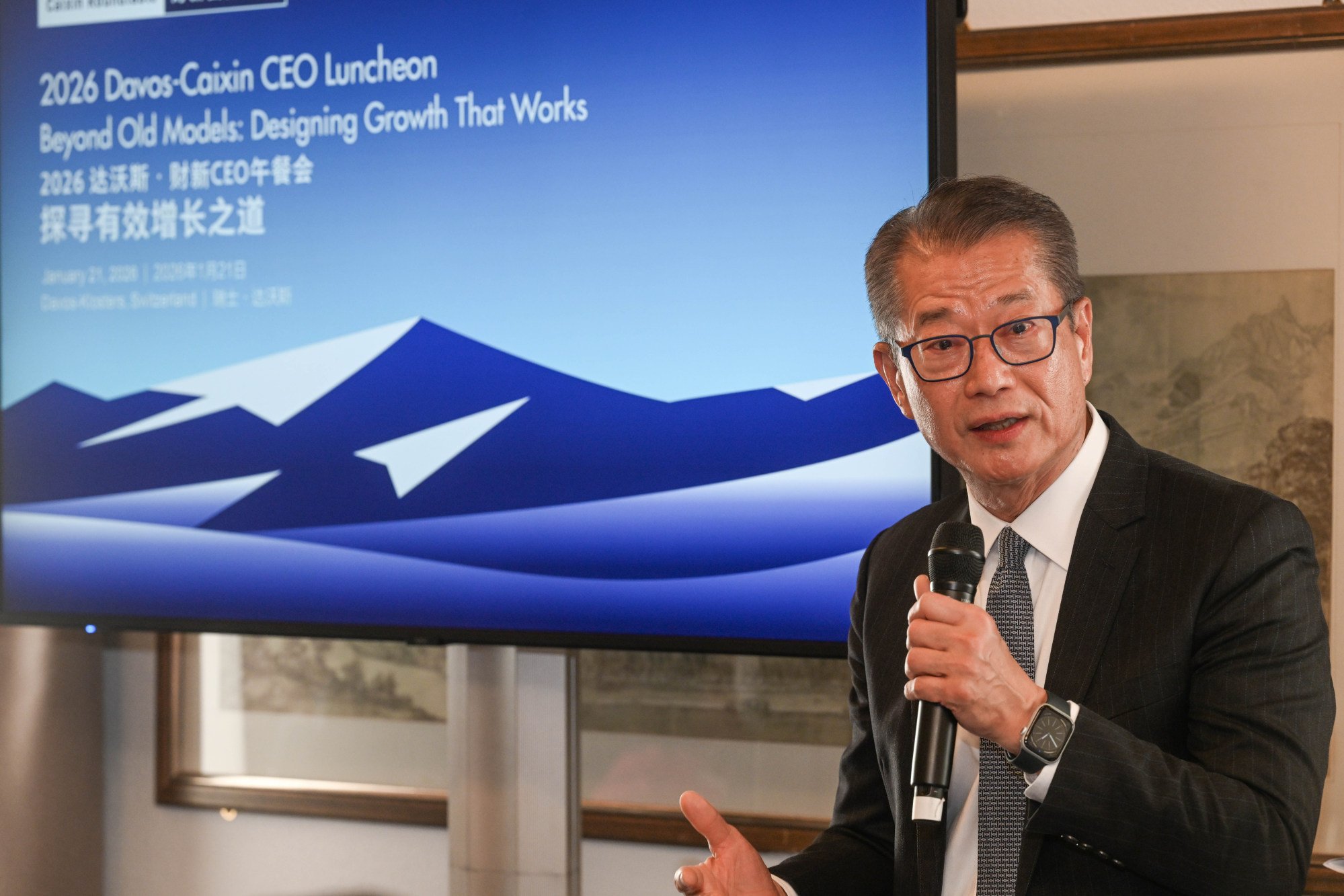
Speaking at the “How to Finance Decarbonization?” panel in Davos, Switzerland, Financial Secretary Paul Chan Mo-po said that a key strategy by Hong Kong authorities was collaborating with the private sector to develop robust business cases for sustainable initiatives.
Among the panellists was Conrad Keijzer, president and CEO of Swiss chemicals producer Clariant, who asked Chan if Hong Kong would consider “a broader approach” beyond offering tax incentives for electric vehicle purchases, to foster greater demand for decarbonisation.
Keijzer suggested requiring products sold in Hong Kong to disclose their carbon emissions to consumers, and lowering taxes on carbon-neutral or low-carbon products.
In response, Chan said: “We take a different route instead of imposing tax, because our tax is very simple. A simple and low tax regime is Hong Kong’s core competitiveness.”
“We don’t have a Value-Added Tax or a Goods and Services Tax. So what we try to do is to work with the business sector to build business cases.”
Sharing examples with the international audience, Chan said the Hong Kong government had provided subsidies to transport firms to buy and test-run hydrogen fuel cell buses as part of its goal to achieve zero vehicular emissions before 2050.
Several countries have implemented carbon-based taxation and simultaneously utilise tax incentives to promote lower-carbon products, including Singapore, which has a carbon tax on large emitters.
Hong Kong is tackling decarbonisation through its Climate Action Plan 2050, focusing on net-zero electricity by phasing out coal for backup, increasing renewables and promoting green transport with electric vehicles.
Chan said the Hong Kong government would continue to focus on four key aspects: power generation, electricity consumption in buildings, transport and waste reduction.
The finance chief said governments around the world should be more innovative in channelling private capital towards decarbonisation projects.
“In this process, you need to inspire trust and confidence in those institutional and retail investors so that this money really goes to green and transitional projects,” he said, promoting Hong Kong’s strengths in professional services such as auditing.
On the same panel, Rovshan Najaf, president of the State Oil Company of the Azerbaijan Republic, pointed to the need for technological breakthroughs in green ammonia and hydrogen to strengthen commercial viability.
Odile Renaud-Basso, president of the European Bank for Reconstruction and Development, said that, from her experience working with emerging markets, clear policy frameworks were crucial in aligning public and private sectors in pursuing decarbonisation projects. -- SOUTH CHINA MORNING POST


