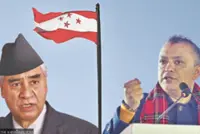
THE nation’s oldest political party, Nepali Congress, has split ahead of the March general elections, with the dissident party faction unanimously electing a new president.
The rupture adds to Nepal’s turbulent political environment, after nationwide protests in September over corruption, governance failures and demands for political renewal that ousted the previous government.
“I am grateful to you all,” newly elected party president Gagan Thapa said in a speech in the early hours of yesterday morning.
“You have given me the responsibility of the president of a party like the Nepali Congress, this is not a small responsibility. I sincerely pledge in front of you that I will not let you down.”
Questions remain about which Nepali Congress faction is now legitimate – and will be able to use the iconic tree symbol and party flag during the election scheduled for March 5.
“The commission has received letters and will make a decision,” Election Commission spokesman Narayan Prasad Bhattarai told reporters.
Five-time prime minister Sher Bahadur Deuba has served as Nepali Congress’ president since 2016, but a special convention was called by dissident leaders to pave the way for leadership change.
Negotiations to prevent a split continued until Wednesday but collapsed after leaders failed to reach an agreement, including over whether Deuba would take a step back.
Thapa and two other leaders were then suspended before the breakaway members voted him leader of their faction.
Thapa, 49, is one of the most prominent faces of the party’s younger generation and held the position of its general secretary.
The fragmentation of the Nepali Congress underscores a broader shift in the country’s politics, where demands for a generational shift and political accountability are reshaping long-established parties and prompting new faces to join politics.
After Nepal’s previous prime minister, KP Sharma Oli, was ousted in September, 73-year-old former chief justice Sushila Karki was appointed interim premier. — AFP