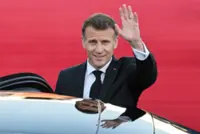
President Lee Jae-myung is set for a summit with Japanese Prime Minister Sanae Takaichi, a week after one with Chinese President Xi Jinping, as Seoul seeks to balance ties with both neighbours.
The summit in Japan’s Nara City today comes amid a growing diplomatic dispute between Beijing and Tokyo, and analysts expect Takaichi to highlight the stability of three-way ties between the United States, Japan and South Korea.
Lee has taken an approach of “pragmatic diplomacy” in seeking to balance ties with China and Japan, which could make it easier to reach pacts in business fields such as artificial intelligence.
“Historically, disputes between China and Japan go on for a long time,” said Yang Kee-ho, a Japanese studies professor at South Korea’s Sungkonghoe University.
“It is very likely that the Sino-Japanese relationship will deteriorate throughout (Takaichi’s) term in office.”
Beijing was infuriated after Takaichi said in November a Chinese attack on democratically governed Taiwan could be deemed an existential threat to Japan, which could trigger a military response from Tokyo.
South Korea’s Lee and Takaichi may discuss the Japan-China dispute during their meeting, a security adviser to Lee, Wi Sung-lac said.
However, South Korea is unlikely to take sides, analysts said.
“Our relationship with Japan is as important as our relationship with China,” Lee told reporters during his state visit to China last week.
Perennial concerns, such as the denuclearisation of the Korean peninsula and the fate of Japanese nationals abducted by neighbouring North Korea are also expected to figure on the agenda.
Ties are still plagued by longstanding tension on topics such as Japan’s colonisation of Korea, including the treatment of Korean women forced to work in its wartime military brothels.
Such historical issues have moved from the centre stage of relations for now, analysts said, though some in South Korea still want them to stay high on the agenda.
Lee’s two-day visit to Japan, shorter than his four-day trip to China, is part of “shuttle diplomacy” efforts that the two countries agreed last year.
Even if the trip has no tangible outcome, said Yang, “The most important thing is to keep the shuttle meetings going ... and eventually reaching concrete results.” — Reuters