American novelists Ken Liu and Rebecca F. Kuang were the undisputed stars of the annual Singapore Writers Festival last month.
Their sessions were packed to capacity, with audiences eager to hear their thoughts on artificial intelligence, education, and even Singaporean cuisine.
Days before the 10-day festival, which started on November 7, the leaders of China and the United States held key talks in Busan, South Korea, sending conciliatory signals amid an intense geopolitical rivalry.
Yet in Singapore, scarcely any questions from readers or the press prompted the authors to address the issue of US-China relations.
Both 49-year-old science fiction writer Liu and 29-year-old Kuang, who writes fantasy novels, are second-generation Chinese immigrants.
For many readers, they represent a new breed of Chinese-American writers who are incorporating elements of Chinese culture into their work in new ways.
Their transcendence of politics and ideology is a departure from the previous generation of Chinese-American writers, whose careers developed in more turbulent times.
The emergence of this new generation of writers “has everything to do with the shifting US-China relationship and China’s new geopolitical and economic power”, said Christopher Fan, an associate professor of English at University of California, Irvine.
“They are not the Tiananmen-era dissidents or immigrants and so aren’t shaped by that era’s politics.”
Fan noted that the growing tensions between China and the US had, conversely, “created more space” for new writers including Kuang and Liu, enabling them “to explore issues beyond an American-based identity”.
‘Dance’ between cultures
In 2000, four-year-old Kuang emigrated from Guangzhou in southern China to the US with her family.
It was before China’s accession to the World Trade Organization and its successful bid to host the Olympics, when the rapid economic growth of what was then the world’s most populous nation had only just begun.
Kuang and her family settled in Dallas. She grew up in the Texas city, becoming an accomplished debater during secondary school before going on to study history at Georgetown University in Washington.
As a writer, Kuang has mostly embraced fantasy – though her 2023 novel Yellowface is a satire that delves into race and cultural appropriation.
“I don’t have a fixed cultural identity – it’s always in flux,” Kuang said during a conversation with the media at the Singapore Writers Festival.
“I kind of refuse to align myself with any cultural perspective,” she said. “That’s the nice thing about living on the border and in between cultures: you can dance.”
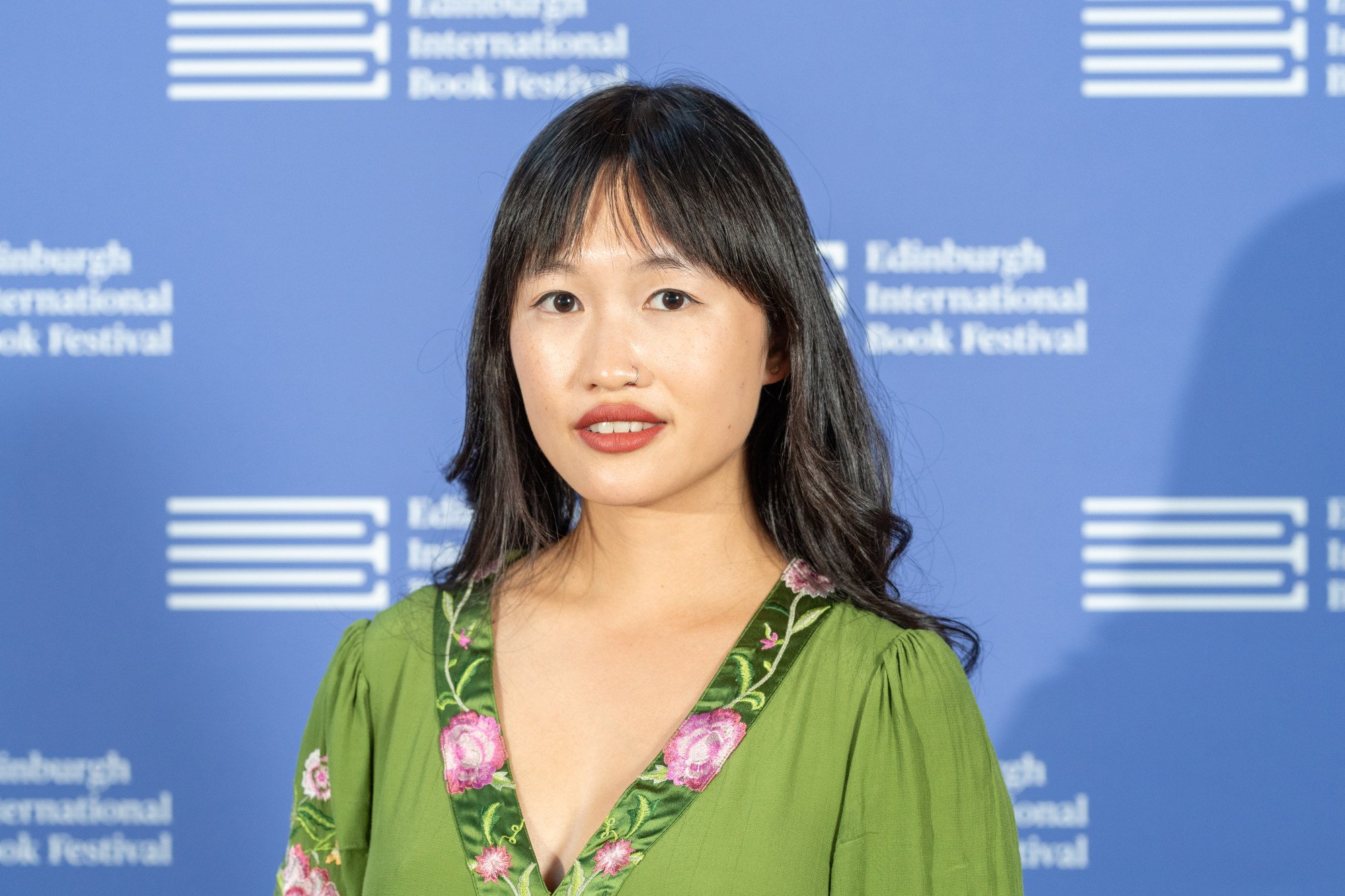
For Kuang, Chinese history is a cultural inspiration rather than a personal burden.
She told The New Yorker earlier this year that she drew inspiration for her fantasy writing from her family history. That included her grandparents’ experiences evading Japanese forces during the Second Sino-Japanese War that ended in 1945 and their ordeal through the Cultural Revolution.
Rather than avoiding her Chinese roots, Kuang turned these experiences into universally resonant stories that have captivated readers worldwide.
Her debut novel was The Poppy War, written during her undergraduate years and published in 2018 when she was only 22. It is the first book in a trilogy depicting the fictional Nikara Empire, inspired by China’s history in the late 19th and early 20th centuries.
There are parallels to the Nanking massacre of 1937, Japan’s experiments on humans at its secret research facility known as Unit 731, and historical figures – its heroine is based on Mao Zedong, the founder of the People’s Republic.
Speaking at the Singapore festival, Kuang said her novel “deals pretty much exclusively with Chinese mythology and philosophy in Chinese history”.
She also acknowledged the profound influence Chinese literature has had on her.
“I’m pretty secure in my lane since I’m Chinese-American,” said Kuang, who is pursuing a PhD at Yale University’s East Asian Languages and Literatures Department.
‘Write for eternity’
Sci-fi writer Liu also moved to the US with his family when he was young, at the age of 11. The family emigrated from Lanzhou, in northwestern Gansu province – first to California and then to Connecticut. Liu went on to study at Harvard University, graduating with a bachelor’s degree in English literature. He worked as a software engineer then went back to Harvard and became a lawyer before he started writing full-time.
His celebrated 2011 short story The Paper Menagerie is the first work of fiction to win the Hugo, Nebula and World Fantasy awards. A poignant tale about the cultural dislocation experienced by second-generation immigrants, the story is grounded in the traditional Chinese art of paper folding known as zhezhi.
Liu said the emphasis in his writing was on the more universal elements of Chinese culture.
But Liu – who was the translator that brought Liu Cixin’s The Three-Body Problem to the English-speaking world – rejected the suggestion that he was a cultural ambassador and said reading was personal, not political.
At a time when science fiction is sometimes seen as a portent of tech trends or geopolitical tensions, Liu also declined to comment on current affairs.
“I write for eternity,” he said during an interview in Singapore.
In his epic fantasy series The Dandelion Dynasty, Liu reimagined a path to modernity that bypassed the European Renaissance.
“Is it possible to write a story about modernity ... that has a different way of thinking?” he said.
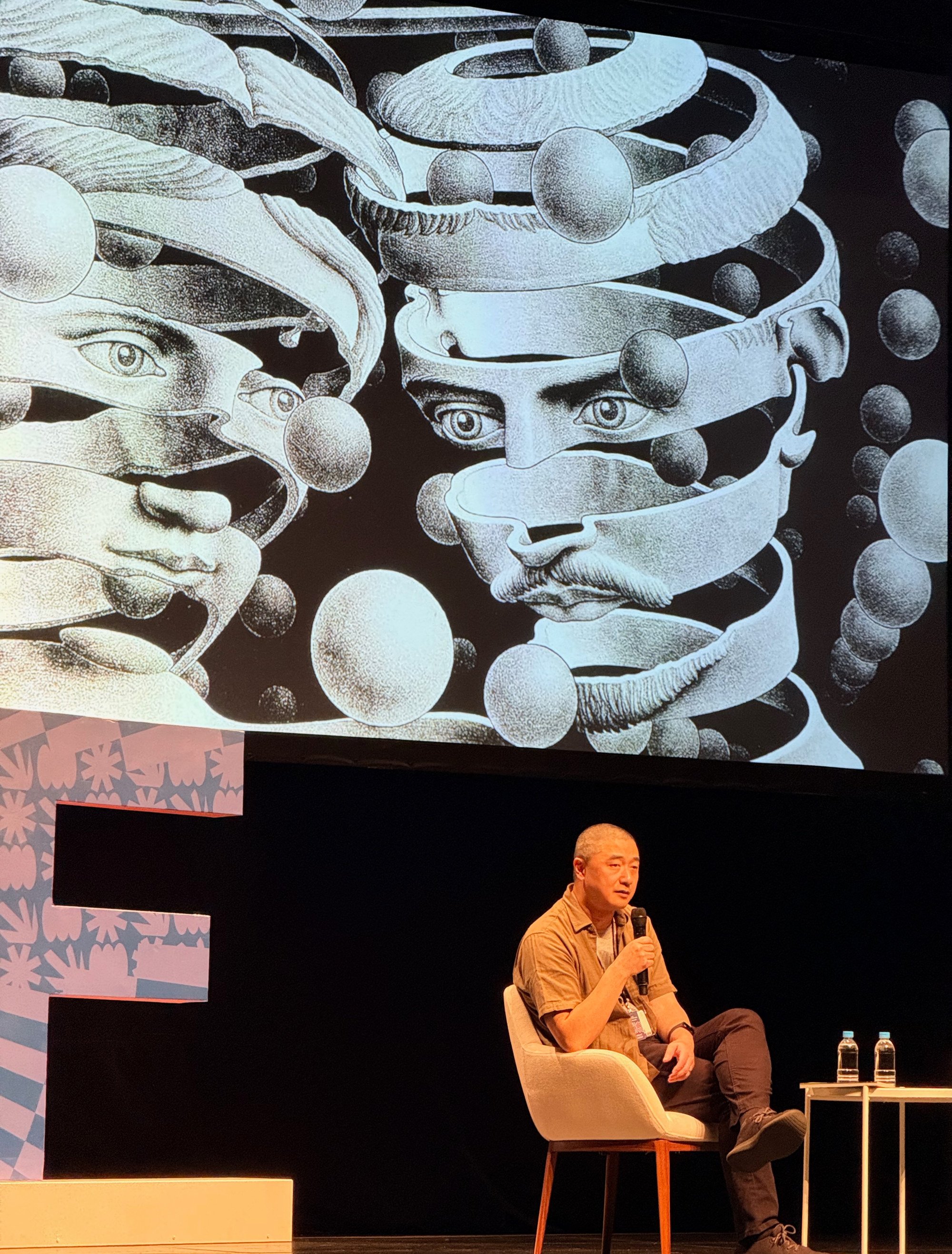
For Liu, specific events are vehicles to explore the “collective unconscious” and the human condition.
“Every particular cultural experience is universal. Whether something is traditionally ‘Chinese’ is not relevant,” Liu told the South China Morning Post in an earlier interview.
“All experiences are reflective of the collective unconscious and therefore become the source of stories,” he said.
“I think it’s the same for all artists. The stories they learn are based on their own lives. Whatever life they live, they have acquired a particular set of images, words, metaphors and ideas. But what is important is whether they can use those things to say what is beyond them.”
Li Yali, a lecturer with the foreign studies school at Nanjing University of Posts and Telecommunications, said both Liu and Kuang had framed Chinese-American writing “not as peripheral or oppositional ... but as a dynamic site where genre, transnational circulation and cultural translation actively reshape the contours of contemporary American, Chinese and even world literature”.
According to Fan, from the University of California, Irvine, the depictions of Chinese cultural elements in Kuang and Liu’s works were largely accurate despite them lacking first-hand experience of Chinese society.
Consequently, he said the works could provide a better understanding of Chinese society for “Western readers unfamiliar with that culture”.
The older generation
Fan said that the new generation of Chinese-American writers was to some extent “shaped by economic mobility”.
He said the parents of these writers were often “upwardly mobile academically and professionally” and “their entry into the writing profession is deeply shaped by middle- to upper-middle-class values and professional identity”.
But for the preceding generation of Chinese-American writers, who have been described by some literary critics as “the Tiananmen generation”, the situation is far more complex.
For them, it has been difficult to escape the reality of politics to construct a new world within the realm of fiction writing.
Many Chinese writers who became well known before Liu and Kuang were born, or during their student years, used their craft to bear witness to the political and historical traumas of their home country.
Among the most distinguished is Jin Xuefei, who uses the pen name Ha Jin and won the National Book Award in 1999 for his novel Waiting.
The former People’s Liberation Army soldier has said the crackdown on pro-democracy protests in Beijing in 1989 prompted him to stay in the US – where he was pursuing a doctorate at Brandeis University – and write in English, his second language.
By publishing English-language novels in the US, he bypassed the Chinese censors and set to work chronicling China’s contemporary political upheaval, including the Cultural Revolution.
His acclaimed novel Waiting meticulously details the life of a military doctor as he endures an 18-year wait for the Communist Party to approve his divorce.
Jin’s 2004 novel War Trash, which won the PEN/Faulkner Award, depicts a Chinese soldier’s ordeal in a prisoner-of-war camp during the Korean war.
Another well-known Chinese-American writer, Li Yiyun, arrived in the US in 1996 to study immunology after graduating from Peking University before she turned to fiction writing.
Li’s early works also told the stories of people on the margins whose lives were profoundly affected by political campaigns and major policy shifts in China.
Her short story collection published in 2005, A Thousand Years of Good Prayers, depicts the harsh realities for those left behind by China’s economic boom, like a retired teacher who loses everything in the volatile stock market.
Li has toned down elements of Chinese society in her recent works, and her Chinese-language works have gained widespread recognition in China.
‘Political nonsense’
However, there has been plenty of controversy around Chinese-American authors – most recently over the Netflix adaptation of The Three-Body Problem, for which Liu and author Liu Cixin were consultants.
Some critics said its multi-ethnic casting and explicit portrayal of the Cultural Revolution were rife with ideological bias against China.
Earlier, when the Hugo Awards ceremony was held in Chengdu, Sichuan in 2023 – the first time it had been hosted in China – Kuang’s novel Babel was controversially excluded from the nominations.
Emails leaked the following year revealed that Hugo administrator Dave McCarty had suggested altering the list of finalists to exclude works focusing on Taiwan, Tibet or other topics that may be an issue in China.
Babel, published in 2022, is arguably Kuang’s most successful novel. Set in a parallel-world Oxford, it uses an intricate linguistic narrative to examine the operational mechanisms of British imperial expansion.
If it was removed from the list of finalists it may have been a case of the organisers being too concerned about political sensitivities in China.
When the Hugo Awards ceremony was held, the Chinese edition of Babel had already been approved for mainland publication – meaning it had undergone scrutiny by the censors to make sure it did not have any content related to historical or political events deemed sensitive by the Chinese authorities.
On Douban – China’s most influential book, film and music ratings site – Babel scores 8 out of 10 based on reviews from more than 7,500 readers.
Kuang also drew attention in May this year during her graduation address at Georgetown University, when she referenced the 1989 Tiananmen crackdown – a taboo in mainland China.
Excerpts from her speech went viral on social media, drawing praise from the more liberal-minded and criticism from nationalists. The clips were swiftly removed by the censors.
But Kuang said these incidents had not affected the response to her work in China.
“Regardless of whatever political nonsense there is, I have received a really warm reception in China,” she said.
That includes the fractious relationship between Beijing and Washington.
“It’s really important to untangle people and artists from whatever their governments are doing ... just as I wouldn’t want to be judged for whatever [Donald] Trump is doing, I think that’s the same for Chinese readers,” Kuang said.
“In a lot of ways we’re powerless to [what our] leaders are doing, but there’s so much potential for personal connections through storytelling that are possible outside of that realm.” -- SOUTH CHINA MORNING POST