Nearly two months after Japan’s new prime minister enraged Beijing with her remarks on Taiwan, the issue is not going away.
Sanae Takaichi set off a diplomatic firestorm in November when she suggested that Japan could justify a military response if Beijing attacked Taiwan.
Beijing hit back with diplomatic, economic and military pressure in a campaign analysts said reflected concerns about Japan’s assertiveness on regional security and closer ties with the US and other allies.
Tensions are soaring, and there is no end in sight. But according to analysts, the intensity and duration of the stand-off could ultimately hinge on the US-China-Japan triangle.
The row erupted on November 7 after Takaichi became the first Japanese prime minister to explicitly state that any use of force by Beijing against Taiwan could be a “survival-threatening situation” for Japan, suggesting that the country’s military could intervene.
Takaichi’s comments drew strong criticism from Beijing and prompted a series of retaliatory measures aimed at piling economic and diplomatic pressure on Japan. Takaichi has refused to retract the comments, despite repeated demands to do so from Beijing.
Wu Xinbo, dean of the Institute of International Studies at Fudan University in Shanghai, said China was mainly concerned about Japan taking a more proactive role in challenging regional security with the resurgence of militarism.
“In the past, it was widely believed that Washington was pushing Tokyo to take certain steps, but now it appears that in some cases Tokyo is the one offering ideas,” he said.
“Tokyo is actively pulling Washington along and bringing other countries into its approach, which intensifies regional tensions.”
Wu said Japan’s involvement in the South China Sea and the Taiwan Strait in the past decade was partly fuelling Beijing’s concerns.
Beijing views Taiwan as part of China to be reunited by force if necessary. Japan and its treaty ally the United States, like most countries, do not recognise Taiwan as an independent state, but Washington opposes any attempt to take the self-ruled island by force and is legally bound to provide arms for its defence.
Wu said Japan’s national security policy was also an issue for Beijing, especially since 2015 when it had “clearly shifted, placing greater emphasis on balancing China”.
Japan’s pacifist constitution was amended in 2015, when Shinzo Abe was in power, to allow Tokyo to come to the aid of troops from foreign countries even if Japan was not directly under attack.
China – where memories of Japan’s wartime aggression are deeply ingrained – has for years accused Japan’s political right-wing of trying to amend its pacifist constitution, alter its non-nuclear policy and expand the country’s military capabilities.
“In pursuing this goal of balancing China, Japan has not only worked to keep the US close, but has also actively expanded cooperation with other countries such as Australia, Vietnam and India,” Wu said.
“In this sense, Japan has become the most significant challenger to China’s interests in the region after the US.”
Shanghai-based military analyst Ni Lexiong had a similar view.
“What Japan seems to be signalling is that, even if the US does not act, Japan will,” he said.
“Japan’s intention is that it keeps pressuring Washington ... in case of a conflict, Japan expects to compel the US to join in.”
Japan’s expanding defence spending, military ties and strategic posture in Southeast Asia have also raised concerns in China in recent months.
Last week Tokyo approved a record defence bill exceeding 9 trillion yen (US$57.5 billion) for 2026 – a 9.4 per cent year-on-year increase – aimed at strengthening strike-back capabilities and coastal defence.
Chinese foreign ministry spokesman Lin Jian said the bigger budget showed “Japanese right-wing forces’ motive to remilitarise Japan and resurrect militarism” and that Japan was “deviating further and further away from the path of peaceful development and moving in a dangerous direction”.
Takaichi – who has criticised China’s growing military presence in the region – in October had announced plans to boost Japan’s defence spending to reach a target of 2 per cent of GDP two years ahead of schedule.
That came after a new defence pact was signed with the Philippines in September, allowing Japan’s military to deploy there for the first time since World War II.
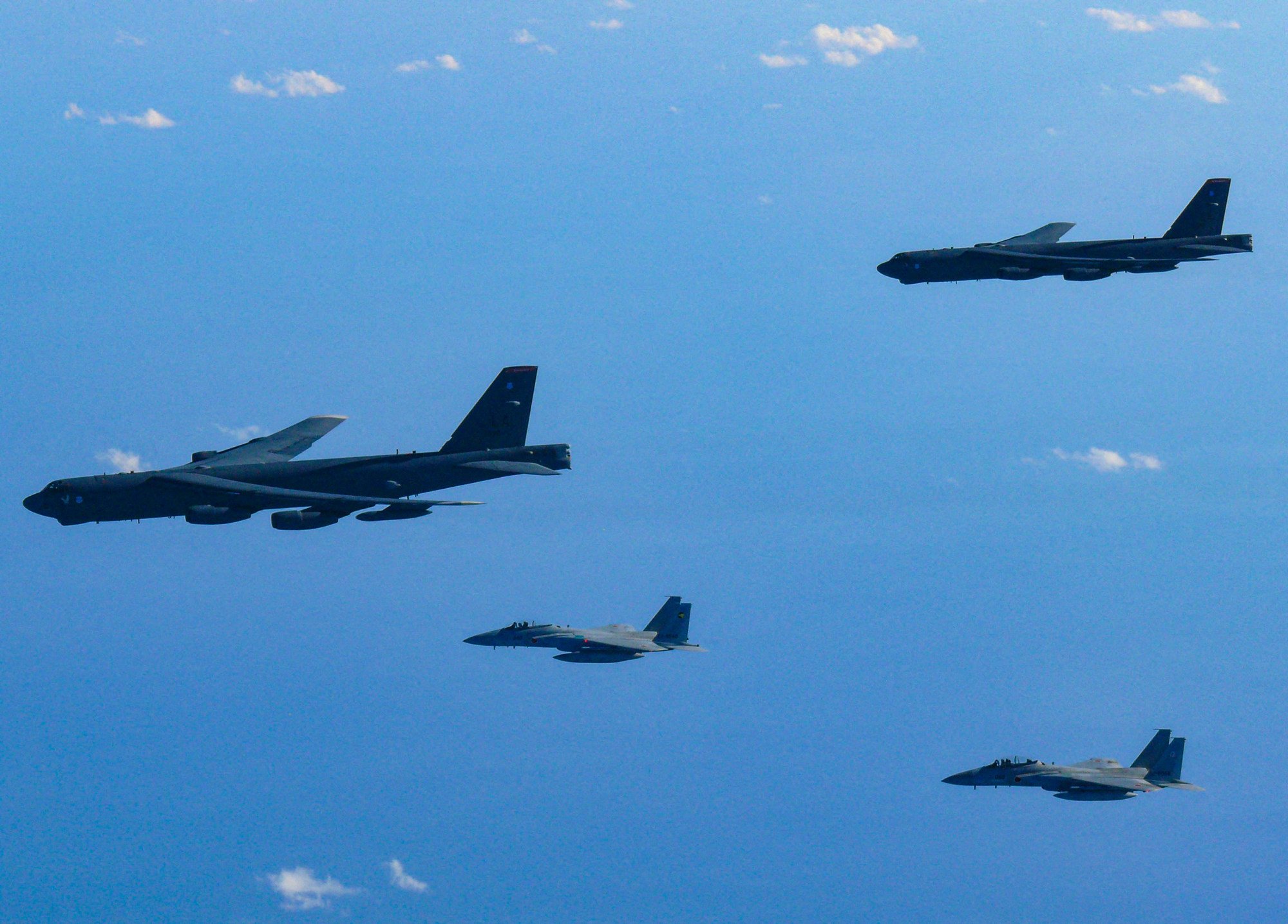
Japan has since held joint military exercises with the Philippines as well as the United States.
In a substantive shift in its arms export policy, Japan has also been exporting domestically produced Patriot interceptor missiles to the United States and is considering similar exports to the Philippines.
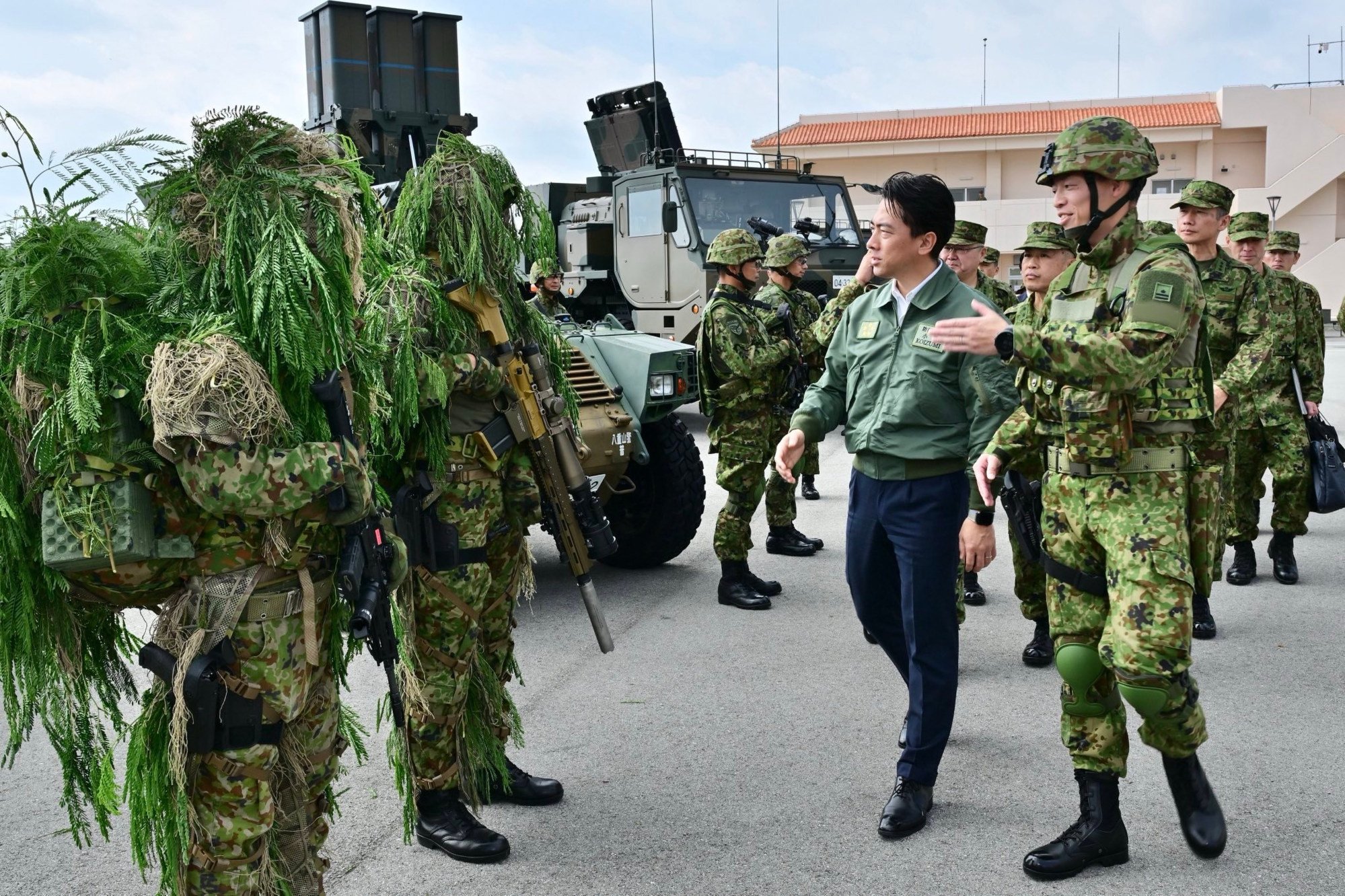
Meanwhile, Japan has also said it planned to deploy missiles on the country’s westernmost island of Yonaguni – located just 110km (68 miles) from Taiwan.
These are all seen as moves to challenge Beijing. But according to Lian Degui, director of the Centre for Japanese Studies at the Shanghai International Studies University, Japan was unlikely to make any risky military moves.
“Japan simply does not have the military capability,” Lian said.
“Its economic and military strength are both less than one-third of China’s, so it is in no position to act on its own,” he said, adding that Japanese allies such as the Philippines, South Korea and Australia were also likely to stay out of any conflict that might break out.
Kei Koga, associate professor of public policy and global affairs at Singapore’s Nanyang Technological University, pointed to Washington’s stance as another factor in the protracted tensions between Tokyo and Beijing.
Koga said the Donald Trump administration’s Taiwan policy was “extremely unclear”, and with Trump potentially visiting China in April, Washington appeared “unwilling to confront Beijing in the near term”.
“China may therefore see this moment as an opportunity to drive a wedge between Japan and the United States,” he said.
Koga also noted that Beijing had long been concerned about external interference in the Taiwan issue.
This year marks the 80th anniversary of the end of World War II, and the surrender of the Japanese forces in Taiwan which ended Japan’s 50-year occupation of the island.
“China is particularly sensitive to any narratives or actions that might signal external involvement in Taiwan during such a symbolic year,” he said.
Trump spoke by phone with Takaichi late last month, just hours after a call with Chinese President Xi Jinping in which Trump reportedly said the US “understands how important the Taiwan question is to China”, according to state news agency Xinhua.
Koga noted that Beijing would see that Tokyo could realistically challenge China if it acted together with allies like Washington or Manila, whereas it would not pose as big a threat if it acted alone.
“In this sense, the trajectory of Japan-China relations is likely to depend heavily on the future dynamics of both Japan-US relations and US-China relations,” he said.
However, Toru Horiuchi, a lecturer in China-Japan relations at Chinese University of Hong Kong, said Japan had some formidable military capabilities and “could individually challenge China to some extent”.
“But I believe the balance of power has already shifted in China’s favour, and China probably perceives Japan as a lesser power than itself or the US,” he said.
“It is only when Japan’s military power is combined with that of the US, especially, and other Asian countries that China probably perceives a serious challenge to its security.”
He said Japan was seeking to “build or strengthen various frameworks to check and balance China”, including the Japan-US alliance and security cooperation with other Asian countries such as South Korea, the Philippines and Vietnam.
Japan and South Korea, as long-standing US partners, continue joint efforts with Washington to contain China’s rise – a persistent concern for Beijing. Under the Joe Biden administration, this trilateral cooperation was formalised into an institutional framework that aimed to boost collective defences against perceived threats from China, Russia and North Korea.
This alignment is also seen in expanding multilateral engagements. Recent activities include quadrilateral maritime drills involving the US, Japan, Australia and the Philippines, alongside Japan’s moves to strengthen defence ties with nations like Vietnam. Concurrently, Japan has progressively tightened export controls on advanced semiconductor manufacturing equipment, explicitly targeting Chinese entities.
As the tension with Japan continues to intensify, China has stepped up its pressure tactics, issuing a new travel warning earlier this month advising citizens to avoid going to Japan after several earthquakes hit the northeast of the country.
Takaichi appeared to try to lower the temperature when she told a parliamentary session on December 3 that Tokyo’s “fundamental position regarding Taiwan remains unchanged from that stated in the 1972 Japan-China Joint Communique, and there has been no change whatsoever to this position”.
Beijing dismissed the remarks as “prevarication”, warning that it “absolutely does not accept” Takaichi’s continued refusal to retract her comments on Taiwan.
Koga said that strong reaction from Beijing was likely to continue “as its diplomatic rhetoric has intensified” but that its actions remained “somewhat measured”. He noted that there had been no large-scale anti-Japanese demonstrations or any targeting of Japanese businesses in China.
“Given this calibrated approach, the current tensions are likely to be prolonged unless a significant external shock creates an opening for both sides to recalibrate their relationship,” he said.
Lian expected no major change in the situation until “probably at least the first half of [next] year”, pointing to Tokyo’s response to Beijing’s criticism and the Japanese prime minister’s high approval ratings.
Takaichi’s approval ratings have been consistently high since she took office in October. A Yomiuri Shimbun survey in November found the Takaichi cabinet’s approval rating was at 72 per cent – up slightly from the previous month’s poll.
Lian said that could change by early to mid-next year if new factors emerged or if there was more influence from anti-Takaichi factions.
Horiuchi from CUHK also pointed to strong anti-China sentiment in Japan which meant Takaichi would not want to be perceived as yielding to Chinese pressure.
However, he noted that it was in Beijing’s interests to have stable relations with Tokyo – and that could shift the needle.
Relations between China and Japan have been frequently tested, but the two neighbours are also major trading partners.
“In the longer term, the priority for China is its strategic competition with the US, and at least stable relations with Japan are important for its hedging against the US and its economic interests,” Horiuchi said.
“China may change its attitude towards Japan depending upon its calculation of its interests.”