An investigation into the 28 March 2025 collapse of Bangkok's SAO tower, exploring the human cost, flawed construction, and systemic corruption it exposed.
Introduction: The Day the Earth Shook and One Tower Fell
On 28 March 2025, a powerful earthquake originating hundreds of kilometres away in Myanmar sent tremors across the Thai capital. For most of Bangkok, the event was a frightening but fleeting disruption. In the hours that followed, Bangkok Governor Chadchart Sittipunt reported a city shaken but largely intact: 169 buildings had sustained minor cracks, but none suffered significant structural damage. The city's infrastructure, it seemed, had weathered the seismic test.
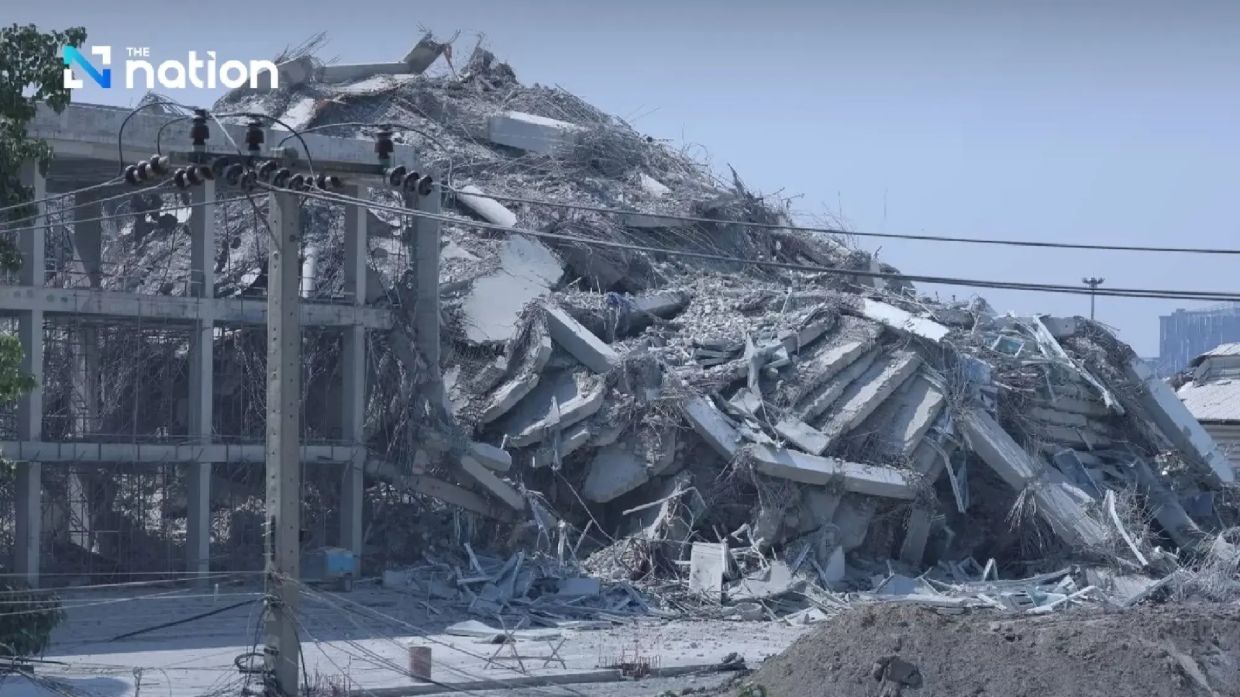
Amidst this landscape of resilience, however, stood a devastating anomaly. On Kamphaeng Phet 2 Road, the nearly-completed, 33-storey State Audit Office (SAO) building lay in a catastrophic heap of twisted steel and shattered concrete. It was the only building in the entire city to be destroyed, its sudden, violent collapse claiming the lives of dozens of construction workers and instantly transforming a natural disaster into a national tragedy.
The building's singular failure ripped through the public consciousness, raising an urgent and deeply unsettling question. Why, in a city of countless high-rises, did this specific skyscraper—a government facility no less—fall while all others stood firm? Its collapse not only triggered a massive search and rescue operation but also launched a far-reaching inquiry that would expose critical weaknesses in the very foundations of Thailand’s construction industry and governance.
A Singular Catastrophe: Anatomy of the SAO Building Collapse
To comprehend the full scope of the tragedy, it is essential to analyse the specifics of the collapse, the immediate human toll, and the scale of the emergency response. The event was not merely a structural failure; it was a complex disaster scene that demanded a monumental and international effort to recover the victims and begin the search for answers.
The 33-storey skyscraper, located in the bustling Chatuchak district, was approximately 30% complete when the earthquake struck. At 12:50 MMT on 28 March 2025, as workers were installing piping and glass walls, the structure gave way. The collapse was swift and total, leaving a mountain of debris where a modern government tower was meant to stand.
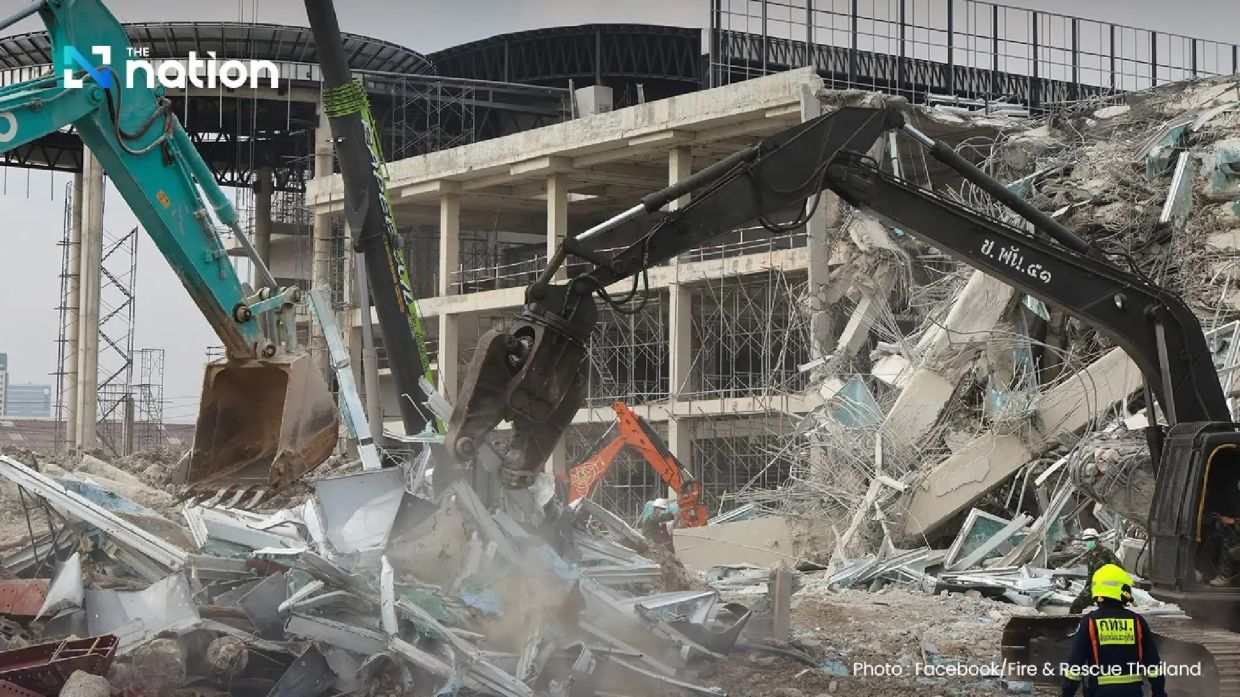
The human cost was staggering. As rescue operations concluded weeks later, the final figures, reported on 13 and 14 May 2025, painted a grim picture: 95 confirmed deaths, 9 non-fatal injuries, and 4 workers who remained unaccounted for. The victims were a testament to the diverse workforce behind Bangkok's development, including at least ten migrant workers from Myanmar and one Cambodian national, with other foreign nationals also reported among the victims.
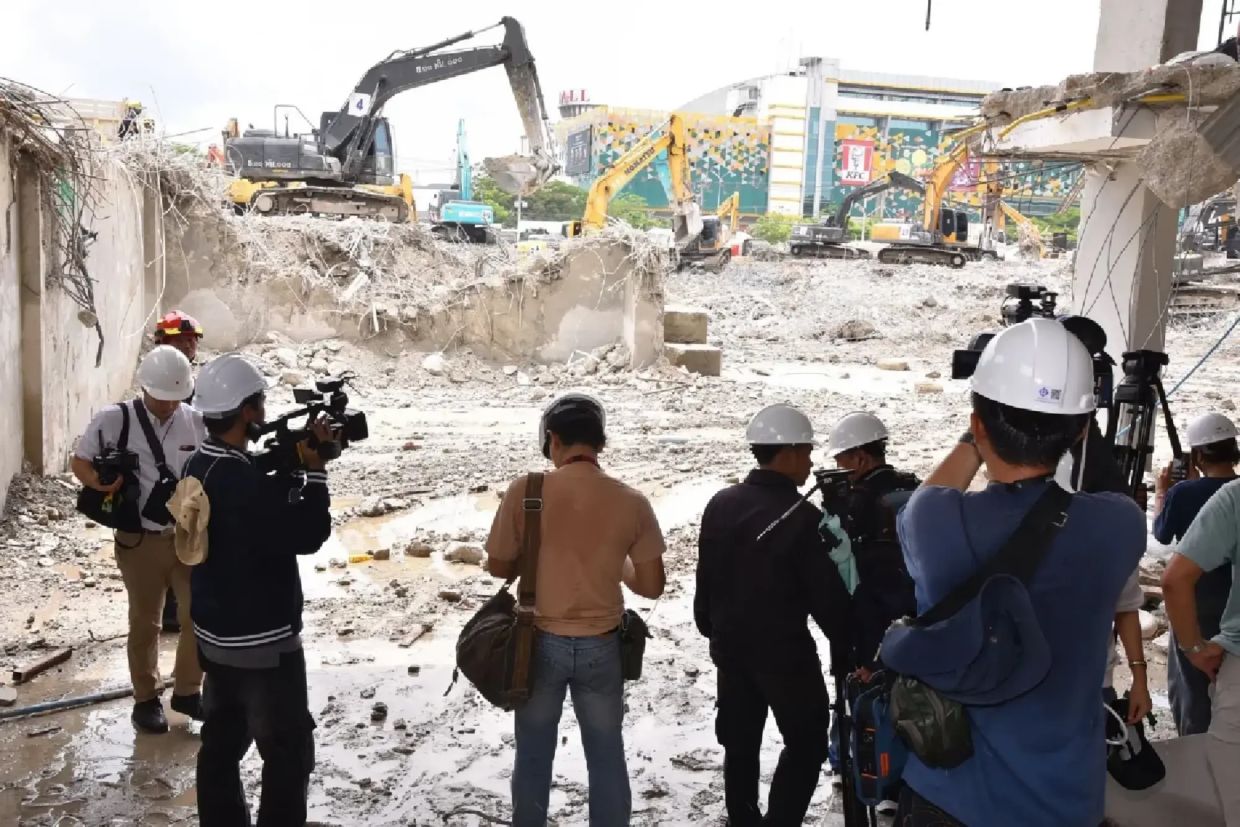
The immediate aftermath saw a frantic race against time. Rescue workers deployed excavators and cranes to sift through the wreckage in a desperate search for survivors. The international community responded, with personnel from the United States joining the rescue efforts and the Israeli embassy providing a specialised scanning device to aid in locating those trapped beneath the rubble. From the first moments of shock, the focus shifted from the immediate aftermath to the complex and far-reaching investigation that would inevitably follow.
The Investigation: Unravelling a Cascade of Failures
The investigation into the SAO building collapse evolved from a search for external causes into a damning verdict on internal failures. What began as a question of whether the earthquake's force was simply too great for the structure quickly morphed into an exposé of flawed design, substandard practices, and a troubling lack of oversight. This section deconstructs the investigative process, which peeled back layers of negligence to reveal a project rotten at its core.
Initial Suspicions: The Steel Controversy
In the immediate days following the collapse, attention turned to the building's raw materials. On 30 March 2025, Industry Minister Akanat Promphan announced that inspectors had discovered "anomalies" in steel samples recovered from the site. The spotlight fell on the supplier, a Chinese company named Xin Ke Yuan Steel, which, in a deeply concerning revelation, had already been ordered by Thai authorities to cease operations in December 2024. This initial finding suggested a simple case of faulty materials, but the truth would prove to be far more complex.
The Official Verdict: A Flawed Blueprint and Faulty Execution
Three months later, on 30 June 2025, Prime Minister Paetongtarn Shinawatra delivered the definitive findings of the official investigation. After extensive analysis, including advanced simulations of the building’s response to seismic forces, the conclusion was unequivocal: the collapse was due to "flaws in its design and construction." The investigation identified a cascade of critical failures that doomed the building from the start.
Key deficiencies included:
Deficient Shear Wall Systems: The structural walls around the building's lift shafts and stairwells—critical components for providing stability against lateral forces like an earthquake—were improperly designed.
Substandard Concrete: The concrete used in the construction did not meet required quality standards.
Faulty Construction Practices: The execution of the building plans was deeply flawed, indicating a failure to adhere to established engineering protocols.
The Prime Minister also clarified the earlier steel controversy. The investigation concluded that the steel material itself was not inherently substandard. Rather, the problem was one of illegal modification and misuse. The Prime Minister stated that the steel "was cut down in size and used in a way that did not comply with regulations — making it effectively illegal." This pointed not to a faulty product, but to a deliberate and dangerous deviation from the approved engineering plans.
A Web of Complicity: Assigning Responsibility
With the technical causes established, the investigation turned to identifying who was responsible. On 8 May 2025, Metropolitan Police Bureau deputy chief Pol Maj-General Noppasin Poolsawat outlined three primary groups under police scrutiny:
The Design Team: Forum Architect and Meinhardt (Thailand).
The Construction Team: ITD-CREC Joint Venture, a partnership between Italian-Thai Development and China Railway Number 10 (Thailand) Co., Ltd.
The Construction Supervision Team: PKW Joint Venture, a consortium comprising PN Synchronize, W and Associates Consultants, and KP Consultants and Management.
However, the main contractor offered a compelling counter-narrative. On 9 May 2025, Kriengsak Kovadhana, a senior executive at Italian-Thai Development (ITD), stated that his company had simply followed the plans provided by the designers and the client. He revealed that there had been nine separate plan revisions during the project and that ITD had raised over 700 formal queries regarding design conflicts.
Specifically addressing the weakened lift shaft walls—a key deficiency identified in the official report—he argued that the decision to reduce their thickness was a modification made to comply with government requirements. Crucially, Kriengsak asserted that reviewing the structural safety of revised plans was "not the contractor’s responsibility," placing the onus squarely back on the designers and supervisors. The stage was now set for the technical findings to translate into criminal charges.
The Legal Aftermath: The Search for Justice
The investigation's damning conclusions triggered a complex and high-profile legal battle, as Thai authorities moved to hold the individuals and corporations implicated in the disaster accountable. The subsequent criminal proceedings revealed a web of alleged misconduct that stretched from the construction site to the executive boardroom, initiating a protracted search for justice for the 95 victims.
The legal dragnet began to close in just weeks after the collapse. By 19 April 2025, a Chinese representative of the contractor China Railway No. 10 had been arrested. This was followed on 15 May by the issuance of arrest warrants for 17 individuals, a list that included the high-profile former president of Italian-Thai Development, Premchai Karnasuta. He surrendered along with 14 other suspects in Bangkok and denied the charges.
On 7 August 2025, prosecutors formally filed charges against 23 individuals and corporate entities. The indictment was sweeping, covering a range of serious offenses including professional misconduct, failure to adhere to safety protocols resulting in death, document forgery, and using forged documents.
The court proceedings have since underscored the case's complexity. In a hearing on 22 November 2025, six engineers from the design firm Meinhardt were granted temporary release on bail under strict conditions, including an overseas travel ban. This development signaled that the legal process would be a lengthy and meticulous affair, extending far beyond the immediate shock of the disaster. As the criminal case moved forward, however, a separate investigation was already exposing the rot of alleged corruption that may have enabled the tragedy from its very inception.
The Shadow of Corruption: A System Under Scrutiny
The collapse of the SAO building was more than a catastrophic engineering failure; it became a symbol of a potential breakdown in public integrity. As investigators dug into the project's history, they unearthed serious allegations of bid-rigging and a deliberate circumvention of transparency measures, suggesting the disaster's roots lay in a system compromised by corruption long before the first foundation was poured.
The investigation into these allegations was spearheaded by Thailand’s Department of Special Investigation (DSI). On 20 June 2025, the DSI submitted a massive trove of evidence—46 case files containing 17,620 documents—to the National Anti-Corruption Commission (NACC). The files outlined a case of alleged bid-rigging related to the building's construction contract.
The scale of the accusations was staggering. A total of 76 individuals were implicated, a majority of whom—70 people—were government officials. The investigation reached the highest echelons of the State Audit Office itself, implicating former Auditor General Prajak Boonyang, the current Auditor General Montien Charoenphol, and the Chairman of the State Audit Commission, General Chanathap Inthamara.
This official investigation was corroborated by watchdog groups. Mana Nimitmongkol, President of the Anti-Corruption Organization of Thailand (ACT), revealed a critical failure in oversight. He stated that the SAO project was supposed to adhere to an "Integrity Pact"—a formal agreement to ensure transparency with observers from civil society. However, this pact was never implemented. According to Mana, a "shadowy figure" appeared to have interfered to prevent this crucial layer of oversight from being applied to the project. This revelation painted a picture of a project deliberately shielded from public scrutiny, creating an environment where negligence and malfeasance could thrive.
Wider Ramifications for Thailand
The aftershocks of the SAO building's collapse radiated far beyond the Chatuchak district, triggering a national reckoning over critical systemic weaknesses. The disaster served as a brutal stress test, exposing not only flawed construction practices but also inadequate industrial standards and a dangerously ineffective national emergency preparedness system.
A Wake-Up Call for Industrial Standards
The initial focus on substandard steel from the Xin Ke Yuan factory, while later clarified in the context of the SAO project, cast a long shadow over Thailand's entire steel industry. On 24 October 2025, ten of the country's leading steel associations made a joint appeal to the Ministry of Industry, demanding it block the factory from reopening.
Their concern went to the heart of industrial safety. They argued that Xin Ke Yuan's use of Induction Furnaces without a proper secondary purification step resulted in steel contaminated with impurities. This process yields a product that fails to meet mandatory Thai Industrial Standards (TIS), posing a grave public safety risk by compromising the structural integrity of buildings. Furthermore, by cutting corners on safety and quality, such producers create unfair competition for manufacturers who invest in proper, compliant production methods. The appeal was a clear call for stricter enforcement to protect both public safety and the integrity of the market.
Exposing a Failing National Warning System
On the day of the earthquake, another critical system failed the Thai public: the national disaster warning system. As tremors shook Bangkok, the official SMS alerts from the Department of Disaster Prevention and Mitigation (DDPM) were severely delayed. Some citizens received their first text message over 24 hours after the event, causing widespread confusion and leading some to believe a second earthquake was imminent.
The system's collapse did not go unnoticed at the highest level. During a meeting on 29 March 2025, Prime Minister Paetongtarn Shinawatra demanded urgent improvements, instructing the DDPM and the National Broadcasting and Telecommunications Commission (NBTC) to work with mobile operators to resolve the unacceptable delays. The incident laid bare a fundamental gap in the country's ability to communicate vital, time-sensitive information to its citizens during a crisis, forcing a necessary re-evaluation of its emergency response protocols.
The Lasting Legacy of a Man-Made Disaster
The collapse of the State Audit Office building on 28 March 2025 was not merely an accident caused by an earthquake. The mountain of evidence and the subsequent investigations have made it clear that this was a man-made disaster. It was a catastrophic failure precipitated by a toxic confluence of flawed design, illegal construction practices, compromised professional oversight, and a deeply disturbing backdrop of alleged high-level corruption that subverted transparency from the project's inception.
The ultimate price of these systemic breakdowns was paid by the 95 people who lost their lives in the rubble—workers who placed their trust in a system that ultimately failed to protect them. Their deaths stand as the most profound and tragic consequence of cutting corners on public safety and governance. The fallen tower has left an indelible scar on Bangkok's skyline and psyche, serving as a catalyst for ongoing legal battles, a difficult but necessary examination of public integrity, and a stark, enduring warning of the devastating cost of negligence. -- The Nation Thailand / Asia News Network