
Hong Kong’s High Court found former media boss Jimmy Lai Chee-ying guilty on all charges in his national security trial on Monday, ruling that he had used his tabloid newspaper and international connections to push for foreign intervention and sanctions against the local and central governments.
In open proceedings watched by a packed gallery of spectators including representatives of foreign governments at West Kowloon Court, a panel of three judges convicted the businessman turned opposition activist, 78, of sedition and collusion charges, slamming him for sacrificing his compatriots’ interests to pursue his political agenda to bring down the Communist Party.
The 855-page ruling, coming after 156 days of hearings, found that Lai was the mastermind behind three conspiracies to instigate international sanctions and hostile activities against Hong Kong and mainland China, and to print seditious articles through his now-defunct Apple Daily.
While Lai was not held liable for acts committed before the national security law took effect in June 2020, the judges said such evidence could nevertheless prove his intent to continue his push for foreign intervention.
They also noted that he had continued to promote an anti-China stance and call for foreign sanctions even after the law was imposed, although adopting a more subtle approach.
“The only reasonable inference we can draw from the preponderance of the evidence is that [Lai’s] only intent whether pre or post [national security law] was to seek the downfall of the [Communist Party of China] even though the ultimate cost was the sacrifice of the interests of the people of [mainland China] and [Hong Kong],” the panel said.
The judges, who were hand-picked by the city’s leader to adjudicate national security cases, found Lai guilty of two conspiracy counts of collusion with foreign forces and a third of conspiracy to print and distribute seditious articles, an offence under local legislation.
Apple Daily Ltd, Apple Daily Printing Ltd and AD Internet Ltd, the companies responsible for the newspaper’s print and digital operations, were also convicted of the two collusion offences.
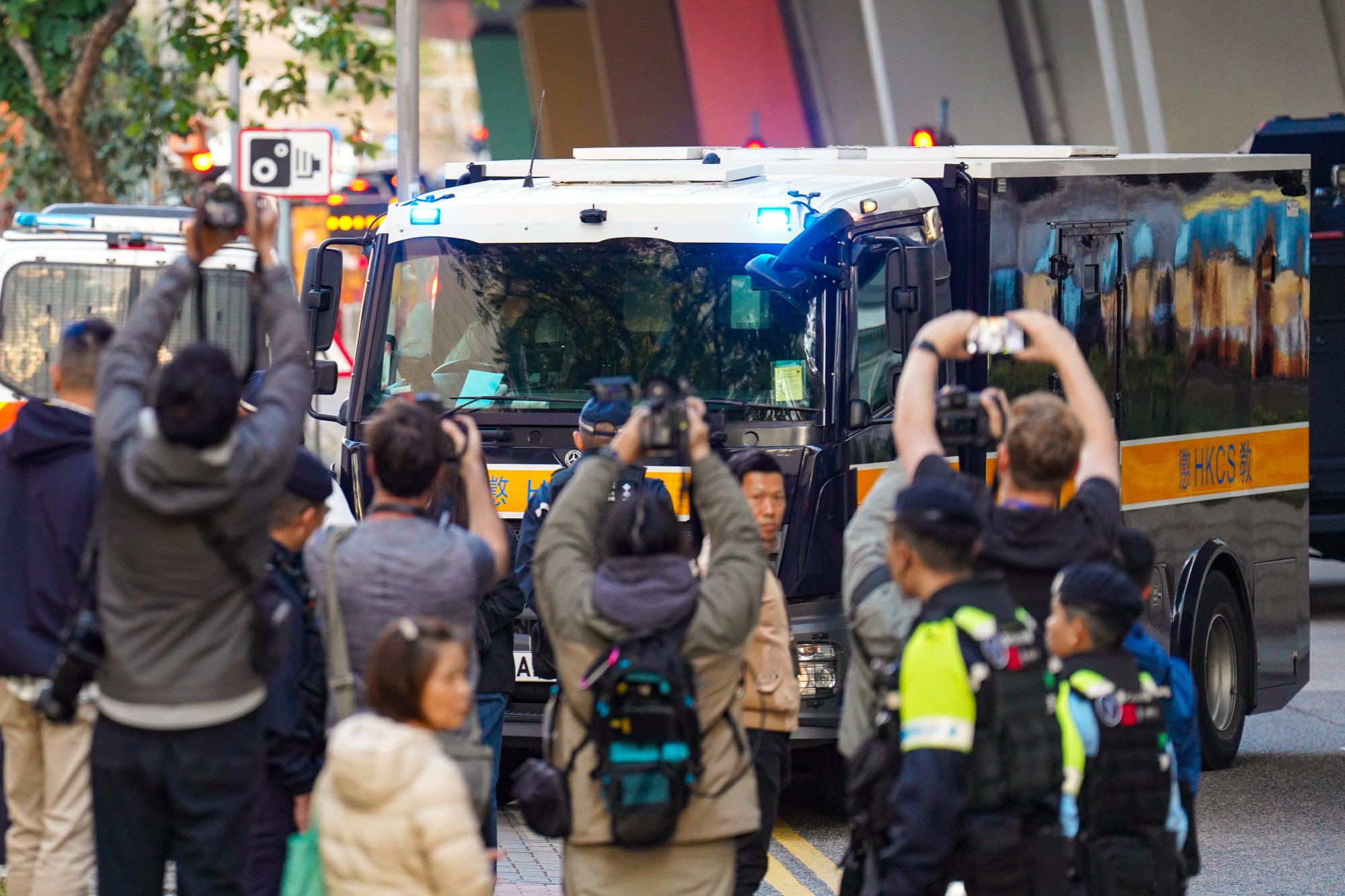
Lai, who has been remanded in custody since December 2020, faces a minimum jail sentence of 10 years and up to life imprisonment if the court finds that his culpability matches that of a “principal offender” under the Beijing-decreed statute.
The court will hear oral mitigation from January 12 for Lai and eight other co-defendants, including six former Apple Daily senior executives, who pleaded guilty before the trial.
Beijing and Hong Kong authorities lauded the verdict as a fair and just outcome.
“The people of the whole country, including our compatriots in Hong Kong, are filled with righteous indignation and strongly demand that he be severely punished according to the law,” the Hong Kong and Macau Affairs Office said in a commentary.
Chief Executive John Lee Ka-chiu said Lai’s conviction was backed by “irrefutable evidence”, condemning Lai for undermining the country’s fundamental interests.
“His acts were shameful and his intentions were malicious,” Lee said.
In a rare move, the Office of the Commissioner of the Ministry of Foreign Affairs in Hong Kong issued an open letter to foreign media in the city urging them to uphold objectivity, fairness and professionalism in their coverage of the case.
The letter argued that Lai was not prosecuted for the news or views published in his media outlets, as the key charge against him was collusion with foreign forces to endanger national security.
It said Lai’s trial was open and transparent, with fair and just procedures while the Hong Kong judiciary exercised its judicial power independently.
The ruling triggered a fresh round of condemnation from Western governments, politicians, press unions and human rights observers, who called for Lai’s immediate release.
Their international campaign against Lai’s prosecution has seen the judges in the case come under extreme pressure, including threats of sanctions from the United States.
Sporting a beige coat, the outspoken Beijing critic was flanked by eight prison guards in the dock as he listened with a hearing aid to the judges’ summary of their findings. He did not speak during the 40-minute session.
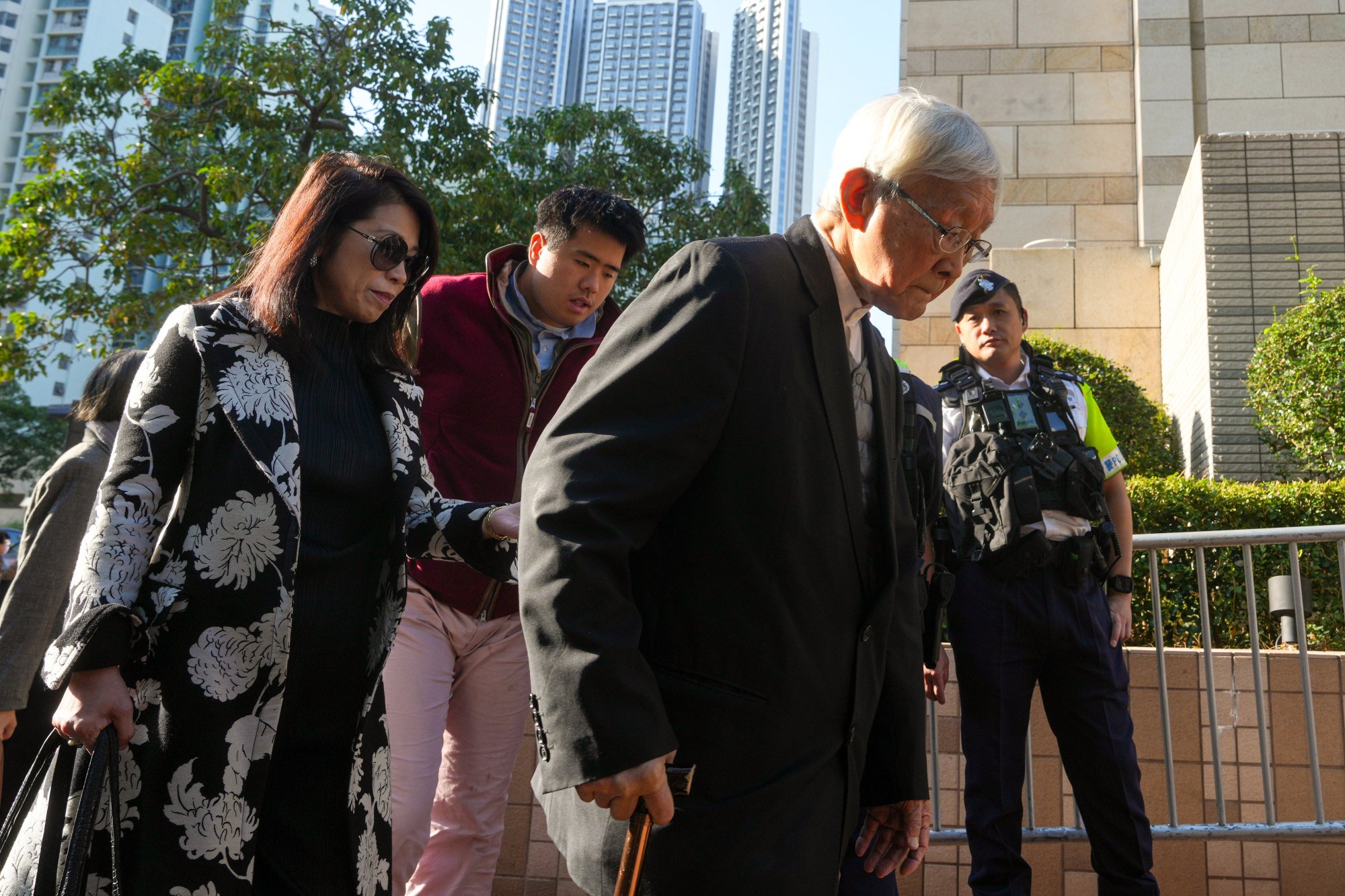
Among the hundreds of attendees were his wife Teresa Li Wan-kam, their son Augustin Lai Zhun-yan and Cardinal Joseph Zen Ze-kiun. Lai’s daughter Claire Lai Choi was absent.
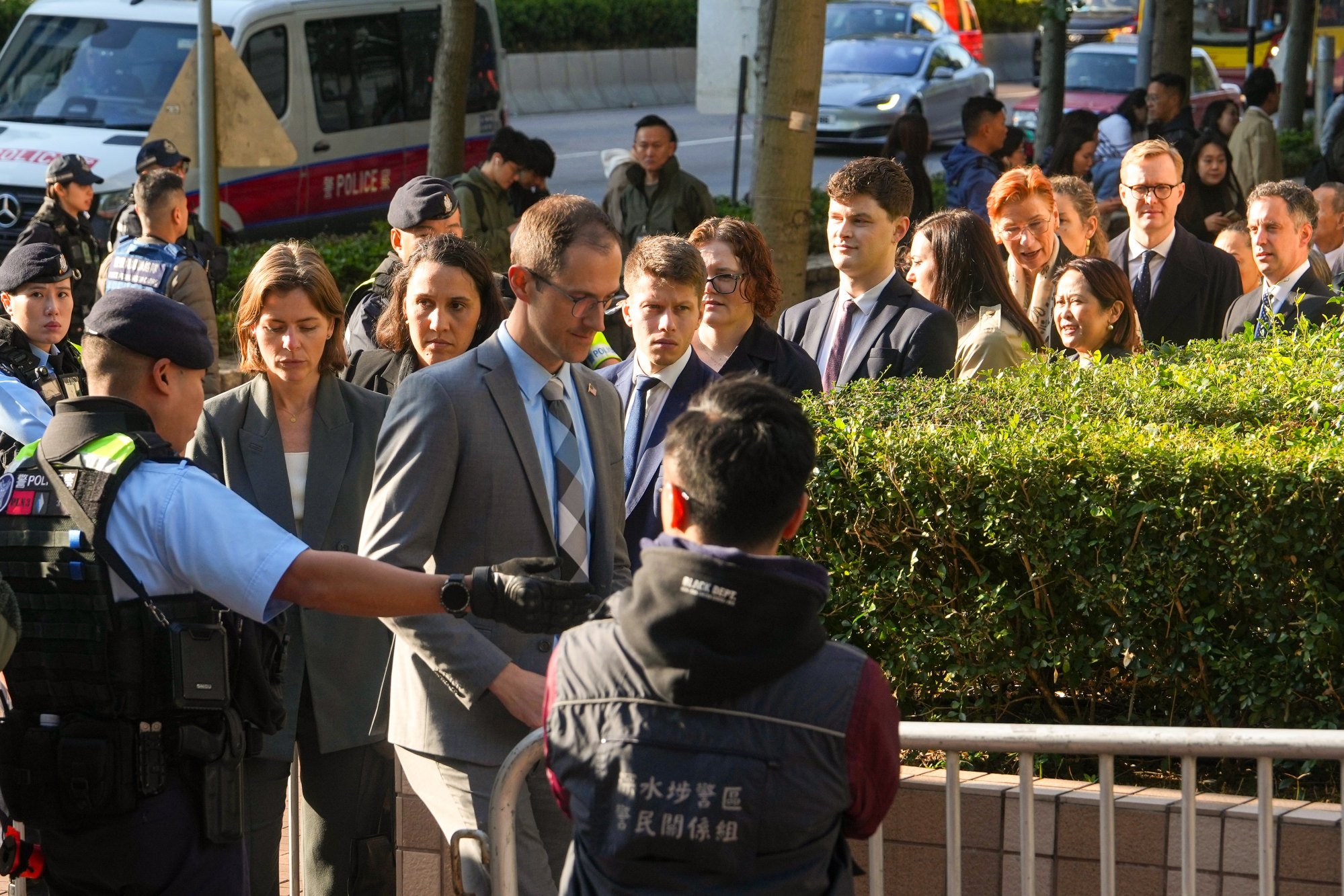
The 16 Western diplomats present included representatives from the United Kingdom, the United States, the European Union and Canada.
Acting British consul general Sarah Robinson reaffirmed that the case of Lai, who is a British national, remained a priority for the British government.
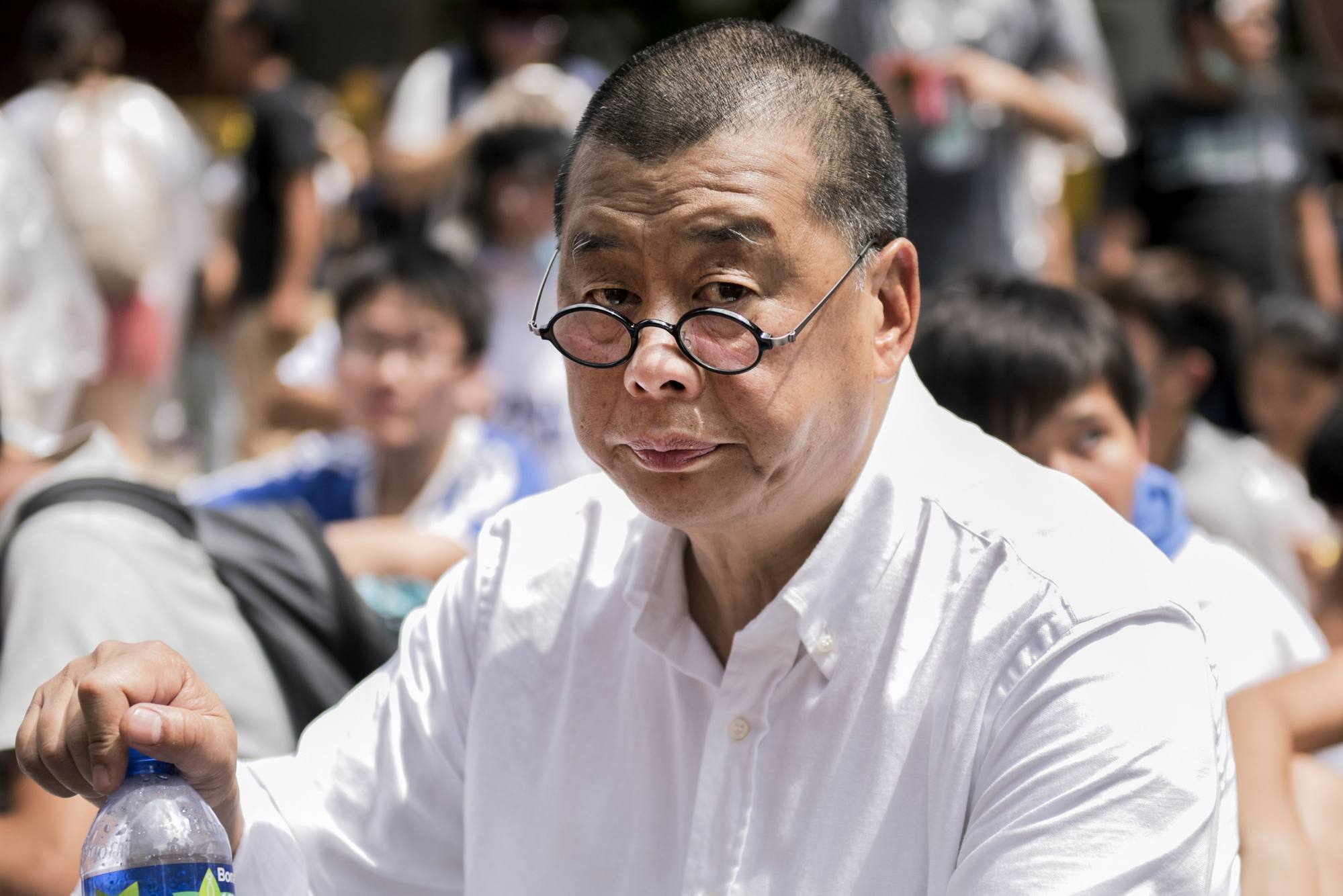
In their 855-page judgment, the judges stressed that Lai was not on trial for his political views, while reaffirming the stance previously adopted by higher courts that there was no conflict between sedition laws and freedoms of speech and of the press.
They found Lai harboured “deep resentment and hatred” towards the Communist Party and surrounded himself with like-minded people hoping to topple Beijing, including his right-hand man Mark Simon.
The judgment noted that Lai had exploited his extensive foreign network to pursue his anti-China agenda since 2017, enlisting the help of former US army general Jack Keane, former deputy defence secretary Paul Wolfowitz and ex-diplomat James Cunningham so that he could appeal to senior officials for sanctions.
Simon, a former US naval intelligence employee, had “worked hard” for Lai behind the scenes to arrange for his meetings with political moguls in Washington, including former US vice-president Mike Pence, then secretary of state Mike Pompeo and various congressmen.
“[Lai] was obsessed with changing the [Communist Party’s] culture and values to one of Western values and make China subservient to the might of the US and the West, turning China into a lackey of the West,” the judges said.
Before the national security law took effect, Lai had already positioned Apple Daily to reflect his anti-China views, poisoned the minds of his readers with his commentary articles and invited writers to make venomous assertions against the regime, according to the judgment.
It noted Lai had specifically asked senior editorial staff to report the anti-government protests of 2019 in a sympathetic light, blame central and local authorities for the unrest, and petition US President Donald Trump to prevent the passage of the national security law in Hong Kong.
The judges pointed out that many of Apple Daily’s articles displayed serious hostility and bias against central and local authorities and supported Lai’s agenda to topple President Xi Jinping and the Communist Party.
They found Lai was consciously using Apple Daily and his personal influence to carry out a consistent campaign to undermine the legitimacy and authority of central and local authorities, until the newspaper’s closure in June 2021.
The bench also found ample evidence suggesting that Lai had persistently called for foreign sanctions notwithstanding the national security law.
It said Lai had operated in a “grey area” by adopting an implicitly disguised and subtle approach, such as applauding the effectiveness of sanctions on social media and during media interviews.
For instance, the court found, the defendant’s anti-China stance permeated the online broadcast series “Live Chat with Jimmy Lai” between July and December 2020, in which he implicitly asked the US and its allies to restrict hi-tech exports to China when he shared his political views with guests abroad.
The judges further highlighted a text exchange between Lai and a then US official in July 2020, in which the media boss said it was right for the country to revoke Hong Kong’s privileged trade status in order to force Beijing to “come to terms” with America’s demands.
Meanwhile, the judges found that Lai provided financial backing to the “Fight for Freedom, Stand with Hong Kong” (SWHK) lobbying group to incite hostile actions from the US and its allies, knowing that Washington was using Hong Kong as leverage in trade talks with Beijing.
They said Lai was keen to enlist and groom young activists to cement his influence among the young, and garner international support for the 2019 protests.
The court found that Lai had engaged three SWHK activists in international lobbying efforts for sanctions, after he explained to the trio his plan to trigger China’s “implosion” through influencing foreign policies on the country.
Lai was also privy to the developments abroad, including the establishment of the Inter-Parliamentary Alliance on China (IPAC) in June 2020 and SWHK’s involvement in the coalition, the judges found.
Lai’s “unwavering commitment” to extend the conspiracy beyond June 2020 was evidenced by his meeting with one of the activists, telling him that the national security law was “more bark than bite” and that he would set a good example himself and continue to request sanctions.
The panel rejected Lai’s “contradictory, inconsistent, evasive and unreliable” testimony that he only wanted foreign governments to demonstrate their concerns and support for Hong Kong, and that his meetings with young activists were meant to help quell social unrest. -- SOUTH CHINA MORNING POST